By December 2026, all nations within the EU are required to provide a digital identity wallet to their populations. Recent polling indicates that individuals are generally open to additional security verifications, provided these measures do not demand excessive personal information.
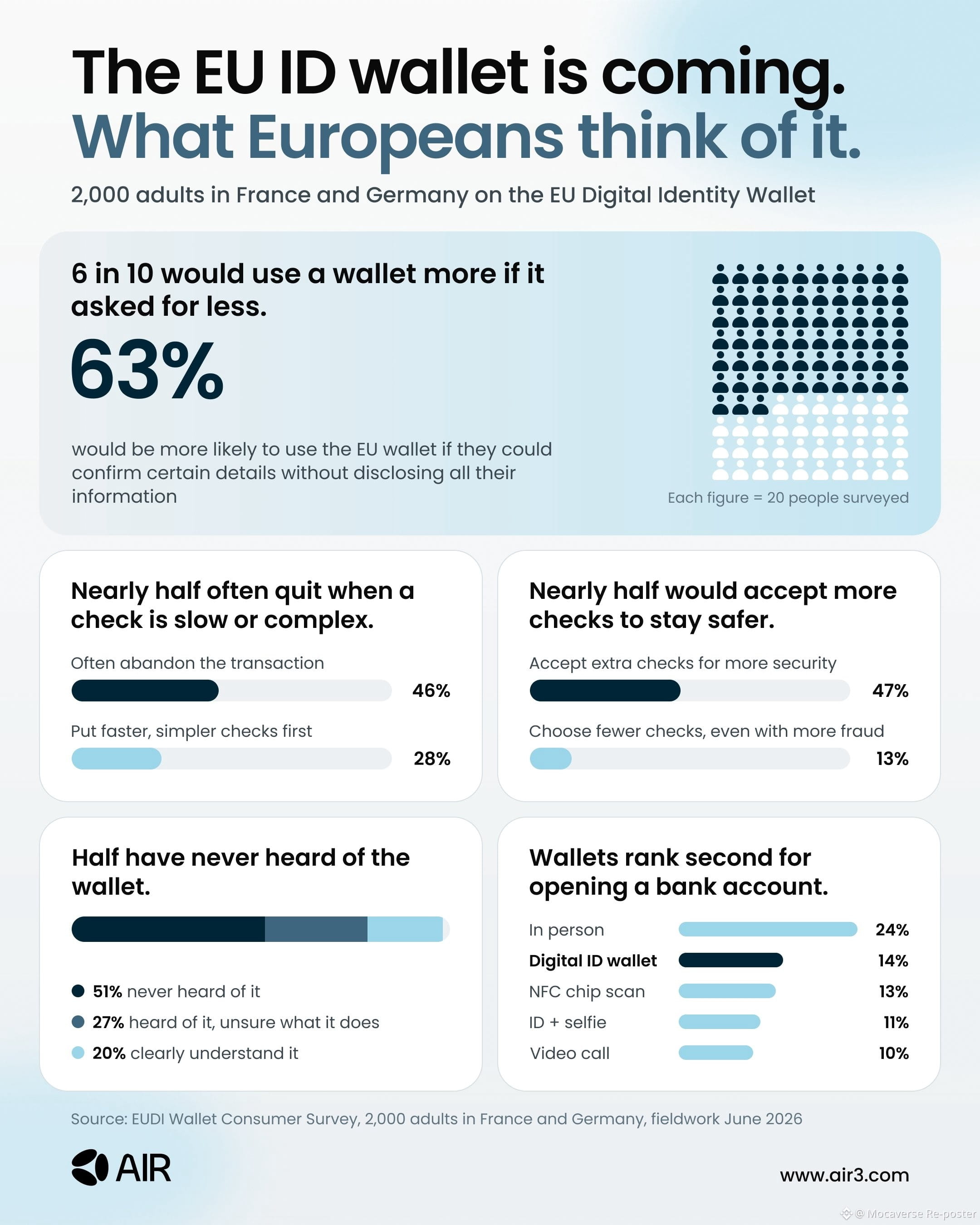
Conducted in June, the study gathered responses from 2,000 adults across Germany and France, revealing several key insights into consumer preferences. A significant majority, representing 63 percent of respondents, indicated a higher likelihood of adopting the technology if they could verify specific facts without revealing their complete personal profile. Furthermore, nearly half of the participants, at 46 percent, frequently cancel a transaction when the identity check becomes overly complicated or sluggish.
When it comes to personal security, 47 percent are willing to undergo further screening if it enhances their protection. In contrast, a mere 13 percent would prefer a streamlined process if it brings a higher chance of fraud. However, for specific financial tasks like setting up a new bank account, traditional methods remain popular. Currently, 24 percent favor face to face verification for this activity, while only 14 percent would opt for a digital wallet.
These findings point to a clear trend. Consumers are not opposed to the concept of verification itself. Instead, they push back against procedures that are excessively time consuming or that harvest more data than necessary for a decision. From a corporate perspective, losing a customer at this verification stage is particularly costly, because the marketing funds to acquire them have already been utilized.
You can find a comprehensive breakdown of all the survey charts, along with four actionable strategies for your onboarding teams, by reading our complete article here: https://tinyurl.com/2d3oeuov
Conducted in June, the study gathered responses from 2,000 adults across Germany and France, revealing several key insights into consumer preferences. A significant majority, representing 63 percent of respondents, indicated a higher likelihood of adopting the technology if they could verify specific facts without revealing their complete personal profile. Furthermore, nearly half of the participants, at 46 percent, frequently cancel a transaction when the identity check becomes overly complicated or sluggish.
When it comes to personal security, 47 percent are willing to undergo further screening if it enhances their protection. In contrast, a mere 13 percent would prefer a streamlined process if it brings a higher chance of fraud. However, for specific financial tasks like setting up a new bank account, traditional methods remain popular. Currently, 24 percent favor face to face verification for this activity, while only 14 percent would opt for a digital wallet.
These findings point to a clear trend. Consumers are not opposed to the concept of verification itself. Instead, they push back against procedures that are excessively time consuming or that harvest more data than necessary for a decision. From a corporate perspective, losing a customer at this verification stage is particularly costly, because the marketing funds to acquire them have already been utilized.
You can find a comprehensive breakdown of all the survey charts, along with four actionable strategies for your onboarding teams, by reading our complete article here: https://tinyurl.com/2d3oeuov