

When institutional interest in crypto comes up, most people tend to look at the same thing: How much money is coming in?
Lately, I’ve been looking one step further back.
What does that money need to trust before it can make a decision?
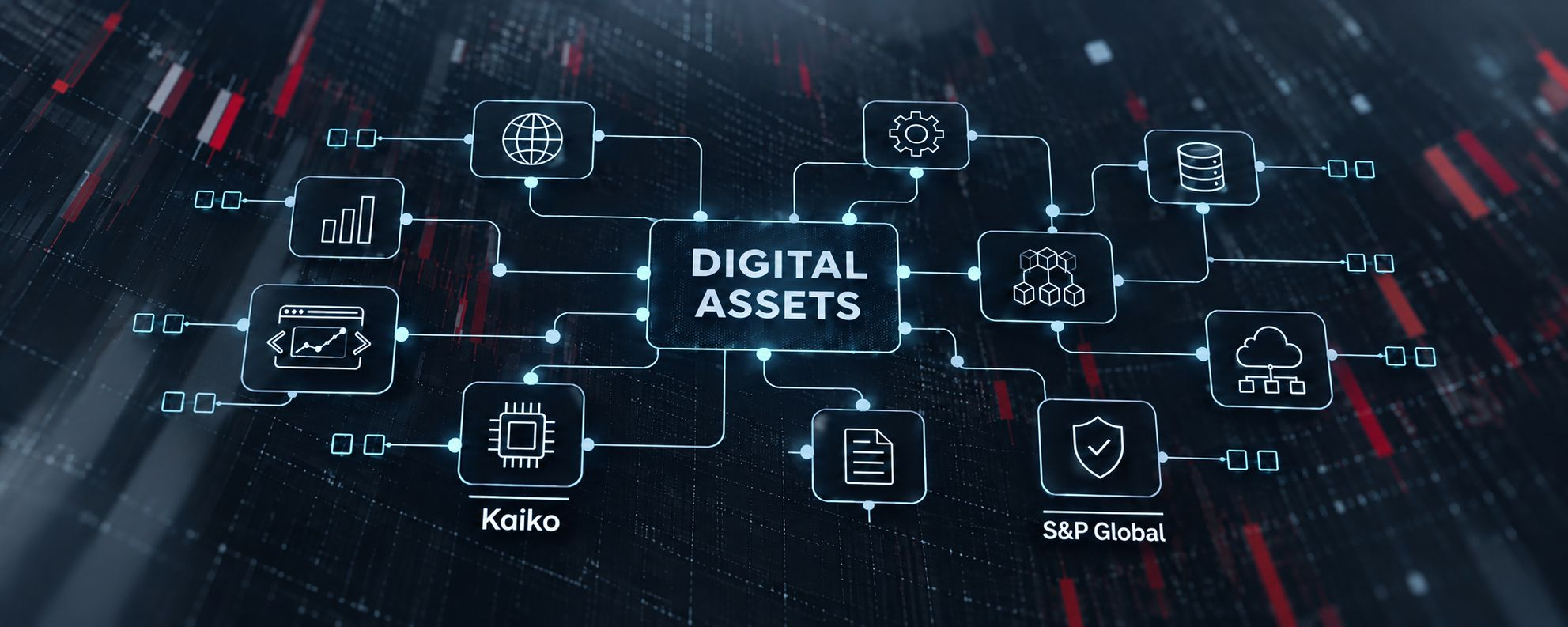
That’s why S&P Global leading a strategic investment that extended Kaiko’s Series B to $110 million caught my attention. Kaiko provides data infrastructure for crypto and on-chain markets.
And this isn’t an isolated development. S&P Dow Jones Indices and Kaiko have also brought their digital asset indices together under a shared framework.
I don’t just see this as another sign of traditional finance moving closer to crypto. I see something more fundamental.
Before large pools of capital move deeper into crypto, they are starting to take seriously how crypto itself is measured.
Because millions of people trading the same asset doesn’t necessarily mean its price carries the same meaning for everyone.
Which market is the price coming from? How deep is the liquidity? Which reference price can actually be trusted?
And among prices formed across different platforms, which one is reliable enough to make a decision on?
A retail investor can move past most of these questions in seconds. Large capital can’t.
And I think this is one of the overlooked parts of crypto becoming institutional.
A market doesn’t mature simply because it gets bigger.
Scale that cannot be measured reliably is still uncertainty for institutions.
If tokenized stocks, bonds, funds and other assets really do move toward 24-hour on-chain markets, some of the most valuable infrastructure may not only be the systems that execute transactions.
The systems that can tell us which price deserves to be trusted may become just as important.
So from now on, I won’t measure institutional interest in crypto only through ETF flows, investments or market caps.
I’ll also be watching which data institutions are beginning to trust.
Because maybe institutionalization doesn’t truly begin on the day large capital enters the market.
Maybe it begins on the day that capital develops a common language for deciding which price is “real.