Bitcoin Faces a Clash Between Fed Pressure and Regulatory Optimism.
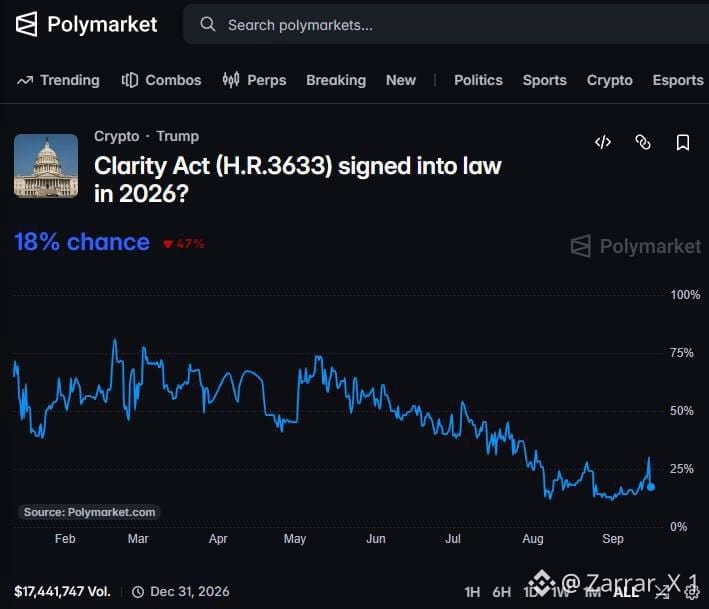
Bitcoin is approaching a critical crossroads as long-term regulatory progress collides with short-term macroeconomic pressure. Polymarket odds for the U.S. CLARITY Act have reportedly climbed above 32% following ethics-related concessions from Donald Trump, giving the market a stronger legislative tailwind.
However, regulatory optimism may not immediately outweigh expectations of a 25-basis-point Federal Reserve rate hike. Persistent inflation and higher oil prices linked to Middle East tensions are keeping monetary policy restrictive, which could tighten dollar liquidity, raise borrowing costs and pressure risk assets in the short term.
The CLARITY Act represents a more structural development. By establishing clearer rules for digital commodities and assigning greater oversight to the CFTC, the legislation could reduce regulatory uncertainty and make U.S. crypto markets more attractive to institutional investors.
The key distinction is timing: macro liquidity is likely to influence Bitcoin’s immediate price action, while regulation could shape its longer-term capital flows. A Fed-driven pullback may therefore create volatility around the $81.5K–$84.4K resistance zone, while successful passage of the bill could strengthen the broader institutional accumulation narrative.
$BTC $BTC #BTC Price Analysis#
Bitcoin is approaching a critical crossroads as long-term regulatory progress collides with short-term macroeconomic pressure. Polymarket odds for the U.S. CLARITY Act have reportedly climbed above 32% following ethics-related concessions from Donald Trump, giving the market a stronger legislative tailwind.
However, regulatory optimism may not immediately outweigh expectations of a 25-basis-point Federal Reserve rate hike. Persistent inflation and higher oil prices linked to Middle East tensions are keeping monetary policy restrictive, which could tighten dollar liquidity, raise borrowing costs and pressure risk assets in the short term.
The CLARITY Act represents a more structural development. By establishing clearer rules for digital commodities and assigning greater oversight to the CFTC, the legislation could reduce regulatory uncertainty and make U.S. crypto markets more attractive to institutional investors.
The key distinction is timing: macro liquidity is likely to influence Bitcoin’s immediate price action, while regulation could shape its longer-term capital flows. A Fed-driven pullback may therefore create volatility around the $81.5K–$84.4K resistance zone, while successful passage of the bill could strengthen the broader institutional accumulation narrative.
$BTC $BTC #BTC Price Analysis#