



When Wall Street finally opened the gates for crypto exchange traded funds, a massive wave of retail money flooded the market. You open your brokerage app, hit the buy button, and suddenly you own a piece of Bitcoin without ever touching a hardware wallet. It feels like magic. But the reality behind the scenes is not magic at all. It is a highly complex and aggressive financial engine working around the clock to make sure the price of your ETF share perfectly matches the real price of the underlying digital asset.
If you ever wondered how a traditional stock exchange product accurately tracks a highly volatile cryptocurrency that trades on completely different platforms, you need to look under the hood. Today we are going to break down the exact mechanics of how crypto ETFs actually create and redeem their shares. We will look at who moves the actual coins, how the money flows, and why this hidden process is the absolute lifeblood of the entire ETF structure.
II. The Two Separate Playgrounds
To understand the process, you first have to separate the financial world into two distinct playgrounds.
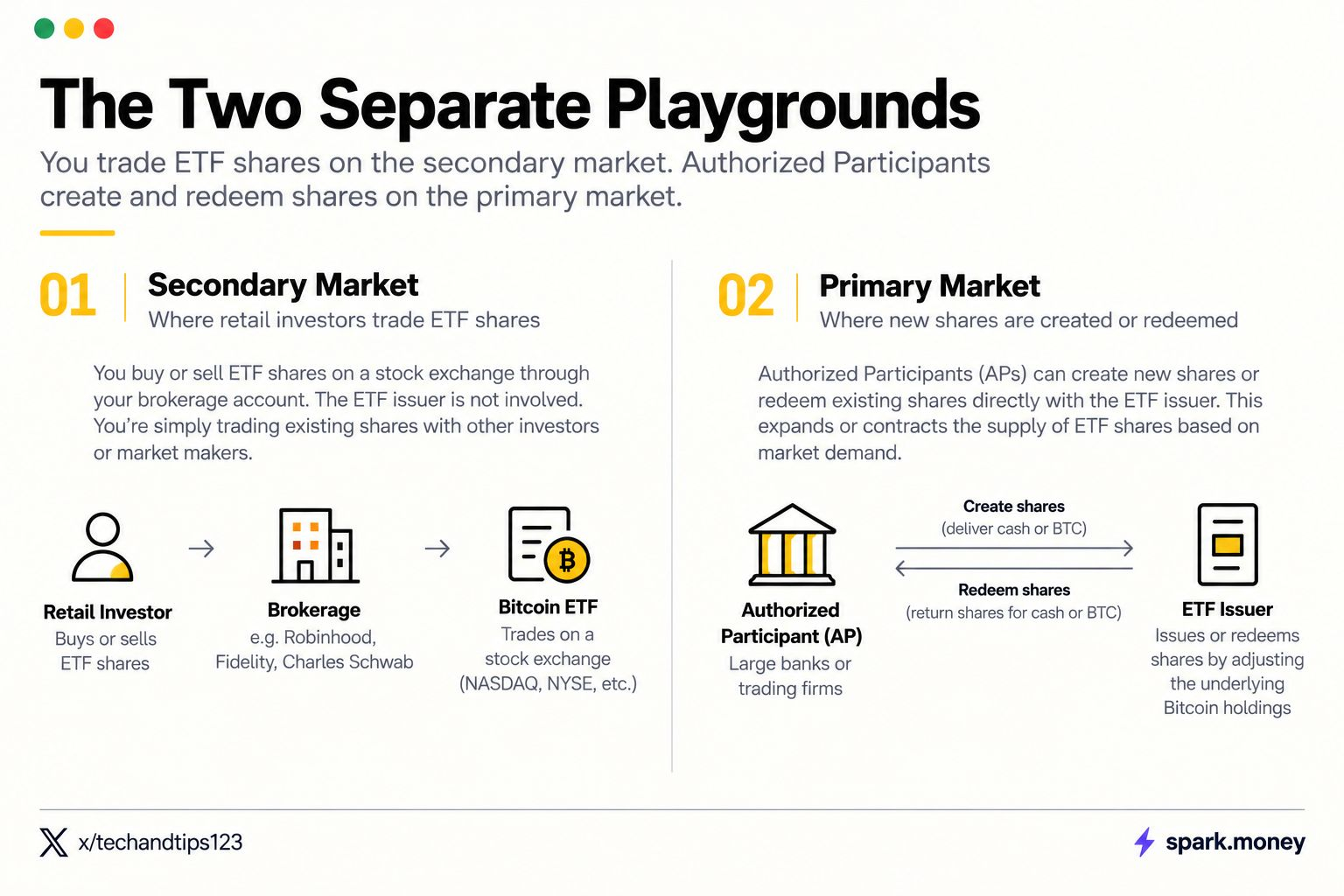
When you buy or sell a share of a Bitcoin ETF on your phone, you are trading on the secondary market. You are simply trading existing shares with other regular investors or market makers. The ETF issuer is not involved in this transaction at all. You are just passing a piece of paper back and forth.
Here's the catch. ETF shares trade on a stock exchange during normal market hours, roughly 9:30 AM to 4:00 PM Eastern, Monday through Friday. Bitcoin trades 24 hours a day, seven days a week. When the stock market is closed, the ETF price cannot move, but Bitcoin keeps trading. By Monday morning, or after any major weekend news, the ETF share price and the real Bitcoin price can drift apart. That gap is what APs exist to close.
But the supply of these paper shares is not fixed. Unlike a traditional company stock where the total number of shares is strictly capped, an ETF can expand and shrink its supply based on market demand. This expansion and contraction happens in the primary market. You and I cannot play in the primary market. The primary market is strictly reserved for the heavy hitters of Wall Street.
III. Meet the Authorized Participants
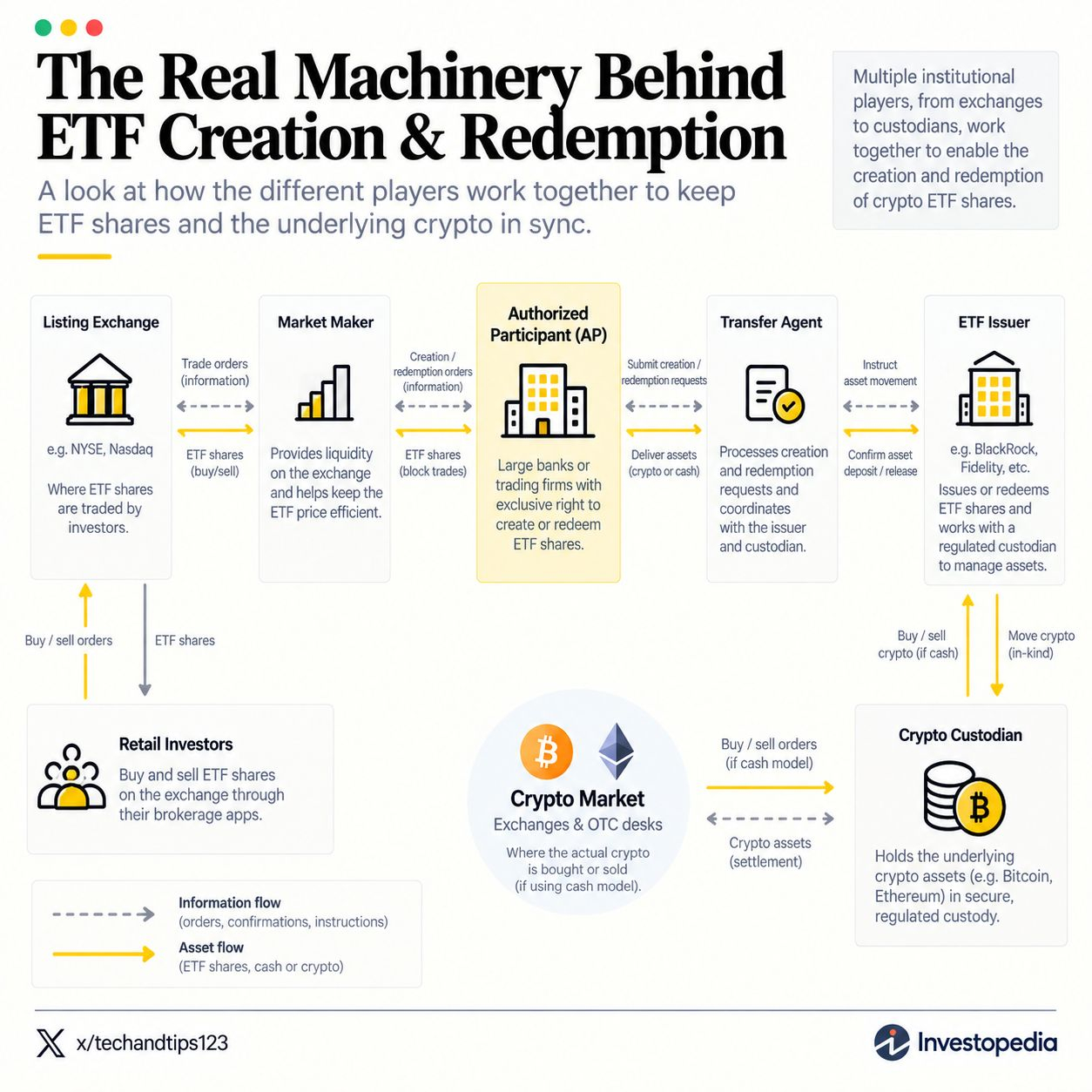
The entire ETF engine relies on a specialized group of institutional players known as Authorized Participants. We just call them APs for short.
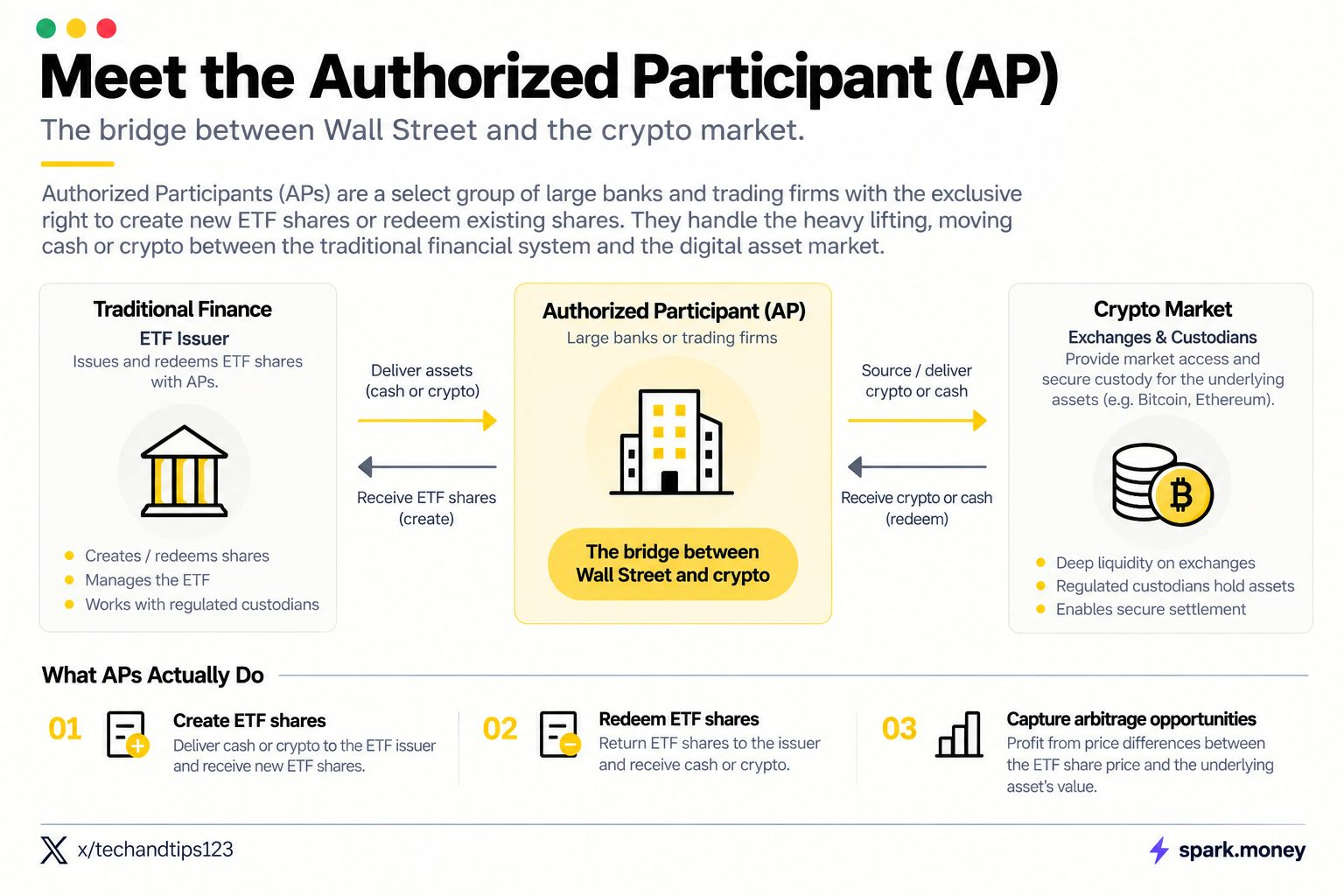
Think of an AP as a highly privileged wholesale dealer. They are usually massive banks or elite trading firms. The ETF issuer gives these specific firms the exclusive legal right to create brand new shares out of thin air or destroy existing shares completely.
The AP acts as the vital bridge between the traditional stock market and the wild crypto spot market. They are the ones actually handling the heavy lifting and moving millions of dollars back and forth to keep the system balanced.
IV. The Cash Versus In-Kind Evolution
In a traditional ETF tracking regular stocks, the AP would go buy the actual underlying assets, hand those assets to the ETF issuer, and receive new ETF shares in return. This is called an in-kind creation.
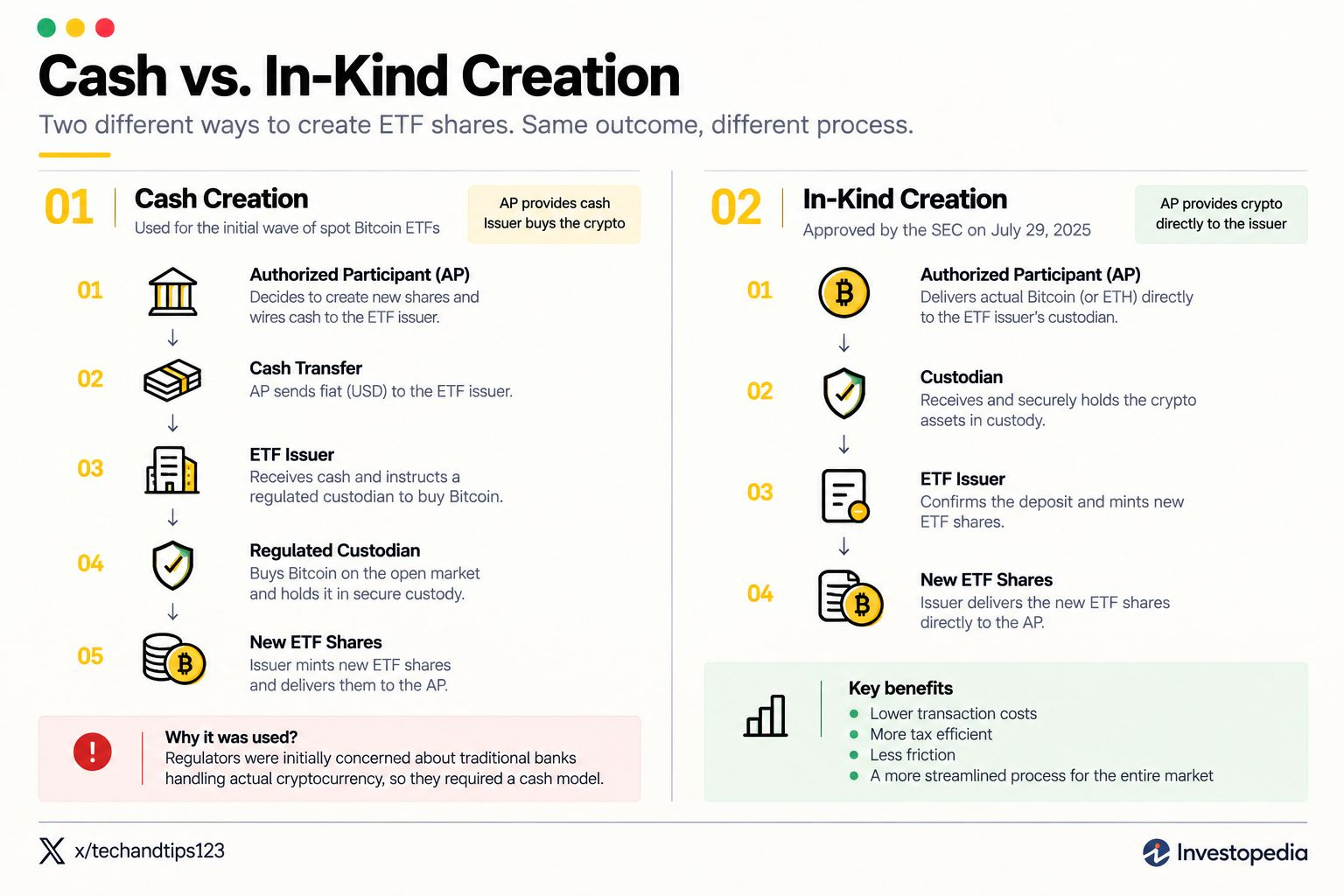
However, when regulators approved the first wave of spot Bitcoin ETFs, they were terrified of traditional banks handling actual cryptocurrency. They refused to let APs touch the digital coins directly. They forced the market to use a cash creation model instead.
Under a cash model, the AP looks at a market premium and decides to create a block of new shares. Instead of buying Bitcoin, the AP wires actual cash directly to the ETF issuer. The ETF issuer then takes that cash, logs into a crypto exchange through a regulated custodian, and buys the real Bitcoin on the open market.
This cash model worked, but it was clunky and created extra trading costs. The crypto industry fought hard to change this rule and recently won a major victory. On July 29, 2025, the SEC officially approved the in-kind creation and redemption model for all spot Bitcoin and Ethereum ETFs.
This regulatory shift changes the game entirely. Now an AP holding large amounts of Bitcoin can simply hand their actual digital coins directly to the ETF issuer and instantly receive ETF shares in return. This removes the friction of converting everything to cash first. It lowers the transaction costs and creates a much more tax efficient structure for the entire fund.
V. The Creation Process: Minting New Shares
Let us walk through what happens when demand for a crypto ETF goes through the roof.
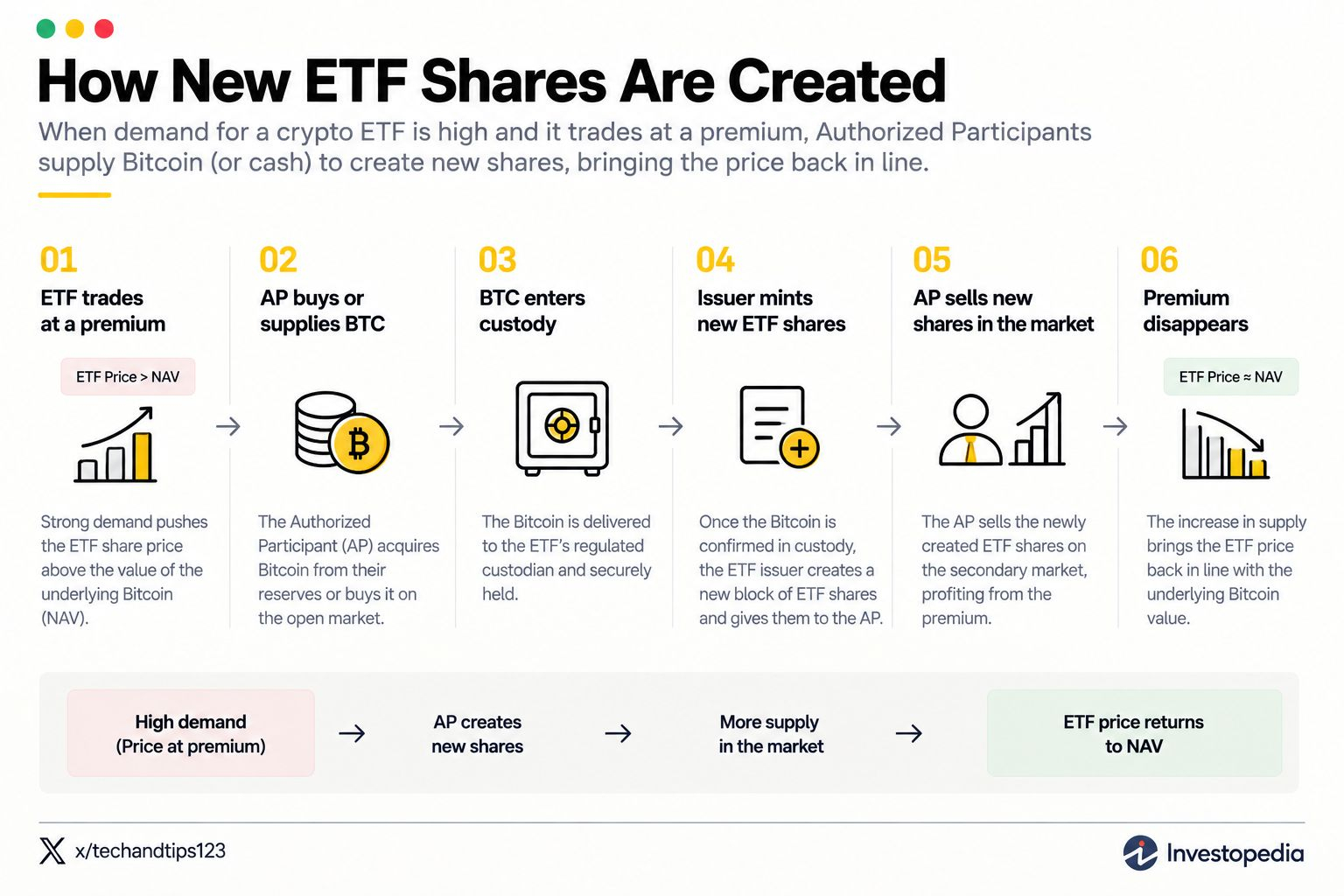
Imagine Bitcoin is pumping and everyone rushes to buy the ETF on their brokerage apps. Because there are more buyers than sellers, the price of the ETF share starts to float higher than the actual value of the Bitcoin it represents. We call this trading at a premium.
When the AP sees this premium, they step in to make a profit and balance the scales. They trigger the creation process.
Using the modern in-kind process, the AP takes real Bitcoin from their own reserves or buys it on the crypto spot market. They deliver those digital coins to the ETF custodian. Once the real Bitcoin is securely locked in the vault, the issuer mints a brand new block of ETF shares and hands them to the AP.
The AP then dumps these brand new shares onto the secondary market to satisfy all those retail buyers. The flood of new supply pushes the ETF share price back down until it perfectly matches the real price of Bitcoin again.
VI. The Redemption Process: Burning the Supply
Now let us look at the exact opposite scenario.
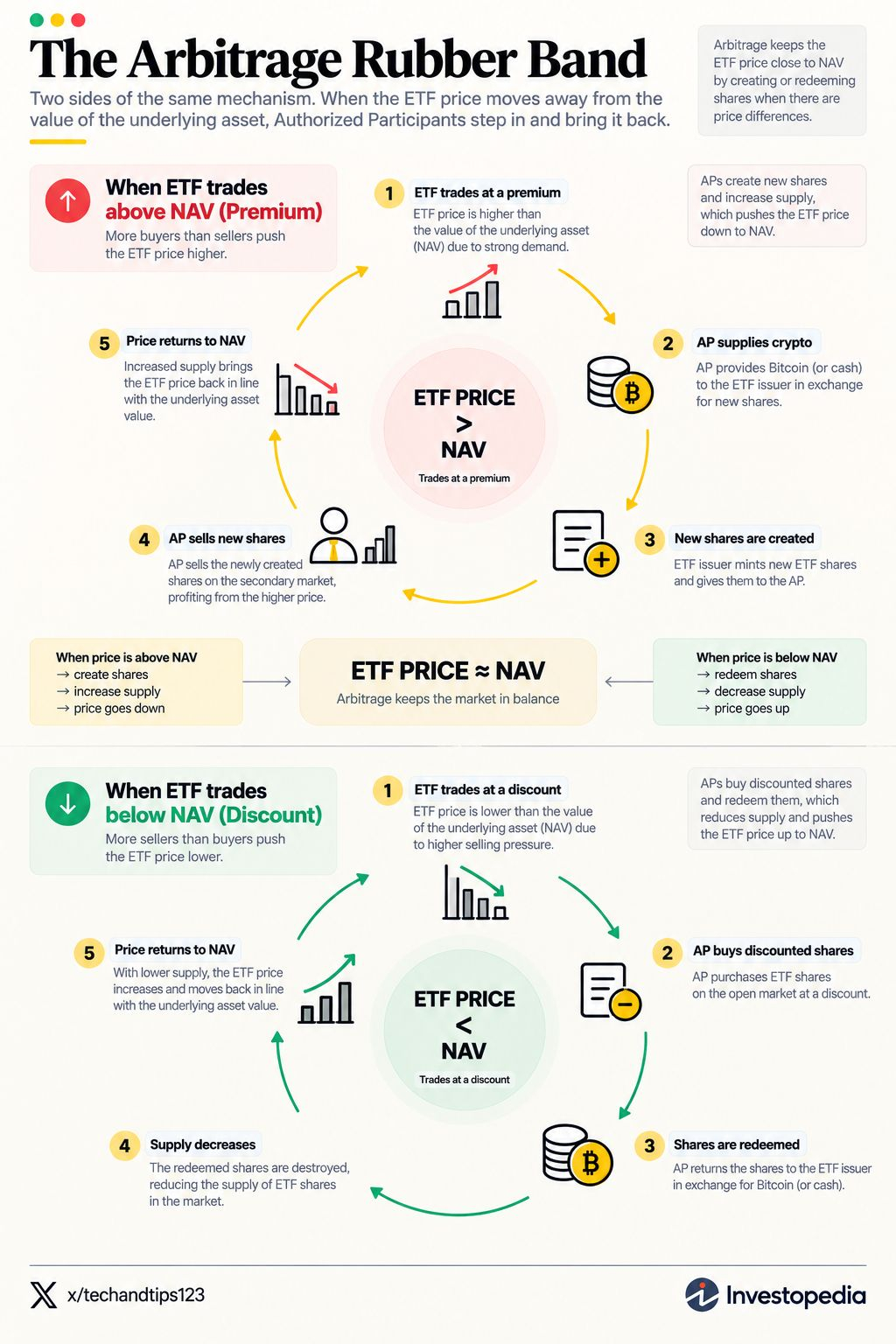
Imagine terrible macroeconomic news breaks and retail investors panic. They rush to sell their crypto ETF shares. This massive wave of selling pressure pushes the ETF share price down. Suddenly the paper share is trading for less than the actual Bitcoin locked in the vault. We call this trading at a discount.
The AP steps in again to capture a risk free profit and restore the balance. They trigger the redemption process.
The AP buys up huge blocks of these discounted ETF shares on the open market. They take these cheap shares and hand them directly back to the ETF issuer. The issuer permanently destroys or redeems those shares.
In return for handing over the paper shares, the ETF issuer unlocks the vault and sends the actual underlying Bitcoin back to the AP. Because the AP bought the ETF shares at a cheap discount on the open market and received the full underlying value in real Bitcoin, they pocket the difference as pure profit. Meanwhile, by taking thousands of shares out of circulation, the AP reduces the total supply on the secondary market. This reduction forces the ETF share price back up until it aligns with the real Bitcoin price again.
VII. The Arbitrage Loop and Why It Matters
This entire game of creating and redeeming shares is just a massive automated arbitrage loop.
The Authorized Participants do not do this out of the goodness of their hearts. They do it because they make millions of dollars by capturing the tiny price differences between the ETF share and the actual cryptocurrency.
This profit motive is the exact mechanic that keeps the ETF safe and reliable for you. Without APs constantly hunting for premiums and discounts, a crypto ETF would behave like a closed end fund. The price would completely detach from reality. You might end up paying a massive premium for a share that holds a fraction of that value in real Bitcoin.
Because the creation and redemption mechanism runs continuously in the background, you never have to worry about the underlying math. The heavy institutional players do the arbitrage for you. Their greed is the invisible rubber band that keeps the ETF share price perfectly glued to the real time value of the digital asset.
FIN
A lot of crypto purists hate the ETF structure entirely. They believe that bringing Wall Street middlemen into a decentralized asset class ruins the entire point of the technology. I completely disagree with that perspective.
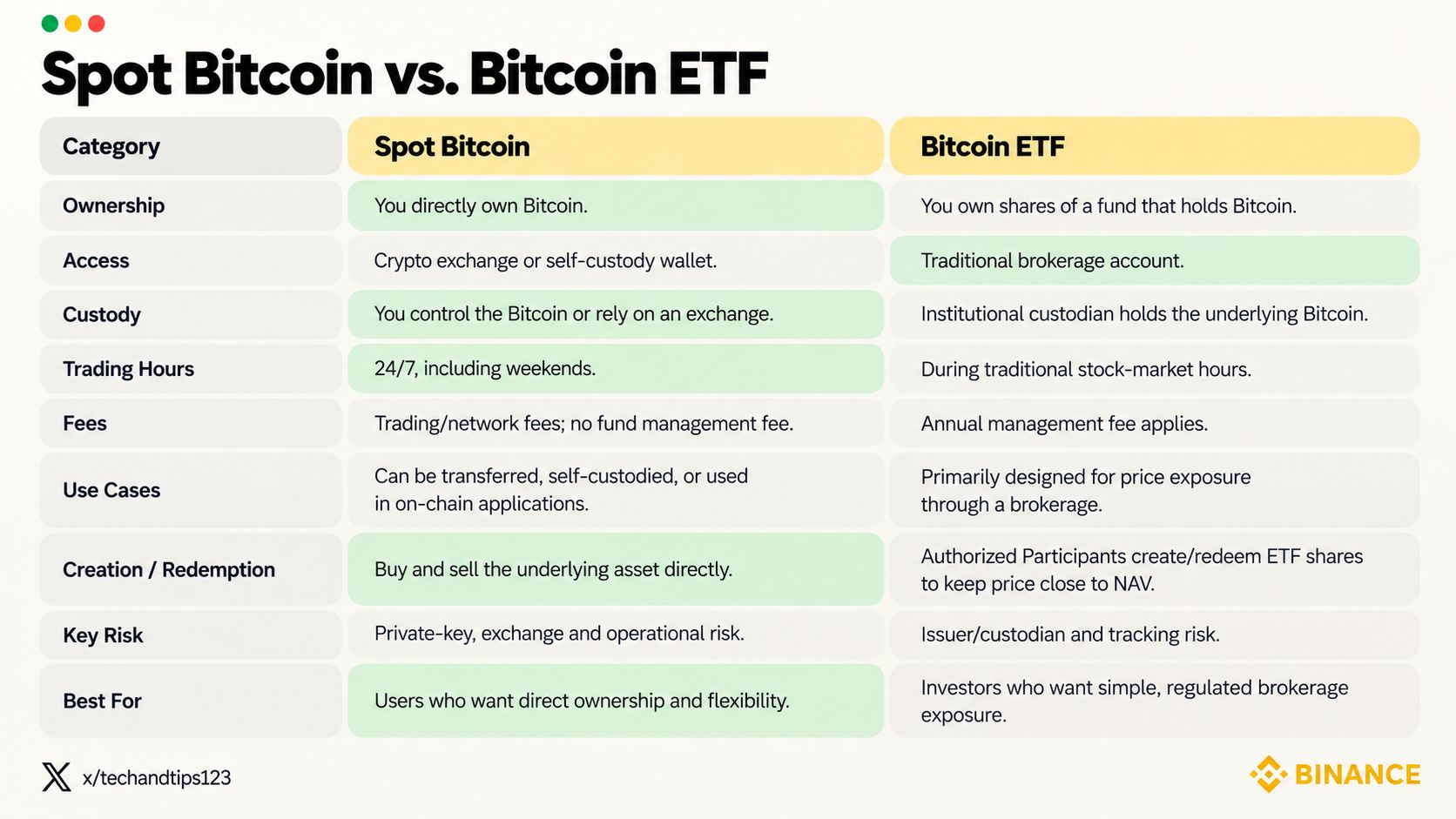
The crypto market desperately needed the deep plumbing of traditional finance to reach mass adoption. The creation and redemption mechanism is an absolute masterpiece of market efficiency. It allows billions of dollars to flow seamlessly between ancient legacy banking rails and modern digital ledgers without breaking the system.
Yes, it introduces centralized custodians and heavy institutional control. But it also provides a perfectly regulated and mathematically sound bridge for trillions of dollars of retirement capital to finally enter our space. Understanding how this engine works gives you a massive advantage. When you know exactly how the big players move the actual coins, you stop panicking over random price deviations. You start trading with the confidence of a true market operator. The machinery works exactly as intended, and it is built to handle whatever volatility this market throws at it.