
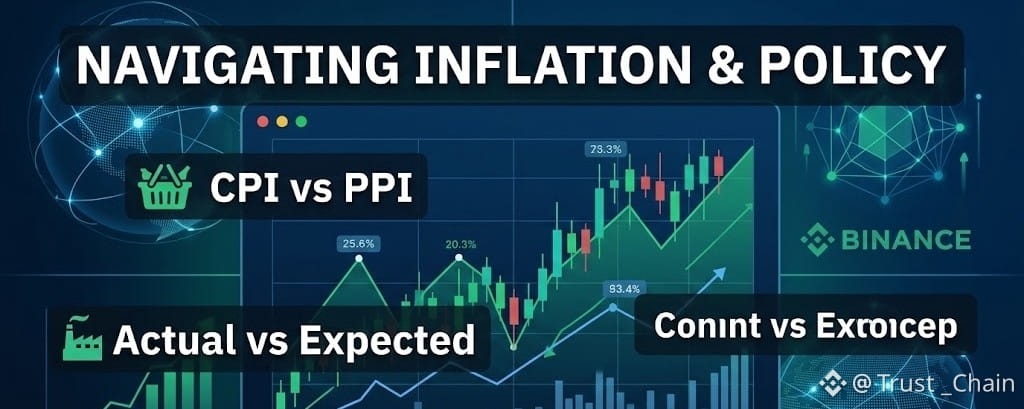

Crypto markets don’t move in isolation. One of the biggest forces shaping risk appetite is U.S. inflation data — especially the Consumer Price Index (CPI) and Producer Price Index (PPI).
Understanding these reports can help crypto investors interpret why Bitcoin and other digital assets sometimes react sharply within minutes of an economic release.
CPI vs. PPI: What’s the Difference?
CPI measures changes in the prices consumers pay for goods and services. It is one of the most closely watched indicators of inflation and includes categories such as housing, food, transportation, and healthcare.
PPI measures price changes received by producers for goods and services. Because producer costs can eventually be passed on to consumers, PPI can provide an early indication of potential inflationary pressure.
In simple terms:
PPI → Producer costs → Consumer prices → CPI → Fed policy
Why Does the Federal Reserve Matter?
The Federal Reserve uses economic data, including inflation, employment, and economic growth, when deciding whether to raise, hold, or cut interest rates.
When inflation remains stubbornly high, the Fed may maintain tighter monetary policy for longer.
Higher interest rates generally make cash and yield-bearing assets more attractive while increasing the cost of capital. This can reduce appetite for higher-risk assets such as equities and cryptocurrencies.
When inflation begins to cool, markets may increasingly price in easier monetary policy. That can improve liquidity expectations and potentially support risk assets.
How Inflation Data Can Affect Bitcoin
The relationship isn't simply:
CPI ↓ = Bitcoin ↑
CPI ↑ = Bitcoin ↓
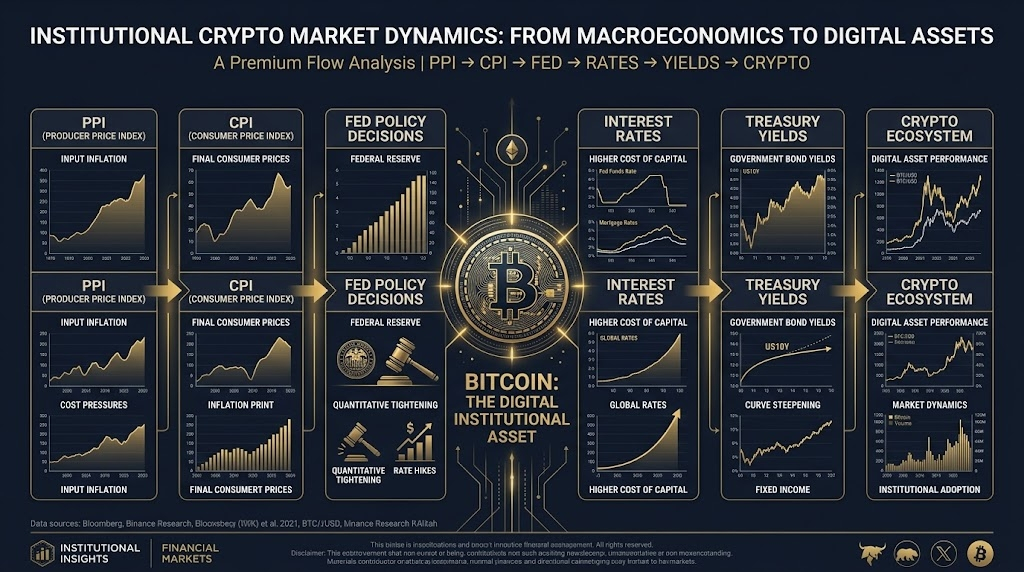
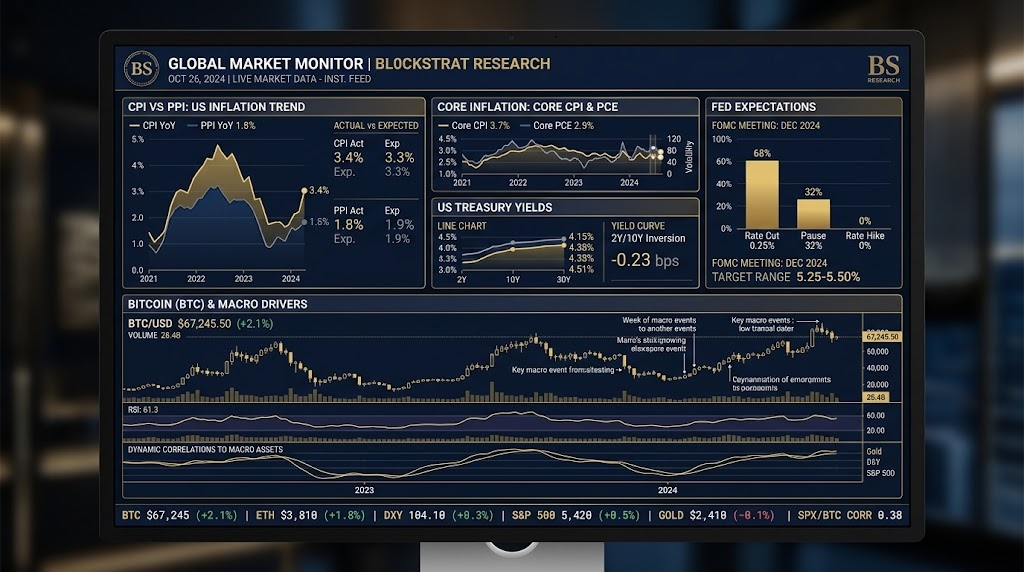
Markets react to the actual number versus expectations and, importantly, what the data means for future Fed policy.
For example:
▪️Hotter-than-expected inflation: Markets may price fewer rate cuts or a more restrictive Fed → risk appetite can weaken.
▪️Cooler-than-expected inflation: Markets may anticipate easier policy → risk appetite can improve.
▪️Data close to expectations: The reaction may depend more heavily on other factors such as Treasury yields, the U.S. dollar, liquidity, ETF flows, and positioning.
This is why the headline inflation number is only part of the story.
Why Crypto Traders Watch the “Core” Data
Markets also pay close attention to core CPI and core PPI, which exclude certain volatile components.
Core inflation can provide a clearer view of underlying price pressures. Persistent core inflation may make it harder for the Fed to justify rapid monetary easing.
For crypto investors, this matters because expectations surrounding interest rates can influence liquidity and risk-taking across global markets.
The Bigger Picture
CPI and PPI should not be viewed as isolated trading signals.
A stronger approach is to watch the entire macro chain:
Inflation → Fed expectations → Treasury yields → Dollar → Liquidity → Risk appetite → Crypto
That framework can help explain why Bitcoin may rally on one inflation report and sell off on another — even when the difference between the numbers appears small.
Final Takeaway
Inflation data matters to crypto because it can change expectations for Federal Reserve policy and global liquidity.
Instead of asking only, “Was CPI high or low?”, investors should ask:
“Was inflation different from expectations, and how could this change the Fed’s next move?”
That distinction is often where the real market signal lies.
#BitcoinCrosses$78000 #AvalancheIntegratesIntoUAEPassDigitalVault