
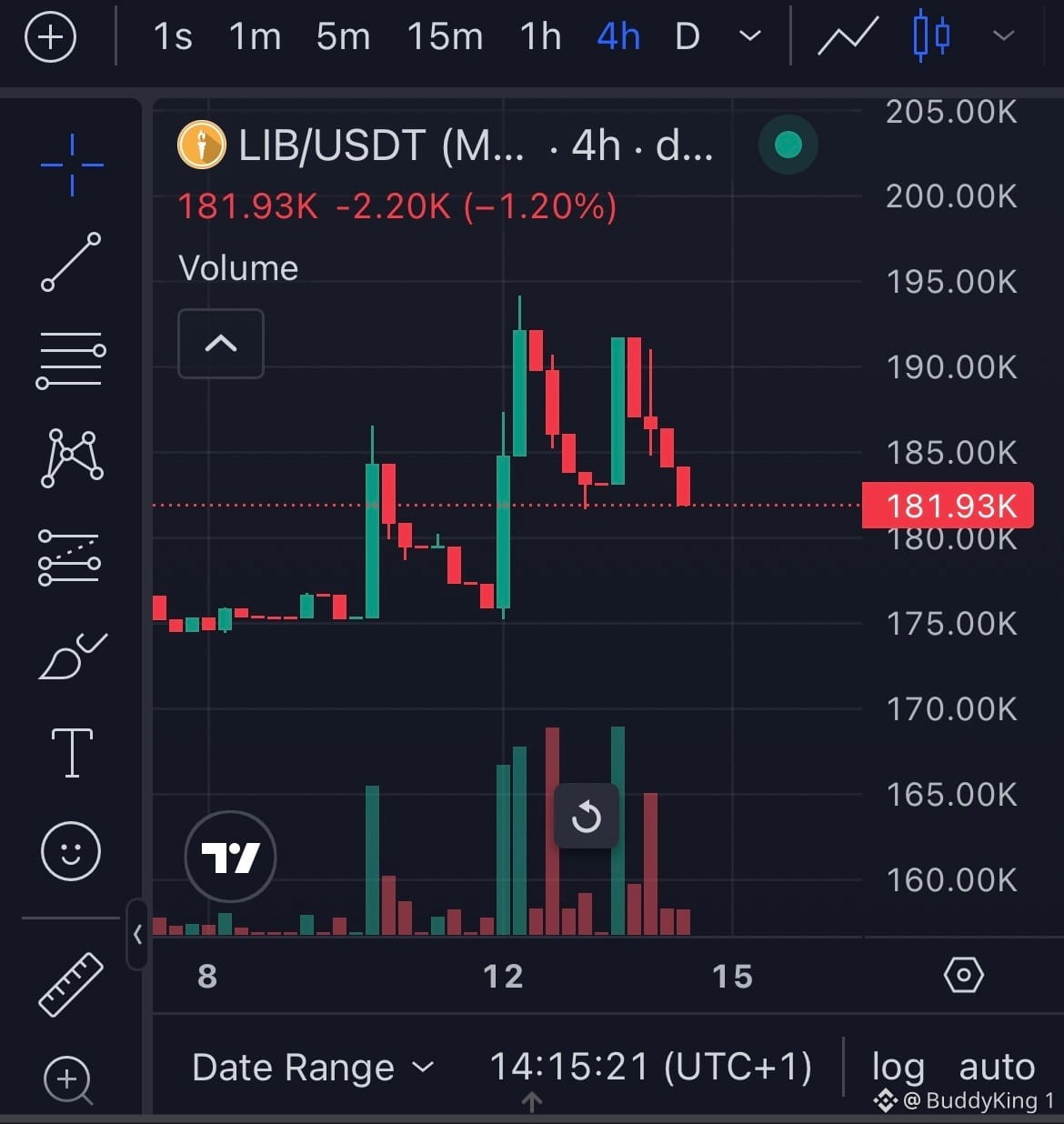
I started looking at @Liberdus from a different angle. Not just as another token to trade, but as a project trying to solve a problem most of us ignore: How much information do we give away just to communicate? Most messaging apps connect your identity to things like a phone number or email. @liberdus takes a different approach. You can create an account without a phone number or email, while messages are encrypted and the network is decentralized. But the part I find interesting as a trader is LIB. It isn't just there to look good on a chart. LIB is used within the Liberdus ecosystem for things like network fees, payments and validator incentives. And the spam problem has an interesting twist too. Unknown senders can be required to pay a small toll before reaching you. That creates an actual economic cost for spam instead of simply asking users to block it. My $LIB trade plan: Bias: Bullish if price holds the current support zone Entry: Wait for a clean support retest + confirmation TP: Previous local high → next resistance SL: Below confirmed support Timeframe: 4H I wouldn't chase a green candle here. I'd rather wait for the market to prove the level first. That's also what interests me about Liberdus: there's a real problem behind the token, not just a ticker. If you're watching $LIB, don't only watch the chart. Look at what the network is actually building. Then decide whether the setup makes sense for you. Explore #Liberdus : $BTC $XRP #BTC Price Analysis# #Macro Insights#

Veröffentlichen
Haftungsausschluss: Enthält Meinungen von Drittanbietern. Keine Beratung. Binance AI wird ohne Gewähr bereitgestellt. Siehe AGB.