


I keep seeing the CLARITY Act discussed like its passage is already a matter of when.
I am not convinced.
The scheduled September 15 vote is getting close but the previous voting week was already cancelled and the latest 630 page amendment still does not appear to have enough Democratic support.
That makes the next few days more important than the headlines suggest.
Senator Cynthia Lummis is now openly blaming Democrats if the bill fails. Her argument is that Democrats already contributed more than 100 proposed changes and that consumers would continue to lack clearer protections and disclosure rules if the legislation stalls.
But political blame does not solve the actual problem.
The bill still needs enough votes.
That is why I find the institutional angle more interesting.
Some large investors have been waiting for clearer regulatory rules before making larger digital asset allocations. If the CLARITY Act eventually becomes law then the biggest impact may not be immediate retail excitement.
It could be the removal of a regulatory barrier for institutions.
But there is another side to this.
The market may already be pricing in some probability of success.
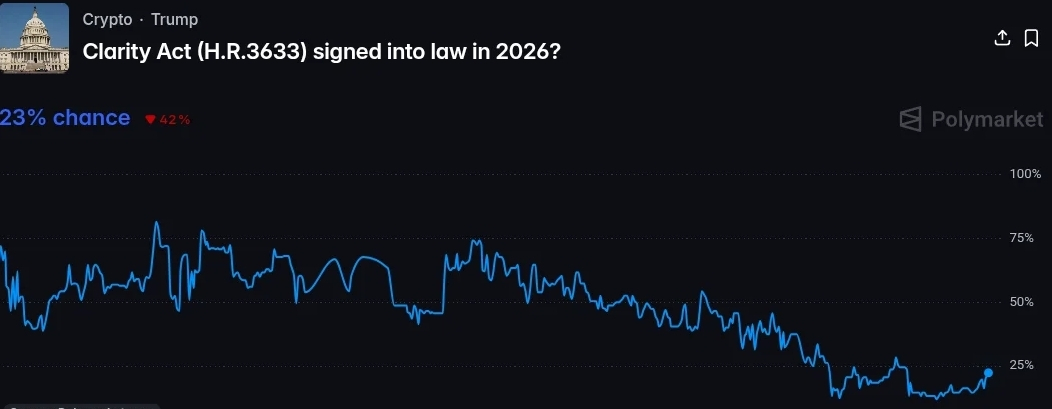
Prediction market odds were around 23% at the time of the report. That is higher than the earlier levels but still nowhere close to suggesting confidence.
President Trump also met with advisers to discuss provisions connected to the legislation while officials continue pushing negotiators to stay at the table.
So there is clearly political pressure behind the bill.
But pressure is not the same as votes.
For crypto markets this distinction matters.
If the bill passes then clearer rules could improve institutional confidence and potentially unlock new capital.
If it fails or gets pushed back again then the market may have to remove some of that expectation from prices.
I would not trade the headline alone.
The real signal is whether lawmakers can actually agree on the final compromise before the procedural process begins.
Right now the CLARITY Act is neither dead nor done.
It is sitting in the most uncomfortable place for markets.
Close enough to create expectations.
But uncertain enough to disappoint them.