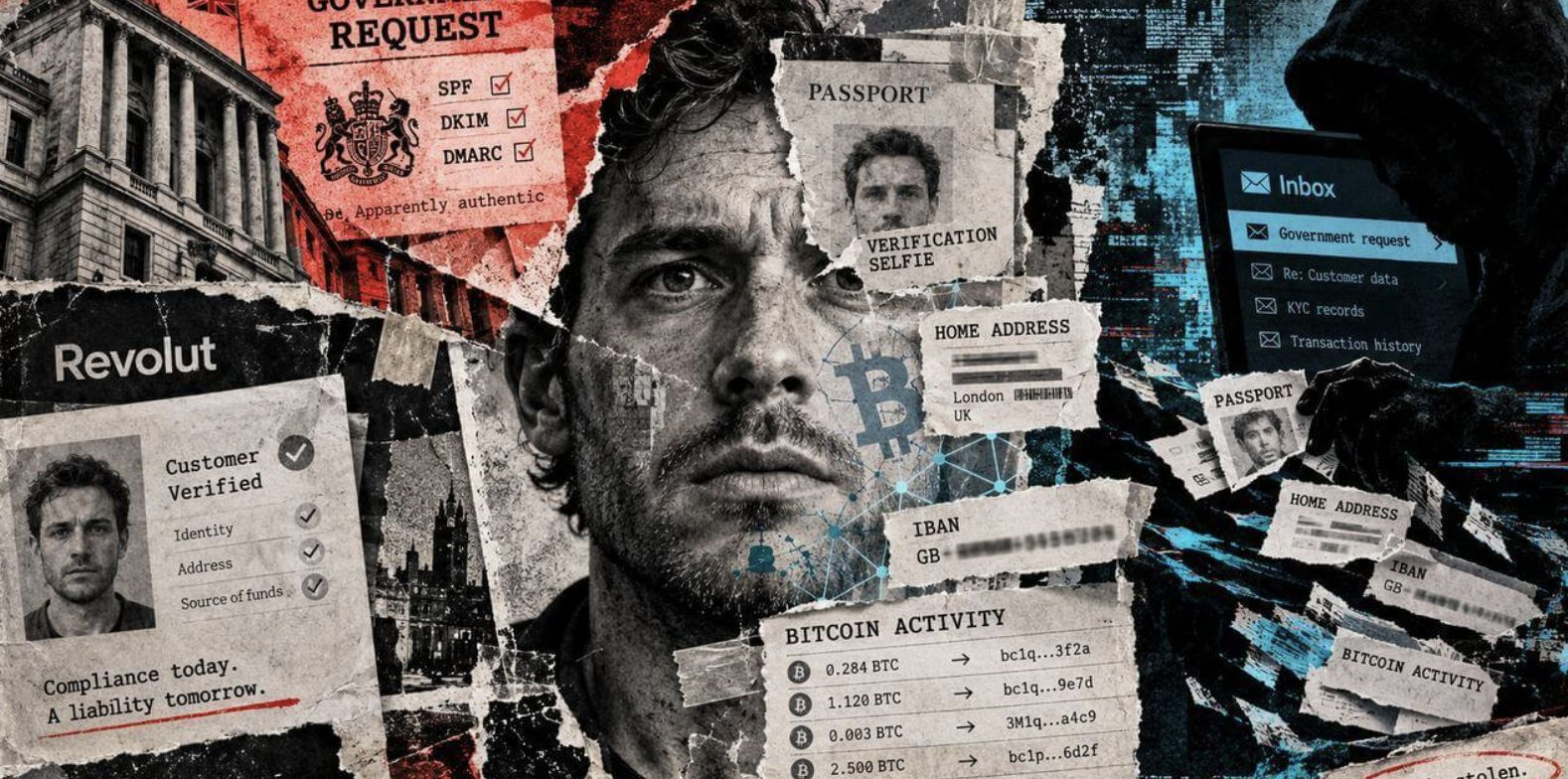
Revolut’s Breach Shows Why Crypto Privacy Can Fail Off-Chain $BTC itself was not compromised. The more serious issue was the bridge between a public blockchain and verified customer identities: Revolut disclosed identity documents, residential details and Bitcoin transaction histories after accepting a fraudulent government data request as legitimate. What failed: 1. The request looked authentic. It came from an unauthorized mailbox inside a real government domain and passed SPF, DKIM and DMARC checks. 2. Revolut released the records. Potentially exposed data included passports or driver’s licenses, verification selfies, addresses, IBANs, account statements and complete transaction histories. 3. Public blockchain data amplified the exposure. Once an attacker can associate a real person with known Bitcoin activity, those transactions may provide starting points for mapping a wider on-chain footprint. No passwords, PINs, private keys or customer funds were reported compromised, and Revolut has not disclosed how many customers were affected. So this was not a conventional crypto hack. It was an identity-layer failure and that distinction matters because blockchain security cannot protect users when the information connecting their real identity to on-chain activity leaks somewhere else. #BTC Price Analysis# #Altcoin Season# #Bitcoin Price Prediction: What is Bitcoins next move?# #Ad #BTC

Veröffentlichen

--
Haftungsausschluss: Enthält Meinungen von Drittanbietern. Keine Beratung. Binance AI wird ohne Gewähr bereitgestellt. Siehe AGB.