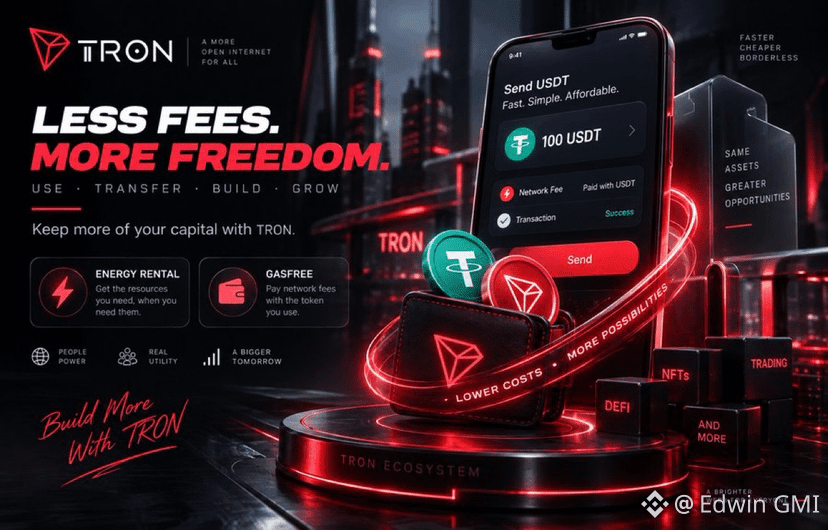
𝗧𝗵𝗲 𝗕𝗲𝘀𝘁 𝗚𝗮𝘀 𝗘𝘅𝗽𝗲𝗿𝗶𝗲𝗻𝗰𝗲 𝗜𝘀 𝗢𝗻𝗲 𝗨𝘀𝗲𝗿𝘀 𝗗𝗼𝗻’𝘁 𝗛𝗮𝘃𝗲 𝗧𝗼 𝗧𝗵𝗶𝗻𝗸 𝗔𝗯𝗼𝘂𝘁.
␥ Think about the last time you used an app.
You probably didn’t stop to calculate how much infrastructure was required before pressing a button.
You simply expected the action to work.
➢ Web3 should move toward the same experience.
Users shouldn’t have to understand Energy, manage separate balances for fees, or think through network mechanics before completing a simple transaction.
The technology can remain complex underneath.
The experience doesn’t have to be.
➜ That’s why solutions like Energy Rental and GasFree on TRON are worth paying attention to.
Energy Rental provides a flexible way to access Energy needed for supported smart-contract interactions, while GasFree is designed to reduce gas-payment friction for supported transactions.
➱ The real story here isn’t just about saving on transaction costs.
It’s about removing unnecessary decisions from the user journey.
Fewer interruptions can mean easier onboarding.
Simpler transactions can mean better retention.
More efficient resource management can mean a better experience for active users and developers.
And when those improvements happen across an entire ecosystem, they can make blockchain feel considerably more practical.
➠ This is the direction Web3 needs.
The goal shouldn’t be to make users better at managing blockchain infrastructure.
The goal should be to build infrastructure that manages more of the complexity for them.
Because mass adoption won’t happen when everyone learns how gas works.
It happens when they can use blockchain without needing to care about it.
Less friction.
More utility.
A better Web3 experience.
@justinsuntron
#TRONEcoStar @TRON DAO
␥ Think about the last time you used an app.
You probably didn’t stop to calculate how much infrastructure was required before pressing a button.
You simply expected the action to work.
➢ Web3 should move toward the same experience.
Users shouldn’t have to understand Energy, manage separate balances for fees, or think through network mechanics before completing a simple transaction.
The technology can remain complex underneath.
The experience doesn’t have to be.
➜ That’s why solutions like Energy Rental and GasFree on TRON are worth paying attention to.
Energy Rental provides a flexible way to access Energy needed for supported smart-contract interactions, while GasFree is designed to reduce gas-payment friction for supported transactions.
➱ The real story here isn’t just about saving on transaction costs.
It’s about removing unnecessary decisions from the user journey.
Fewer interruptions can mean easier onboarding.
Simpler transactions can mean better retention.
More efficient resource management can mean a better experience for active users and developers.
And when those improvements happen across an entire ecosystem, they can make blockchain feel considerably more practical.
➠ This is the direction Web3 needs.
The goal shouldn’t be to make users better at managing blockchain infrastructure.
The goal should be to build infrastructure that manages more of the complexity for them.
Because mass adoption won’t happen when everyone learns how gas works.
It happens when they can use blockchain without needing to care about it.
Less friction.
More utility.
A better Web3 experience.
@justinsuntron
#TRONEcoStar @TRON DAO