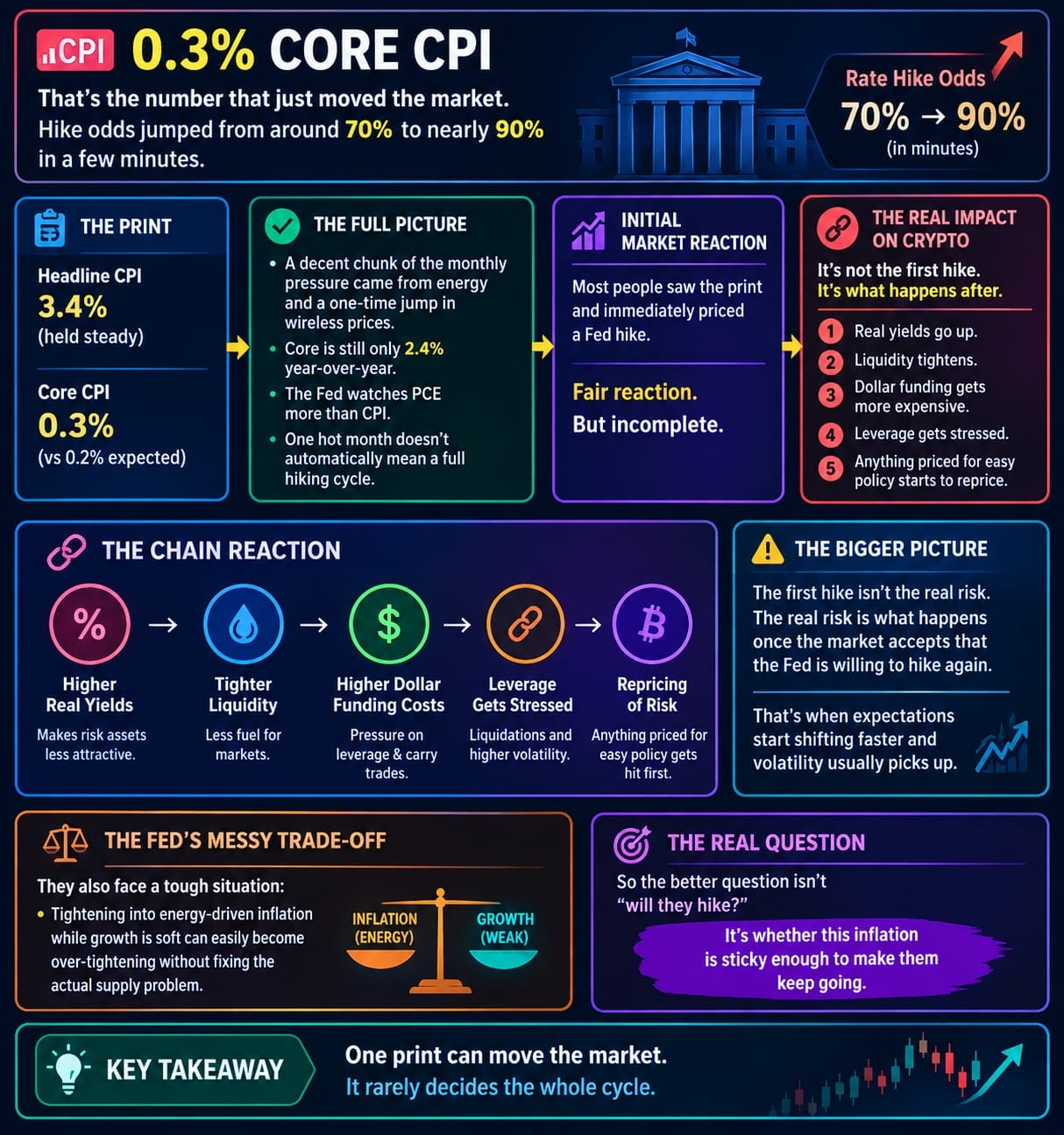
0.3% core CPI.
That’s the number that just moved the market. Hike odds jumped from around 70% to nearly 90% in a few minutes.
Headline held at 3.4%. Core came in hotter than the 0.2% expected. Most people saw the print and immediately priced a Fed hike.
Fair reaction. But incomplete.
A decent chunk of that monthly pressure came from energy and a one-time jump in wireless prices. Core is still only 2.4% year-over-year. And the Fed ultimately watches PCE more than CPI. One hot month doesn’t automatically mean a full hiking cycle.
What actually hits crypto is the chain reaction after the first move:
Real yields go up.
Liquidity tightens.
Dollar funding gets more expensive.
Leverage gets stressed.
Anything that was priced for easy policy starts to reprice.
The first hike isn’t the real risk. The real risk is what happens once the market accepts that the Fed is willing to hike again. That’s when expectations start shifting faster and volatility usually picks up.
They also face a messy trade-off. Tightening into energy-driven inflation while growth is soft can easily become over-tightening without fixing the actual supply problem.
So the better question isn’t “will they hike?”
It’s whether this inflation is sticky enough to make them keep going.
One print can move the market.
It rarely decides the whole cycle.
#cpi
$BTC $SKY $RAYSOL
That’s the number that just moved the market. Hike odds jumped from around 70% to nearly 90% in a few minutes.
Headline held at 3.4%. Core came in hotter than the 0.2% expected. Most people saw the print and immediately priced a Fed hike.
Fair reaction. But incomplete.
A decent chunk of that monthly pressure came from energy and a one-time jump in wireless prices. Core is still only 2.4% year-over-year. And the Fed ultimately watches PCE more than CPI. One hot month doesn’t automatically mean a full hiking cycle.
What actually hits crypto is the chain reaction after the first move:
Real yields go up.
Liquidity tightens.
Dollar funding gets more expensive.
Leverage gets stressed.
Anything that was priced for easy policy starts to reprice.
The first hike isn’t the real risk. The real risk is what happens once the market accepts that the Fed is willing to hike again. That’s when expectations start shifting faster and volatility usually picks up.
They also face a messy trade-off. Tightening into energy-driven inflation while growth is soft can easily become over-tightening without fixing the actual supply problem.
So the better question isn’t “will they hike?”
It’s whether this inflation is sticky enough to make them keep going.
One print can move the market.
It rarely decides the whole cycle.
#cpi
$BTC $SKY $RAYSOL