


The U.S. August CPI has finally given the market a clearer picture ahead of the Federal Reserve meeting next week.
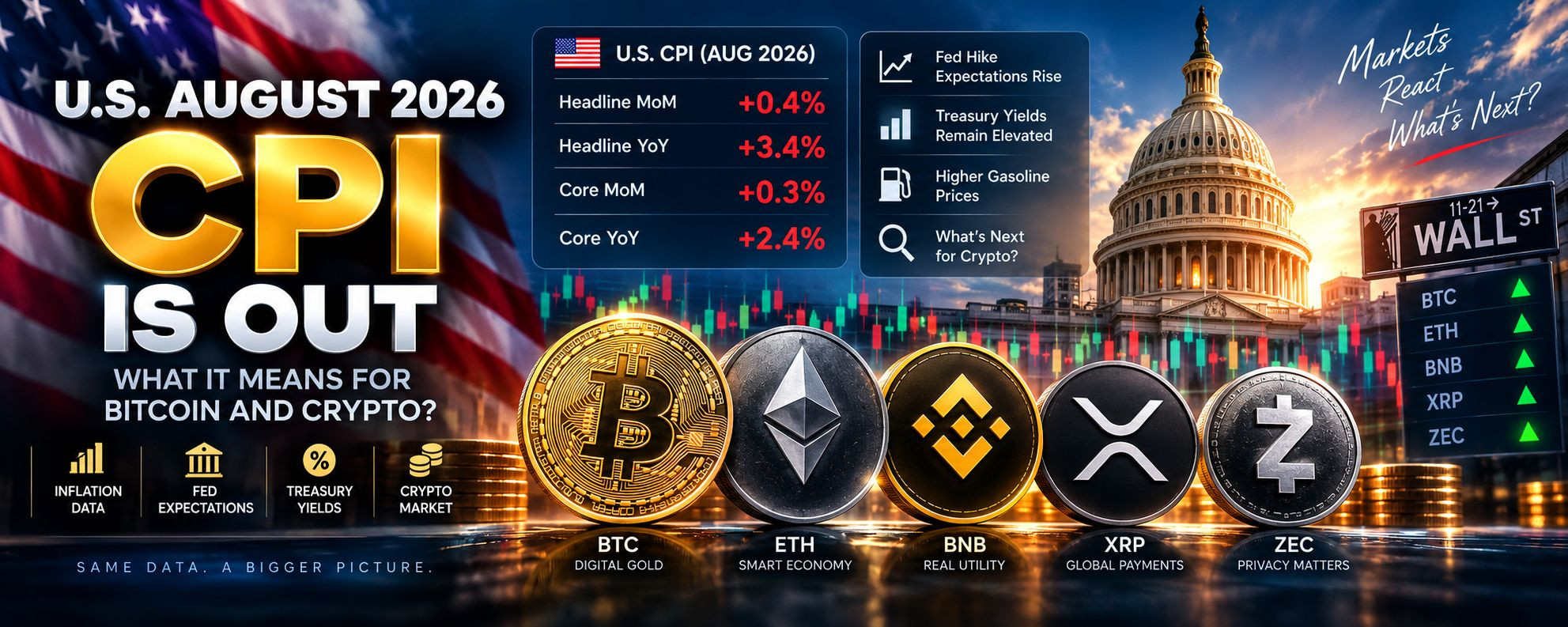
According to the latest CPI report, U.S. consumer prices increased 0.4% month over month in August, up from 0.1% in July. Inflation was 3.4% year over year, while core CPI, which excludes food and energy, increased 0.3% month over month and 2.4% year over year. The monthly headline increase was largely influenced by higher gasoline prices.
So, is this bullish for Bitcoin?
Not clearly.
The headline 3.4% annual inflation rate was broadly in line with expectations, but the 0.3% monthly core reading was stronger than the 0.2% expected by some market forecasts. That matters because the Federal Reserve watches underlying inflation closely when deciding how restrictive monetary policy needs to remain.
The immediate market reaction reflects that concern. Traders increased their expectations for a 25-basis-point Fed rate hike at the September meeting, with estimates moving to roughly 80–85% in major market coverage.
Treasury yields also remain elevated. The U.S. 10-year yield briefly reached around 4.99%, while the 30-year yield moved above 5.4% before easing. Higher yields can make speculative assets such as crypto less attractive because investors have a more competitive return available from relatively lower-risk government debt.
Crypto is already showing some of that pressure.
Bitcoin is trading around the $76K–$77K area, after recently being above $80K. Ethereum is around $2.45K, while BNB is around $713. ZEC has also pulled back sharply in the latest 24-hour period, although it remains significantly higher over the broader recent period.
My market view
I would describe the current setup as cautious rather than outright bearish.
The CPI did not produce a massive upside inflation surprise because headline inflation matched expectations. But it also did not give crypto the clean disinflationary signal bulls would have wanted.
For Bitcoin, the next important question is whether BTC can stabilize after the CPI reaction and whether Treasury yields begin cooling.
For altcoins, I would be even more careful. When yields rise and Bitcoin loses momentum, higher-beta altcoins can experience larger moves in both directions. A sustainable altcoin rally would be more convincing if Bitcoin stabilizes first and liquidity conditions improve.
There is also another important macro factor: oil prices and geopolitical tensions remain elevated. Brent crude recently traded above $100, adding another inflation risk that the Fed cannot simply ignore.
Bottom line: I would not chase a bullish crypto move solely because the CPI headline came in at 3.4%. The data is mixed. Headline inflation was in line with expectations, but core inflation remains above the Fed's 2% target and rate-hike expectations have increased.
If BTC can absorb the higher-yield environment and reclaim strength, the crypto outlook can improve. If yields continue climbing and BTC keeps losing support, altcoins could remain under pressure.
No guaranteed target, no certainty the next signal should come from BTC price action + Treasury yields + Fed expectations, not CPI alone.


