

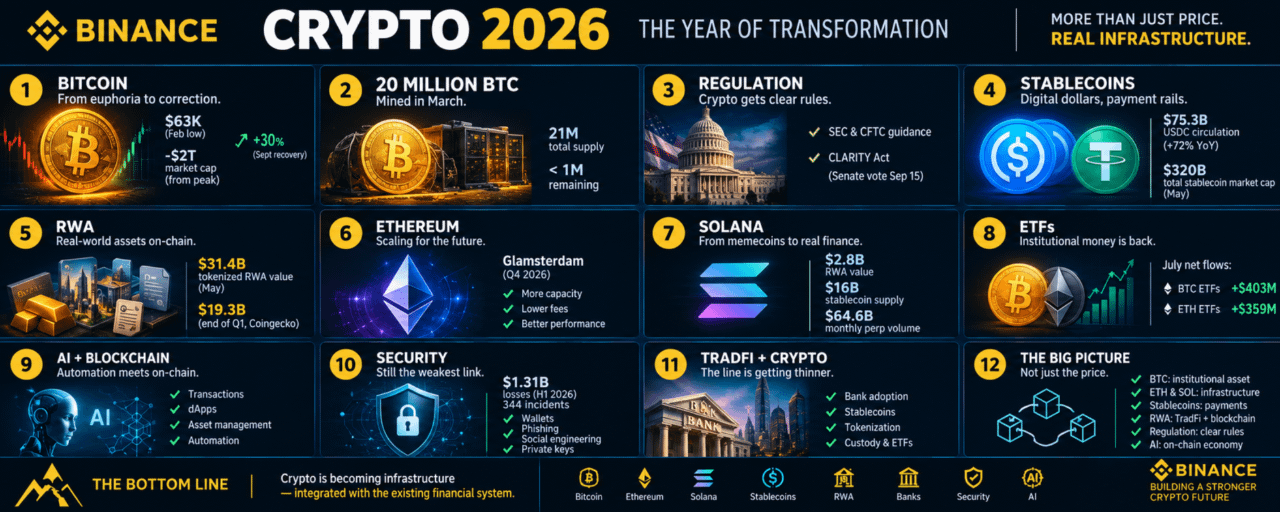

2026 is not over yet, but we can already say one thing:
Crypto is no longer just a story about Bitcoin's price.
This year, the biggest changes have been happening in regulation, stablecoins, real-world asset tokenization, institutional adoption, and blockchain infrastructure itself.
Here are the most important developments so far 👇
━━━━━━━━━━━━━━━━━━
₿ 1. BITCOIN - FROM EUPHORIA TO A BRUTAL CORRECTION
The beginning of the year brought enormous pressure to the market.
Bitcoin fell to approximately $63K in February, while the entire crypto market lost around $2 trillion in value from its previous peak. ETF outflows, macroeconomic uncertainty, interest rates, and fears of tighter monetary policy showed just how closely Bitcoin is now connected to global financial markets.
But the market did not give up.
During the summer, Bitcoin once again showed strength, and in early September it recorded a strong recovery of around 30%, moving back above key technical averages.
📌 Lesson:
Bitcoin in 2026 is increasingly reacting to the FED, bonds, liquidity, geopolitics, and institutional flows - much like a serious global financial asset.
━━━━━━━━━━━━━━━━━━
⛏️ 2. 20 MILLION BITCOIN HAVE NOW BEEN MINED
One of the most symbolically important moments of the year:
Bitcoin reached the 20-millionth mined BTC in March.
With a maximum supply of 21 million, less than one million BTC remain to be mined.
This further highlights what makes Bitcoin unique:
limited supply + predictable monetary policy.
━━━━━━━━━━━━━━━━━━
🏛️ 3. REGULATION - CRYPTO IS MOVING OUT OF THE GREY ZONE
One of the biggest themes of 2026 has been the attempt by the U.S. to finally define:
What is a crypto asset?
What is a security?
What is a commodity?
Who regulates which token?
In March, the SEC and CFTC took an important step through new guidance on how U.S. securities laws apply to certain crypto assets and transactions.
And in August, the SEC proposed “Regulation Crypto Assets,” a new framework for certain crypto investment contracts, including specific exemptions for capital raising.
At the same time, the CLARITY Act continues to push toward a broader market-structure framework.
📌 Right now, the CLARITY Act is one of the biggest regulatory stories in the crypto industry, with the U.S. Senate expected to take an important procedural step on September 15, 2026.
Crypto is no longer simply trying to avoid regulation - the industry is trying to get clear rules under which it can grow.
━━━━━━━━━━━━━━━━━━
💵 4. STABLECOINS ARE BECOMING FINANCIAL INFRASTRUCTURE
If Bitcoin is digital gold, stablecoins increasingly look like:
digital dollars + payment rails + settlement layers.
USDC and other stablecoins continue to grow, while banks, payment companies, and financial institutions are becoming increasingly serious about the sector.
Circle reported earlier this year that USDC circulation had increased 72% year-over-year to $75.3B, alongside strong growth in stablecoin usage.
In May, total stablecoin market capitalization reached approximately $320B.
And now even traditional banks are exploring their own stablecoin models.
That is a huge signal:
Banks are no longer simply looking at how to compete with the crypto industry - they are increasingly trying to use its infrastructure.
━━━━━━━━━━━━━━━━━━
🌎 5. RWA - REAL-WORLD ASSETS ARE MOVING ON-CHAIN
This may be the most important story that the average crypto user is still not paying enough attention to.
RWA = Real World Assets
This means tokenizing:
🏦 government bonds
🥇 gold
📈 stocks
🏢 funds
💳 credit
💰 other traditional financial instruments.
Binance Research estimated in May that the visible value of tokenized RWAs had already reached around $31.4B, compared with approximately $21.5B at the beginning of 2026.
CoinGecko estimated the tokenized RWA market at around $19.3B at the end of Q1, more than tripling from 2025.
Different sources use different definitions of the RWA market, but the direction is the same:
Traditional financial assets are slowly getting a blockchain version.
━━━━━━━━━━━━━━━━━━
⚙️ 6. ETHEREUM - THE FOCUS IS ON SCALE
Ethereum continues developing infrastructure designed to support a much larger number of transactions.
The next major upgrade is Glamsterdam, currently in testing and expected on mainnet in Q4 2026.
The focus is on:
⚡ greater capacity
⚡ parallelization
⚡ more efficient processing
⚡ increased blob/data capacity
⚡ lower transaction costs
⚡ a more sustainable blockchain in the long term.
In other words:
Ethereum is trying to become an even stronger base layer for applications, stablecoins, DeFi, and tokenization.
━━━━━━━━━━━━━━━━━━
🟣 7. SOLANA - FROM MEMECOINS TOWARD FINANCIAL INFRASTRUCTURE
Solana has shown in 2026 that it is no longer just a story about fast chains and memecoins.
In May, Solana had:
• more than $2.8B in RWA value
• over $16B in stablecoin supply
• around $64.6B in monthly perpetual volume
• more than $1B in AUM across U.S. spot Solana ETFs.
The growth of tokenized stocks and institutional products is particularly interesting.
📌 The trend is clear:
Solana is trying to become infrastructure for trading, payments, stablecoins, and tokenized assets.
━━━━━━━━━━━━━━━━━━
📊 8. ETFs - INSTITUTIONAL MONEY HAS NOT DISAPPEARED
The ETF market has gone through major inflows and outflows throughout the year.
Bitcoin ETFs experienced significant outflows in May and June, but returned to positive net flows in July.
In July:
₿ BTC ETFs: approximately +$403M
♦ ETH ETFs: approximately +$359M
Ethereum showed particularly strong relative inflows compared with its market capitalization.
This demonstrates something important:
Institutional capital has not disappeared - it has become much more selective.
━━━━━━━━━━━━━━━━━━
🤖 9. AI + BLOCKCHAIN
2026 is bringing two major technologies even closer together:
Artificial Intelligence + Blockchain
AI agents are increasingly gaining the ability to:
🤖 execute transactions
🤖 interact with blockchain applications
🤖 manage digital assets
🤖 automate trading and financial processes
🤖 interact with on-chain infrastructure.
But there is an important lesson:
AI is not an automatic profit machine.
Progress in AI infrastructure is real, but evidence that AI strategies can consistently generate sustainable risk-adjusted profits remains much weaker than the marketing claims.
━━━━━━━━━━━━━━━━━━
🔐 10. SECURITY REMAINS THE WEAKEST LINK
While infrastructure continues to improve, security remains a massive problem.
During the first half of 2026, Web3 suffered more than $1.31B in losses across 344 incidents, according to CertiK.
The biggest problems were not always sophisticated smart-contract hacks.
A significant portion of losses came through:
⚠️ wallet compromises
⚠️ phishing
⚠️ social engineering
⚠️ private-key issues
⚠️ infrastructure attacks.
And in early September, Liquid Network reported an incident in which approximately 4,000 BTC, worth around $320M at the time, were withdrawn from a federation wallet.
📌 The most important lesson:
In crypto, it is not enough to ask:
“How much can this go up?”
You also need to ask:
“Who controls the keys?”
“How is the protocol secured?”
“What happens if the infrastructure fails?”
━━━━━━━━━━━━━━━━━━
🏦 11. TRADITIONAL FINANCE IS INCREASINGLY MERGING WITH CRYPTO
Another major trend of 2026:
Banks are no longer simply standing on the sidelines.
In September, Standard Chartered launched institutional spot crypto trading in the UAE for Bitcoin and Ether - becoming the first global systemically important banking giant to do so in the country.
This is part of a much broader trend:
banks + stablecoins + tokenization + custody + ETFs + blockchain settlement.
The line between “TradFi” and “Crypto” is becoming increasingly thin.
━━━━━━━━━━━━━━━━━━
🧠 12. THE BIGGEST CHANGE OF 2026 IS NOT THE PRICE
If we put all of this together, we reach an interesting conclusion.
2026 is not simply the year of:
❌ Bitcoin pumps
❌ altseasons
❌ memecoin mania
❌ bull/bear debates.
This is a year of infrastructure being built.
Bitcoin is increasingly becoming an institutional asset.
Ethereum and Solana are trying to become financial infrastructure.
Stablecoins are becoming payment infrastructure.
RWA tokenization is connecting TradFi with blockchain.
Regulators are trying to define the rules.
Banks are entering digital assets.
And AI is beginning to connect automation with the on-chain economy.
━━━━━━━━━━━━━━━━━━
🎯 CONCLUSION
If I had to describe crypto in 2026 in one sentence:
“Crypto is gradually transforming from an alternative financial system into infrastructure that is becoming integrated with the existing financial system.”
And perhaps that is the biggest story of the year.
Because the long-term victory of blockchain may not be the moment when Bitcoin reaches a certain price.
It may be the moment when people use blockchain every day -
without even thinking about the fact that they are using it. 🌐
━━━━━━━━━━━━━━━━━━
📚 EDUCATIONAL NOTE
Crypto remains a highly risky and volatile market.
Price of a token ≠ quality of the blockchain.
Large market cap ≠ real utility.
ETF inflows ≠ guaranteed growth.
And strong technology ≠ automatically a good investment.
Always analyze: technology + tokenomics + liquidity + adoption + regulation + security + macro.
#Bitcoin #Ethereum #Solana #Crypto #Blockchain #Web3 #Stablecoins #RWA #DeFi #Tokenization #Crypto2026 #Binance