What Is Omniston and How It Improves STON.fi Swaps
In decentralized finance, liquidity is fragmented across pools, DEXs, and liquidity providers. This can make finding good swap execution difficult. Omniston addresses this challenge as the liquidity aggregation and execution layer behind STON.fi swaps.
Instead of limiting a trade to one pool, Omniston can request competing quotes, compare routes across connected sources, and select the strongest valid execution. This gives users broader access to liquidity while keeping STON.fi simple.
How Omniston Works
A swap begins when a user selects the assets and amount. Connected liquidity sources and RFQ resolvers return routes or quotes. Omniston compares those options and identifies the strongest valid path. After the user accepts the quote, the selected route is built into the wallet transaction.
The route need not be direct. Token A to Token B may be routed through TON when a multi hop path offers better execution.
Why Aggregation Matters
A single DEX may miss a deeper pool, a better multi hop route, or a competitive resolver quote. Omniston does not create liquidity. It makes more existing liquidity reachable and comparable through the STON.fi interface.
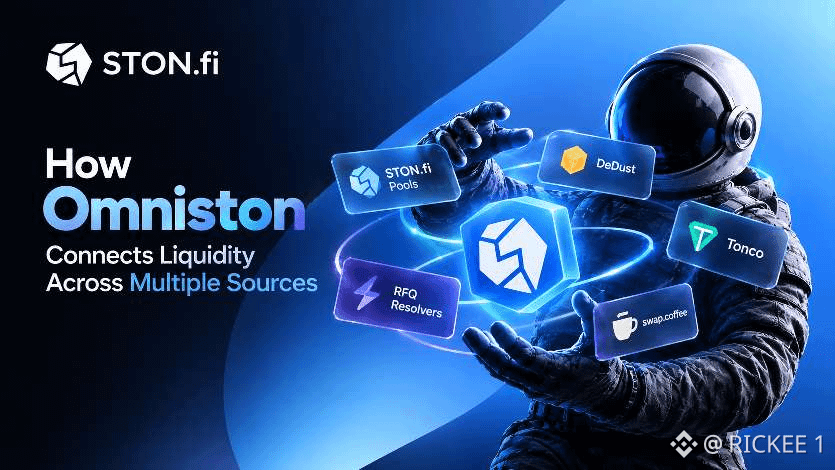
A swap can use STON.fi pools, connected TON DEXs such as DeDust, Tonco and swap.coffee or resolver liquidity. More competition can give larger trades access to deeper liquidity and potentially lower price impact.
Benefits and Limits
Omniston provides broader liquidity access, smarter route discovery, competing quotes, and a simpler execution flow. A stronger quote may replace an earlier quote while the request remains active.
The Bigger Picture
Omniston helps to turn fragmented liquidity into a more connected market. Instead of manually checking multiple pools and DEXs, users can access intelligent routing through one @ston_fi experience.
Connected liquidity creates more possibilities. Smarter routing helps those possibilities compete for each swap.
$BTC
In decentralized finance, liquidity is fragmented across pools, DEXs, and liquidity providers. This can make finding good swap execution difficult. Omniston addresses this challenge as the liquidity aggregation and execution layer behind STON.fi swaps.
Instead of limiting a trade to one pool, Omniston can request competing quotes, compare routes across connected sources, and select the strongest valid execution. This gives users broader access to liquidity while keeping STON.fi simple.
How Omniston Works
A swap begins when a user selects the assets and amount. Connected liquidity sources and RFQ resolvers return routes or quotes. Omniston compares those options and identifies the strongest valid path. After the user accepts the quote, the selected route is built into the wallet transaction.
The route need not be direct. Token A to Token B may be routed through TON when a multi hop path offers better execution.
Why Aggregation Matters
A single DEX may miss a deeper pool, a better multi hop route, or a competitive resolver quote. Omniston does not create liquidity. It makes more existing liquidity reachable and comparable through the STON.fi interface.
A swap can use STON.fi pools, connected TON DEXs such as DeDust, Tonco and swap.coffee or resolver liquidity. More competition can give larger trades access to deeper liquidity and potentially lower price impact.
Benefits and Limits
Omniston provides broader liquidity access, smarter route discovery, competing quotes, and a simpler execution flow. A stronger quote may replace an earlier quote while the request remains active.
The Bigger Picture
Omniston helps to turn fragmented liquidity into a more connected market. Instead of manually checking multiple pools and DEXs, users can access intelligent routing through one @ston_fi experience.
Connected liquidity creates more possibilities. Smarter routing helps those possibilities compete for each swap.
$BTC