##🚨 Markets may be heading into a major turning point.
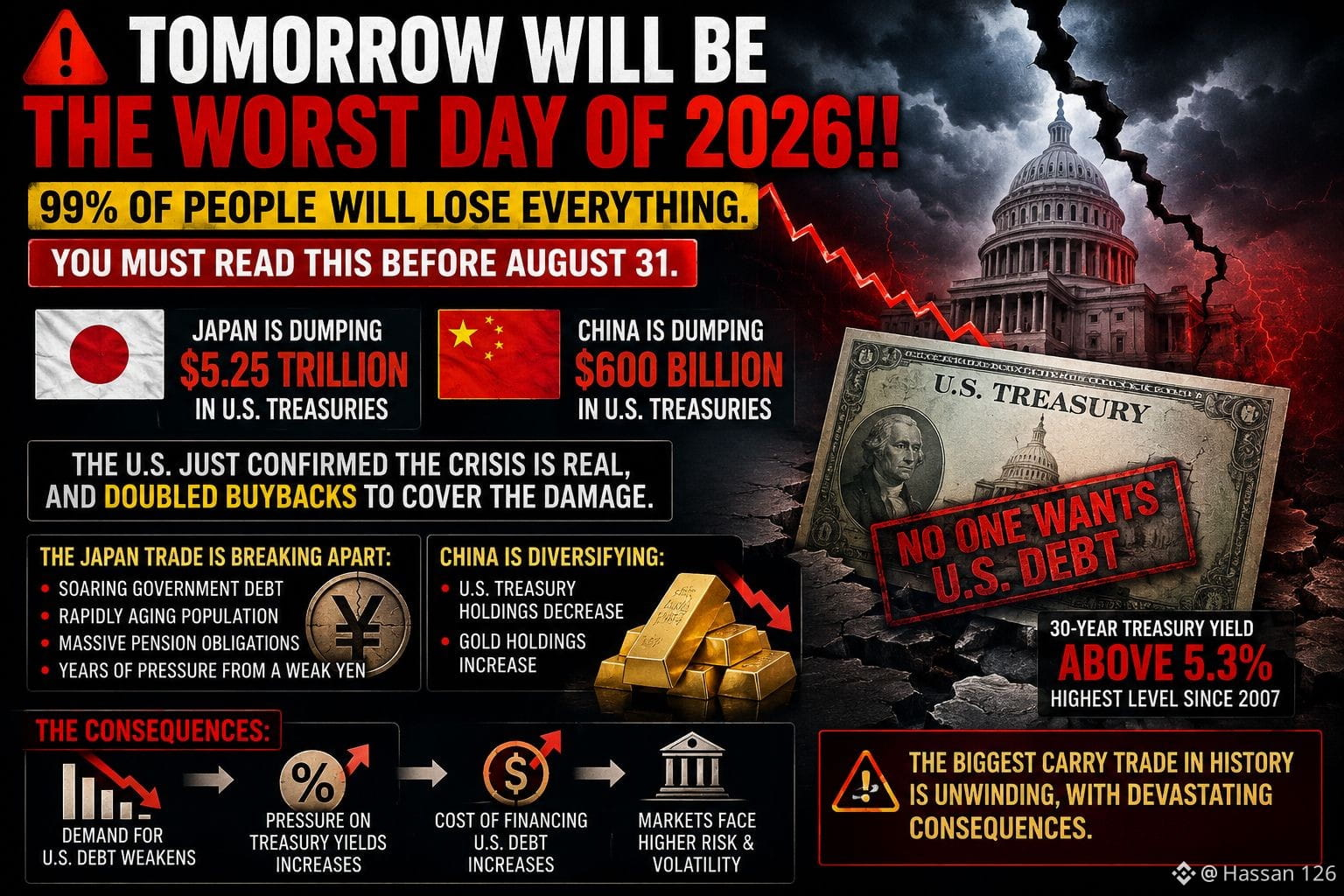
Japan and China are reducing their exposure to U.S. Treasuries, and that could have much bigger consequences for global markets than most people realize.
For decades, Japan’s near-zero interest rates helped make the yen one of the world’s cheapest funding currencies. Investors borrowed yen and moved that capital into U.S. bonds, stocks, real estate, crypto, and other markets.
Now, that trade is under pressure.
Japan is dealing with: → Higher interest rates
→ A weak yen
→ Heavy government debt
→ An aging population
→ Growing pension costs
Meanwhile, China has been steadily reducing its U.S. Treasury holdings while increasing its gold reserves.
That combination matters.
If major foreign buyers demand fewer U.S. Treasuries, the market may need higher yields to attract other investors. And higher yields can increase borrowing costs across the U.S. economy while putting additional pressure on heavily indebted governments and companies.
The bigger concern is the potential unwinding of the massive yen carry trade.
If Japanese assets become more attractive, capital that previously flowed into global markets could move back toward Japan.
That doesn't automatically mean markets will collapse—but it does mean the environment could become much more volatile.
⚠️ The important question isn't whether one specific day will be “the worst day of 2026.”
It's whether we're entering a period where the flows that supported global markets for years begin to reverse.
That's the part investors should be watching closely.
I've spent more than $NVDAB 12 years studying markets, and these shifts are exactly the kind of signals I pay attention to.
2026–2027 could be a very different market environment.
Stay alert. 📉
Japan and China are reducing their exposure to U.S. Treasuries, and that could have much bigger consequences for global markets than most people realize.
For decades, Japan’s near-zero interest rates helped make the yen one of the world’s cheapest funding currencies. Investors borrowed yen and moved that capital into U.S. bonds, stocks, real estate, crypto, and other markets.
Now, that trade is under pressure.
Japan is dealing with: → Higher interest rates
→ A weak yen
→ Heavy government debt
→ An aging population
→ Growing pension costs
Meanwhile, China has been steadily reducing its U.S. Treasury holdings while increasing its gold reserves.
That combination matters.
If major foreign buyers demand fewer U.S. Treasuries, the market may need higher yields to attract other investors. And higher yields can increase borrowing costs across the U.S. economy while putting additional pressure on heavily indebted governments and companies.
The bigger concern is the potential unwinding of the massive yen carry trade.
If Japanese assets become more attractive, capital that previously flowed into global markets could move back toward Japan.
That doesn't automatically mean markets will collapse—but it does mean the environment could become much more volatile.
⚠️ The important question isn't whether one specific day will be “the worst day of 2026.”
It's whether we're entering a period where the flows that supported global markets for years begin to reverse.
That's the part investors should be watching closely.
I've spent more than $NVDAB 12 years studying markets, and these shifts are exactly the kind of signals I pay attention to.
2026–2027 could be a very different market environment.
Stay alert. 📉