
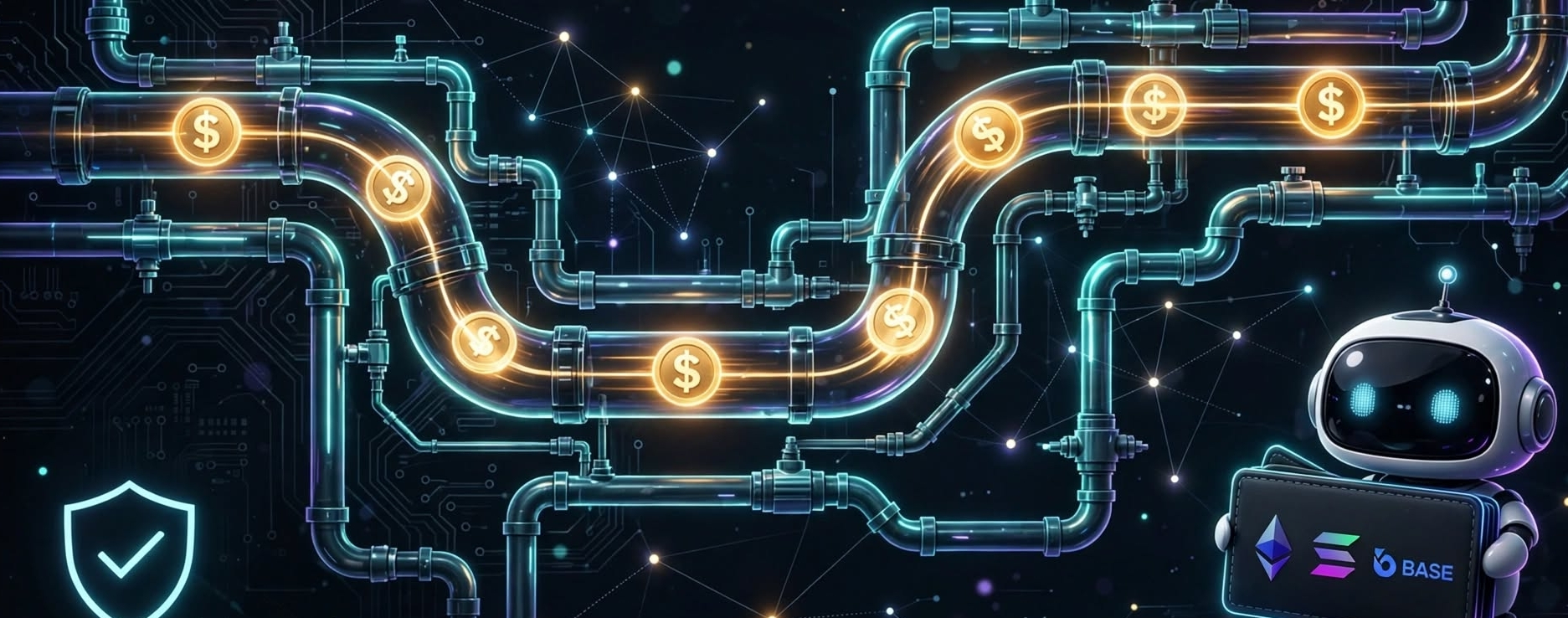

The biggest shift in crypto in 2026 isn't a coin. It's plumbing.
For years crypto tried to be exciting. Laser eyes, moon memes, disruption. Now it's doing something way more powerful: becoming boring.
And boring is exactly what makes this mind-blowing.
Here are 3 trends quietly rewiring money right now — while everyone else is watching the Bitcoin price:
1. Money is learning how to be private again.
Remember when every crypto transaction was public forever? Anyone could look up your wallet and see everything you bought?
That era is ending.
Not because of cypherpunks in hoodies. Because your CFO doesn't want his competitor to see him moving treasury. Because your mom doesn't want her rent payment broadcast to the world.
Google searches for "financial privacy" have surged since 2024. The Ethereum Foundation built a dedicated privacy team. Paxos and Aleo launched a private compliant stablecoin. Every major report from a16z to Grayscale now lists privacy as top-tier infrastructure.
Think of it like this: The early internet had no HTTPS. Everything was readable. Then encryption became the default layer. Privacy in crypto is making the same jump — from ideology to infrastructure. Soon, private transfers will be a standard wallet button, not a sketchy add-on.
2. Your AI will get a wallet before you get a raise.
This is the sci-fi one.
Gartner projects $15 trillion in B2B spending will be intermediated by AI agents by 2028. By 2030, 20% of all money moves could be programmable — agents paying agents for compute, data, and services without a human clicking "confirm".
Imagine: Your personal AI finds a cheaper flight at 3am, swaps your USDC on Base to USDT on Solana because that's what the airline takes, and pays. No forms. No browser.
An AI portfolio manager rebalancing across chains at 3am. A treasury bot moving funds based on yield. They won't use apps. They'll call APIs.
We used to have humans using tools to move money. Now we're building tools that move money themselves. Your money will literally have a robot assistant.
3. There are now 100 different kinds of "one dollar."
Stablecoins crossed $326 billion last year. Citi thinks $3.7 trillion by 2030. But here's the twist nobody talks about:
USDT on Ethereum is NOT the same as USDT on Tron. USDC on Solana is NOT USDC on Base. Add PYUSD, DAI, USD1, plus 30+ regional ones.
We solved digital dollars, then created 100 incompatible versions of a dollar.
So the most important business of the next two years isn't making another stablecoin. It's building the invisible plumbing that makes them all swappable instantly — the router that finds the best path across private, DEX, and hybrid routes.
Same with real-world assets — BlackRock tokenized treasuries on one chain need to swap for stablecoins on another. The swap layer becomes the connective tissue.
The punchline
The World Economic Forum said it in January: blockchain is moving from experimentation into core financial infrastructure.
The winning crypto product of 2026 won't have the loudest meme. It will have the best uptime. The best SLA. The thing that works at 3am when no one is watching.
For 8 years we asked: "Which chain will win? Ethereum vs Solana?"
The new question is: "Who cares which chain? Just give me the best route."
The chain becomes invisible. The route becomes the product.
Revolution was fun. Plumbing pays.