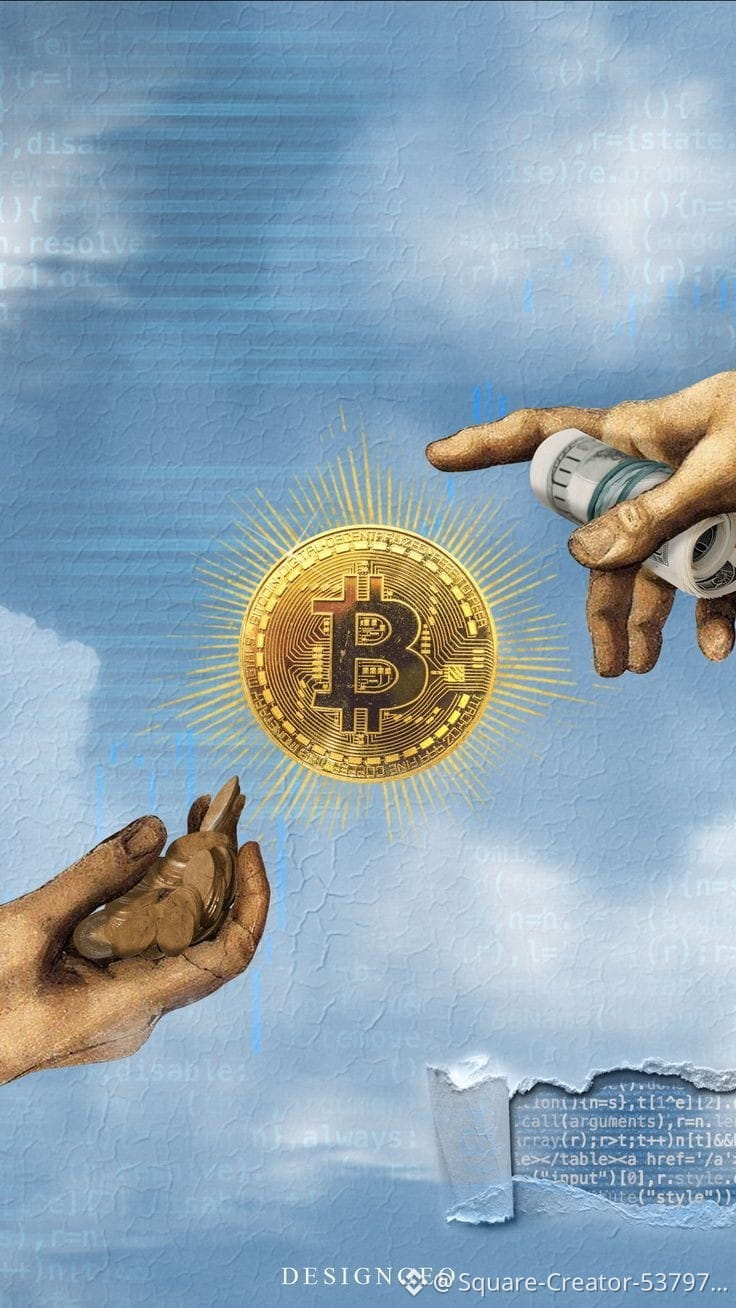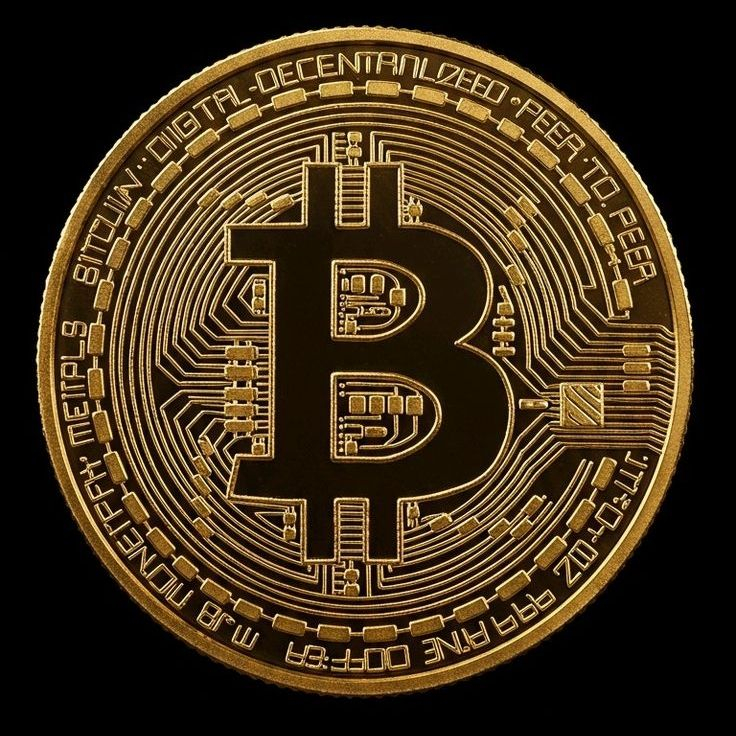
welcome ✨$BTC
Bitcoin : The Digital Financial Revolution and Modern Gold
Since its inception in 2009 by the pseudonymous creator Satoshi Nakamoto, Bitcoin ($BTC ) has redefined the fundamental concepts of money and global finance. What began as an obscure software experiment has grown into the world’s largest digital asset and one of the most influential investments of the twenty-first century.
Technological Innovation and Core Mechanics
Bitcoin operates on Blockchain technology—a decentralized, transparent ledger that records every transaction across a peer-to-peer network without relying on intermediaries like banks or governments. Network security and transaction validation are maintained through a computationally intensive process known as Proof-of-Work (PoW) mining.
The defining feature of Bitcoin is its programmatic scarcity: its protocol caps the total supply at 21 million coins. To control issuance, the network undergoes an automated event called Halving roughly every four years, which cuts the mining reward in half and steadily reduces the rate at which new bitcoins enter circulation.
Why BTC Is Called "Digital Gold"
Absolute Scarcity: A fixed supply limit positions Bitcoin as a hedge against fiat currency inflation and purchasing power loss.
Decentralization & Sovereignty: No central authority or government can alter the monetary policy, freeze accounts, or stop network transactions.
Portability & Cross-Border Efficiency: Substantial value can be transferred across international borders in minutes with minimal friction.
Key Challenges
Despite widespread institutional adoption and regulatory milestones like spot ETF approvals, Bitcoin continues to face key hurdles:
Market Volatility: Prices remain subject to sharp fluctuations driven by market sentiment and macroeconomic shifts.
Regulatory Uncertainty: Global regulations vary significantly, ranging from integration and clear frameworks to strict restrictions.
Environmental Concerns: PoW mining requires substantial energy consumption,
Bitcoin : The Digital Financial Revolution and Modern Gold
Since its inception in 2009 by the pseudonymous creator Satoshi Nakamoto, Bitcoin ($BTC ) has redefined the fundamental concepts of money and global finance. What began as an obscure software experiment has grown into the world’s largest digital asset and one of the most influential investments of the twenty-first century.
Technological Innovation and Core Mechanics
Bitcoin operates on Blockchain technology—a decentralized, transparent ledger that records every transaction across a peer-to-peer network without relying on intermediaries like banks or governments. Network security and transaction validation are maintained through a computationally intensive process known as Proof-of-Work (PoW) mining.
The defining feature of Bitcoin is its programmatic scarcity: its protocol caps the total supply at 21 million coins. To control issuance, the network undergoes an automated event called Halving roughly every four years, which cuts the mining reward in half and steadily reduces the rate at which new bitcoins enter circulation.
Why BTC Is Called "Digital Gold"
Absolute Scarcity: A fixed supply limit positions Bitcoin as a hedge against fiat currency inflation and purchasing power loss.
Decentralization & Sovereignty: No central authority or government can alter the monetary policy, freeze accounts, or stop network transactions.
Portability & Cross-Border Efficiency: Substantial value can be transferred across international borders in minutes with minimal friction.
Key Challenges
Despite widespread institutional adoption and regulatory milestones like spot ETF approvals, Bitcoin continues to face key hurdles:
Market Volatility: Prices remain subject to sharp fluctuations driven by market sentiment and macroeconomic shifts.
Regulatory Uncertainty: Global regulations vary significantly, ranging from integration and clear frameworks to strict restrictions.
Environmental Concerns: PoW mining requires substantial energy consumption,