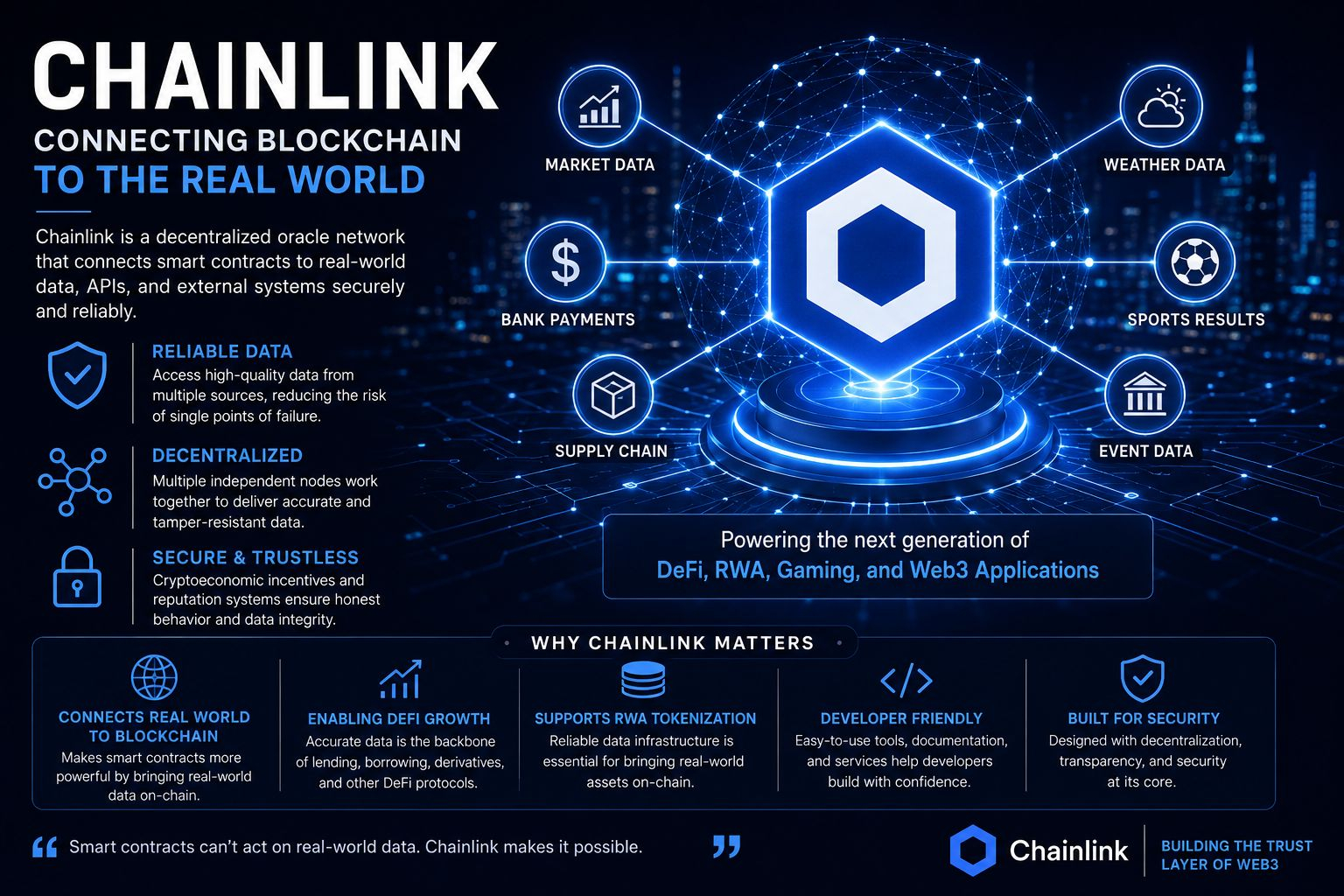
Was nützt ein Smart Contract, wenn er nicht zuverlässig auf Informationen außerhalb der Blockchain zugreifen kann?
Diese Frage steht im Mittelpunkt einer der wichtigsten Herausforderungen in Web3. Blockchains sind hervorragend darin, Informationen zu verifizieren, die bereits On-Chain existieren. Viele Anwendungen benötigen jedoch externe Daten. Preise, Zinssätze, Wetterbedingungen, Sportergebnisse, finanzielle Ereignisse und andere Informationen aus der realen Welt können nicht einfach von selbst in eine Blockchain „hinein“ erscheinen.
Hier wird Chainlink besonders interessant.
Chainlink ist eine dezentrale Oracle-Infrastruktur, die Blockchain-basierte Smart Contracts mit externen Daten und Systemen verbindet. Anstatt zu verlangen, dass ein Smart Contract von einem zentralisierten Datenanbieter abhängt, können dezentrale Oracle-Netzwerke dabei helfen, Informationen aus mehreren Quellen bereitzustellen.
Die Bedeutung davon wird besonders deutlich, wenn man sich dezentrale Finanzsysteme (DeFi) ansieht. Kreditmärkte, Derivate, Stablecoins und andere Finanzanwendungen stützen sich häufig auf verlässliche Marktdaten. Wenn eine Anwendung einen falschen Preis erhält, können die Folgen erheblich sein. Zuverlässige Oracle-Infrastruktur wird daher Teil des Sicherheitsmodells der Anwendung selbst.
Ein Konzept, das ich besonders wichtig finde, ist die Dezentralisierung auf der Datenebene. Es reicht nicht aus, dass die Blockchain dezentral ist, wenn ein entscheidender Informationsbaustein, der in das System gelangt, aus einer einzigen zentralisierten Quelle kommt. Oracle-Netzwerke versuchen diese Abhängigkeit zu verringern, indem sie mehrere unabhängige Datenanbieter und Nodes nutzen.
Auch die Rolle von Chainlink wächst über einfache Preisfeeds hinaus. Seine Infrastruktur wurde so entwickelt, dass sie verschiedene Arten der Blockchain-Konnektivität sowie die Kommunikation zwischen On-Chain-Smart-Contracts und externen Systemen unterstützt. Das könnte zunehmend relevant werden, da Tokenisierung traditionelle Finanzassets in Blockchain-Umgebungen bringt.
Das Wachstum von Real-World Assets (RWAs) macht das besonders interessant. Tokenisierte Finanzprodukte benötigen möglicherweise verlässliche Informationen zu Bewertungen, Zinssätzen, Reserven und anderen Bedingungen außerhalb der Kette (Off-Chain). Ohne eine belastbare Dateninfrastruktur löst das On-Chain-Stellen eines Vermögenswerts nur einen Teil des Problems.
Doch Oracle-Technologie erinnert uns auch daran, dass Blockchain-Systeme nicht jede Form von Vertrauen eliminieren können. Daten stammen schließlich immer irgendwoher. Das Ziel ist es, Mechanismen zu schaffen, die den Prozess transparenter, verifizierbarer und widerstandsfähiger gegen Manipulation machen.
Für mich steht Chainlink als wichtige Schicht der Web3-Infrastruktur im Blickfeld, die leicht übersehen wird, weil Nutzer selten direkt mit ihr interagieren. Dennoch sind viele dezentrale Anwendungen auf korrekte Informationen angewiesen, damit sie ordnungsgemäß funktionieren.
Der nächste Schritt bei der Einführung von Blockchain-Technologie hängt daher möglicherweise nicht nur von besseren Blockchains ab, sondern auch von besseren Verbindungen zwischen Blockchains und der Welt außerhalb von ihnen.
Glaubst du, dass Oracle-Infrastruktur für Web3 genauso wichtig wird wie die Blockchain-Infrastruktur selbst?
#Binance #WriteToEarn #Chainlink #LINK #Blockchain