

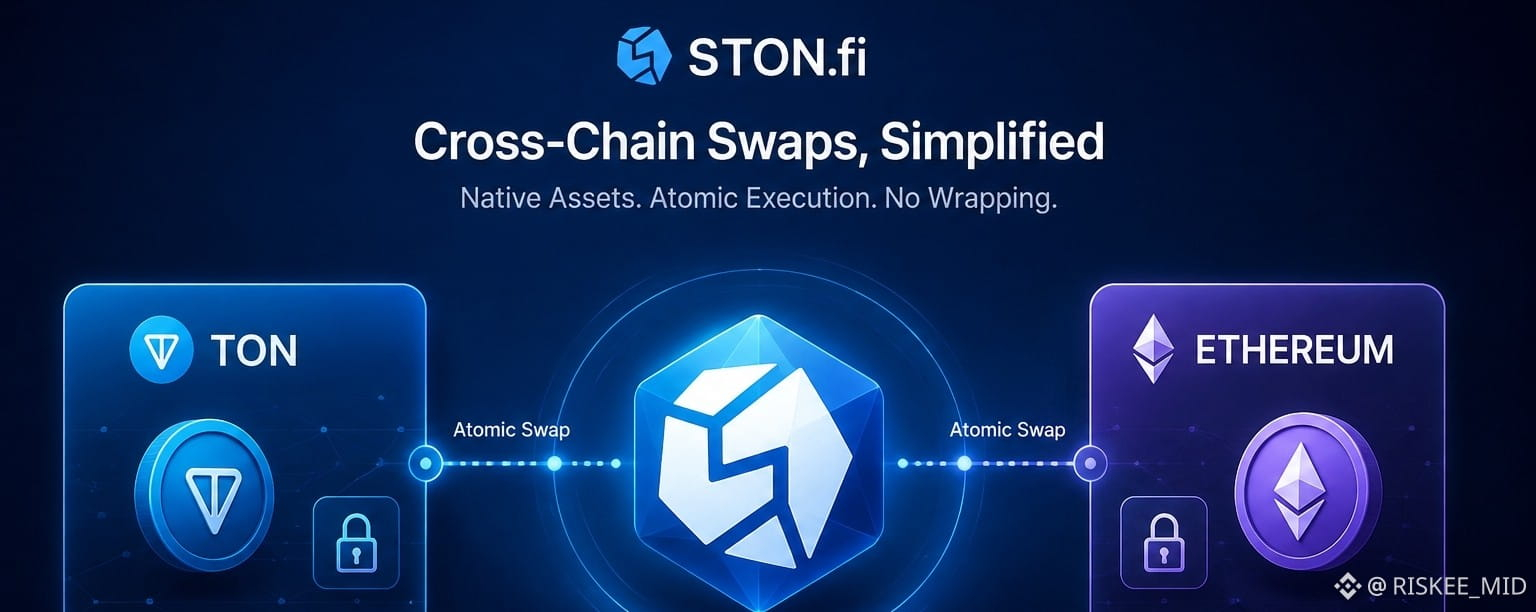

TON- UND ETHEREUM-SWAP
STON.fi’s Ansatz für Cross-Chain-Swaps basiert auf einer einfachen Idee: Nutzer sollen in der Lage sein, Wert über unabhängige Blockchains hinweg auszutauschen, ohne ihre Assets zuerst in umhüllte (wrapped) Darstellungen umwandeln zu müssen.
Mit Omniston nutzt STON.fi ein resolverbasiertes Ausführungsmodell in Kombination mit Request for Quote (RFQ) und Hashed Timelock Contracts (HTLCs), um Swaps zwischen TON und Netzwerken wie Ethereum zu koordinieren. Anstatt sich auf eine herkömmliche Lock-and-Mint-Bridge zu verlassen, ist das System so konzipiert, dass dem Nutzer auf der Ziel-Blockchain genau das Asset bereitgestellt wird, das er tatsächlich angefordert hat.
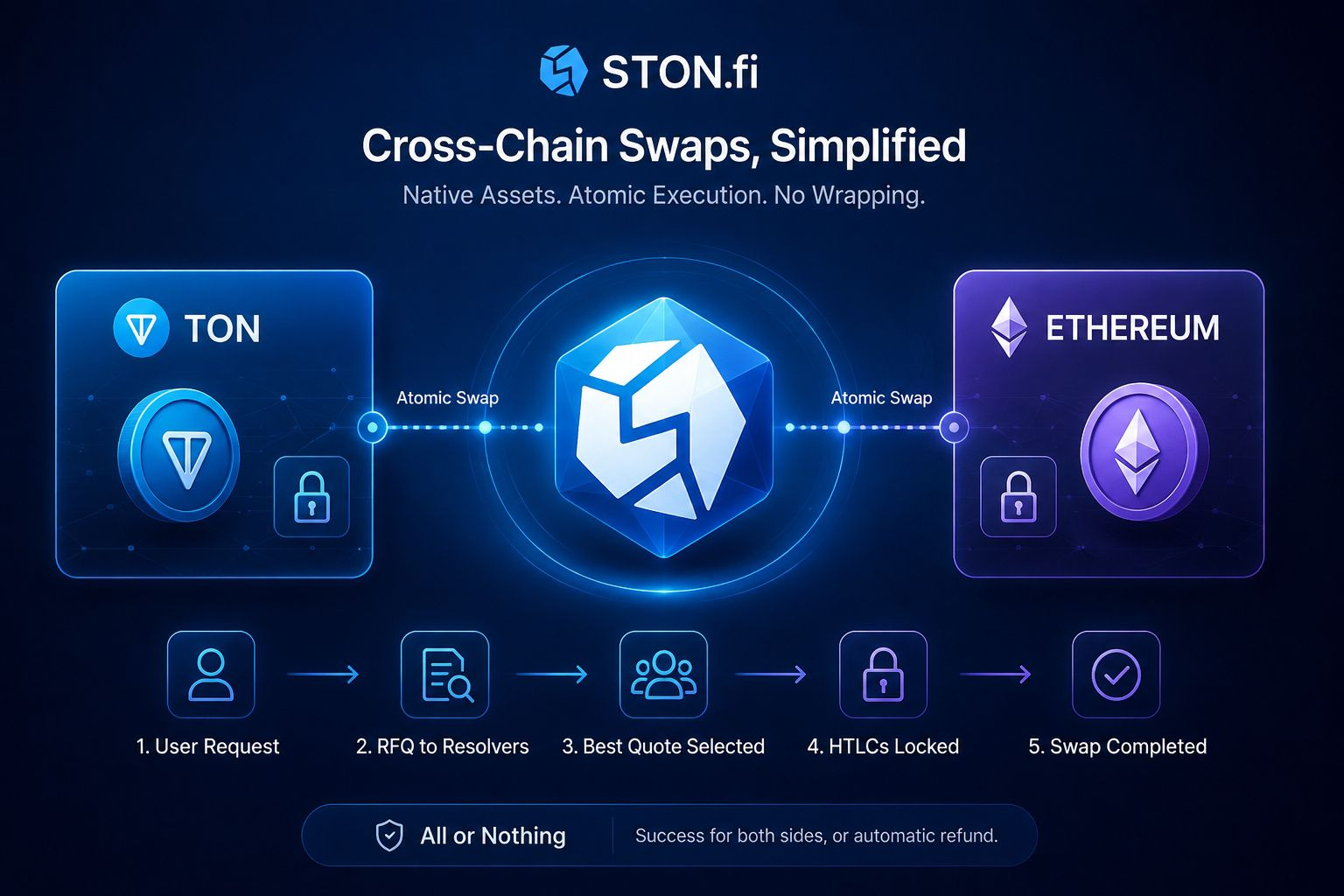
So verbindet Omniston TON und Ethereum
TON und Ethereum funktionieren als getrennte Blockchain-Umgebungen, daher kann ein natives Asset in einem Netzwerk nicht einfach im anderen auftauchen. Omniston löst dieses Koordinationsproblem, indem es Resolver einführt – Liquiditätsanbieter, die konkurrieren, um Cross-Chain-Orders zu erfüllen.
Wenn ein Nutzer einen Swap erstellt, sendet Omniston eine RFQ an verfügbare Resolver. Diese liefern ausführbare Quotes basierend auf den Assets, Mengen und Zielanforderungen. Der ausgewählte Resolver verpflichtet anschließend seine eigene Liquidität auf der Zielseite. Dadurch entsteht ein direkter wirtschaftlicher Anreiz, die Transaktion abzuschließen.
Das bedeutet: Der Resolver geht nicht nur die Zusage ein, Ethereum-Liquidität bereitzustellen. Seine Mittel auf der Zielseite werden über den Abwicklungsmechanismus selbst verpfändet.
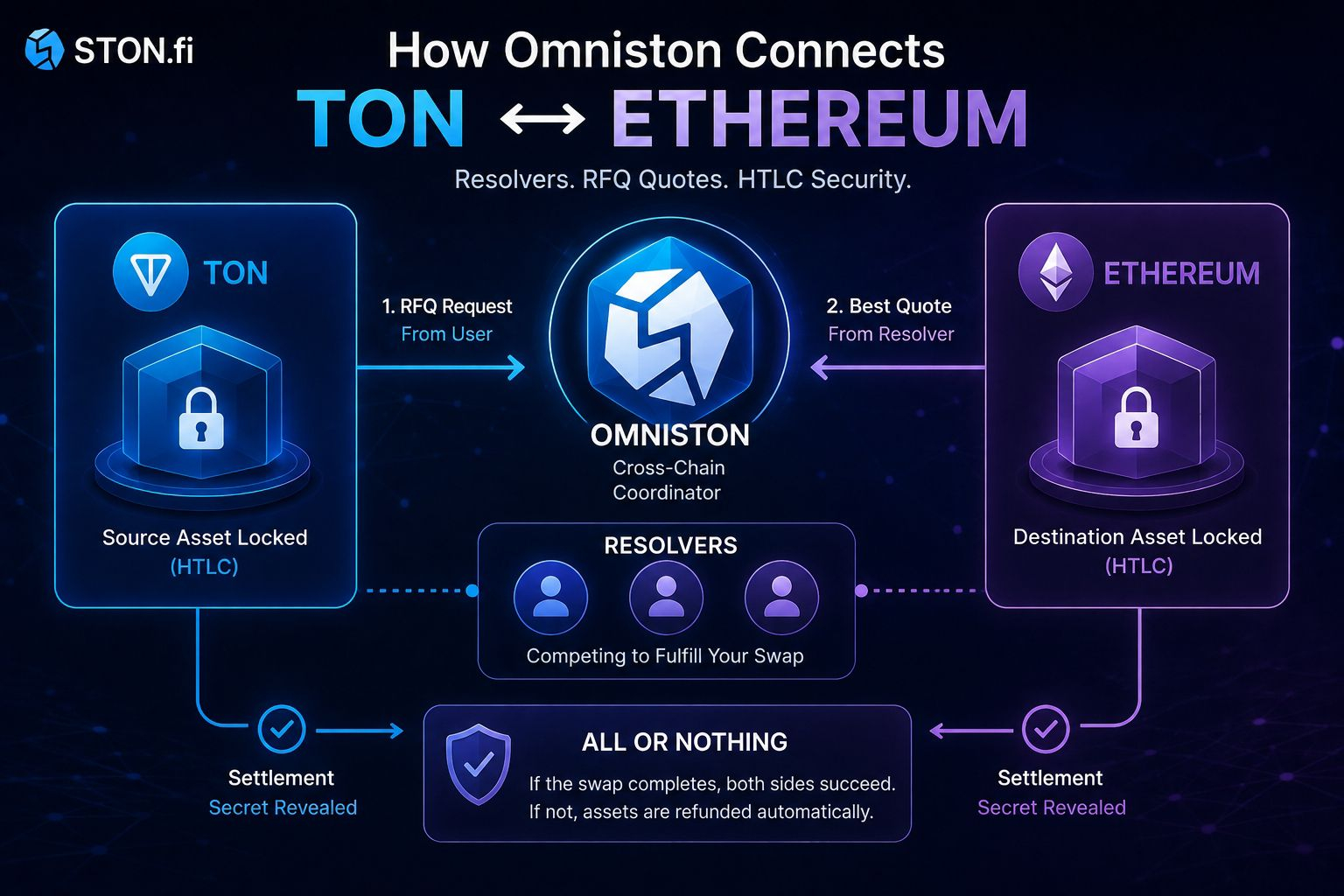
Die Rolle von HTLCs
Die technische Grundlage ist der Hashed Timelock Contract.
Bei einem Swap von TON nach Ethereum werden die Assets auf Quell- und Zielseite in verknüpfte HTLCs (Hashed Timelock Contracts) gelegt, die dieselbe kryptografische Bedingung verwenden. Ein Geheimnis schaltet die Abwicklung frei. Sobald dieses Geheimnis offengelegt ist, kann der Nutzer das Asset auf der Ethereum-Seite beanspruchen, während der Resolver das Asset auf der TON-Seite mit demselben Geheimnis beanspruchen kann.
Das Timelock liefert die zweite Schutzebene.
Wenn die erforderliche Bedingung innerhalb des definierten Zeitfensters nie erfüllt wird, werden die gesperrten Assets gemäß den Vertragsregeln erstattungsfähig. Praktisch zielt das Design auf ein Entweder-oder-Ergebnis ab: erfolgreiche Abwicklung für beide Seiten oder ein Rückerstattungspfad statt eines dauerhaft unvollständigen Swaps.
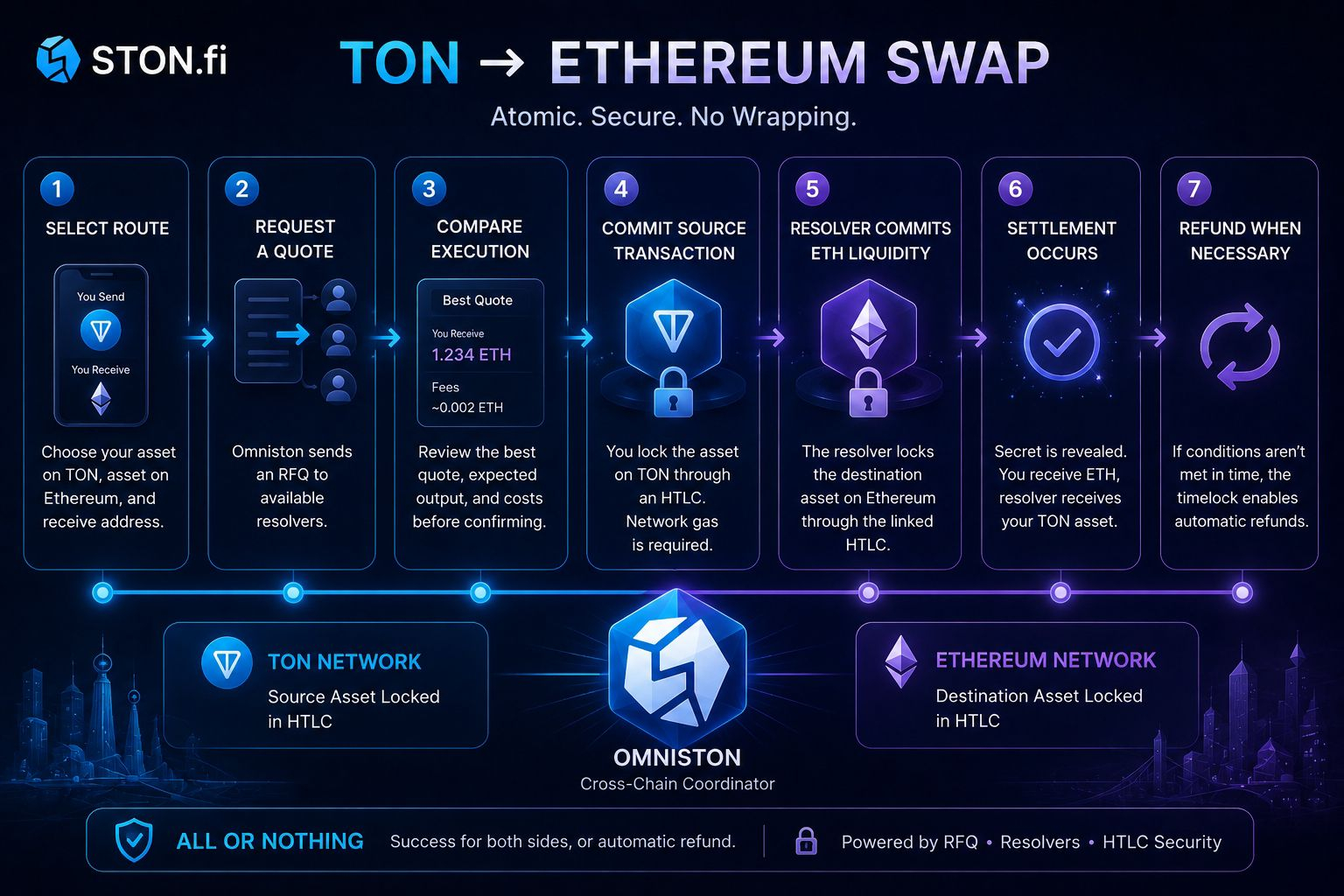
Ein TON → Ethereum Swap, Schritt für Schritt
Stell dir vor, ein Nutzer möchte ein Asset auf der TON-Seite gegen ein Asset auf der Ethereum-Seite tauschen.
1. Wähle die Route
Der Nutzer wählt das Quell-Asset auf TON, das Ziel-Asset auf Ethereum und die empfangende Wallet.
2. Fordere einen Preis an
Omniston verteilt eine RFQ (Request for Quote) an teilnehmende Resolver.
3. Vergleiche die Ausführung
Der Nutzer erhält einen Preis (Quote), der die erwartete Auszahlung und die relevanten Kosten zeigt, bevor er bestätigt.
4. Verpflichte die Quell-Transaktion
Der Nutzer autorisiert die Verpflichtung auf der TON-Seite. Wie bei jeder TON-Transaktion ist weiterhin Netzwerkgas erforderlich.
5. Resolver verpflichtet Ethereum-Liquidität
Der ausgewählte Resolver sperrt das Ziel-Asset auf Ethereum über das entsprechende HTLC mithilfe der verknüpften kryptografischen Bedingung.
6. Die Abwicklung erfolgt
Sobald das Geheimnis offengelegt ist, wird das Ziel-Asset beanspruchbar und der Resolver kann das Asset auf der Quellseite beanspruchen.
7. Rückerstattung, wenn nötig
Wenn die Abwicklungsbedingung nicht innerhalb des erforderlichen Zeitraums erfüllt wird, stellt das Timelock-Mechanismus den entsprechenden Rückerstattungspfad bereit.
Warum das anders ist als eine traditionelle Bridge
Der größte Unterschied ist, was tatsächlich mit den Assets passiert.
Eine herkömmliche Bridge folgt häufig dem Lock-and-Mint-Modell: Das ursprüngliche Asset wird auf einer Kette gesperrt und eine umhüllte Repräsentation wird auf einer anderen ausgegeben. Dieses umhüllte Asset hängt dann davon ab, dass die Bridge-Infrastruktur die zugrunde liegende Beziehung aufrechterhält.
Omniston geht einen anderen Weg.
Es ist als plattformübergreifender Austausch (Cross-Chain Exchange) konzipiert und nicht als Mechanismus, um eine umhüllte (wrapped) Kopie des ursprünglichen Tokens zu erstellen. Der Nutzer fordert ein Ziel-Asset an, und ein Resolver liefert dieses Asset aus seiner eigenen Liquidität auf der Zielseite.
Also nicht:
Asset A → Bridge-Lock → wrapped Asset A
das Modell ist näher an:
Asset A → atomarer Tausch → natives Asset B
Diese Unterscheidung kann für Nutzer wichtig sein, die das Ziel-Asset direkt nutzen möchten, statt eine gebridgte Darstellung zu erhalten.
Warum Resolver wichtig sind
Resolver sind einer der wichtigsten Bestandteile der Omniston-Architektur.
Sie machen Cross-Chain-Liquidität effektiv zu einem wettbewerbsfähigen Marktplatz. Mehrere Resolver können auf dieselbe RFQ antworten, sodass die Ausführung durch verfügbare Liquidität und Preisgestaltung gesteuert wird – statt durch eine einzelne Bridge-Reserve.
Der Resolver übernimmt die Ausführungsverantwortung auf der Zielseite und verpflichtet Kapital für den Handel. Das macht die Notwendigkeit überflüssig, dass ein einzelner gemeinsamer Vault eine riesige Pool an Nutzergeldern hält – ein großer struktureller Unterschied zu vielen traditionellen Bridge-Architekturen.
Bei größeren Orders kann Omniston außerdem Teilausführungen unterstützen. Dadurch kann eine Order in unabhängige Unterswaps aufgeteilt werden, statt die gesamte Menge über einen einzigen Ausführungspfad zu erzwingen.
Worauf Nutzer tatsächlich achten sollten
Die Technologie unter der Haube von Omniston ist anspruchsvoll, doch das nutzerseitige Ziel ist klar:
Wähle, was du hast, wähle, was du willst, sieh dir den Preis an, und lass das Protokoll die Cross-Chain-Abwicklung koordinieren.
Trotzdem sollten Nutzer die praktischen Details nicht ignorieren. Der endgültige Betrag, Gebühren, das Zielnetzwerk, die empfangende Adresse und die benötigte Gas-Menge sollten immer geprüft werden, bevor du eine Transaktion bestätigst. Cross-Chain-Ausführung beseitigt keine Netzwerkkosten, und die Zielkette ist weiterhin entscheidend für Geschwindigkeit und Bedienbarkeit der Abwicklung.
Das große Ganze
Omniston zeigt eine wichtige Weiterentwicklung in Cross-Chain DeFi.
Anstatt zu fragen: „Wie kann ich dieses Token über eine Bridge bewegen?“, wird das Erlebnis: „Welches Asset möchte ich auf der anderen Kette erhalten?“
Das ist ein grundlegender Wandel von Asset-Transport hin zur Cross-Chain-Ausführung.
Durch RFQ-basierte Resolver-Konkurrenz, native Ziel-Liquidität und verknüpfte HTLCs ist die Omniston-Architektur von STON.fi darauf ausgelegt, TON mit unabhängigen Netzwerken wie Ethereum zu verbinden – und dabei den traditionellen Schritt der Wrapped-Assets zu vermeiden. Das Ergebnis ist ein Modell, das auf direkten Austausch, kryptografische Abwicklung und vordefinierte Rückerstattungsbedingungen setzt – statt auf Abhängigkeit von einem gemeinsam genutzten Bridge-Vault.
Für alle, die Cross-Chain-DeFi erkunden, ist es wichtig, diese Unterscheidung zu verstehen: Eine Bridge bewegt Repräsentationen von Assets, während ein atomarer Cross-Chain-Swap ein natives Asset gegen ein anderes austauschen kann. Omniston ist um das zweite Modell herum gebaut.
Mehr über STONfi hier lesen
Erfahre mehr über STON.FI