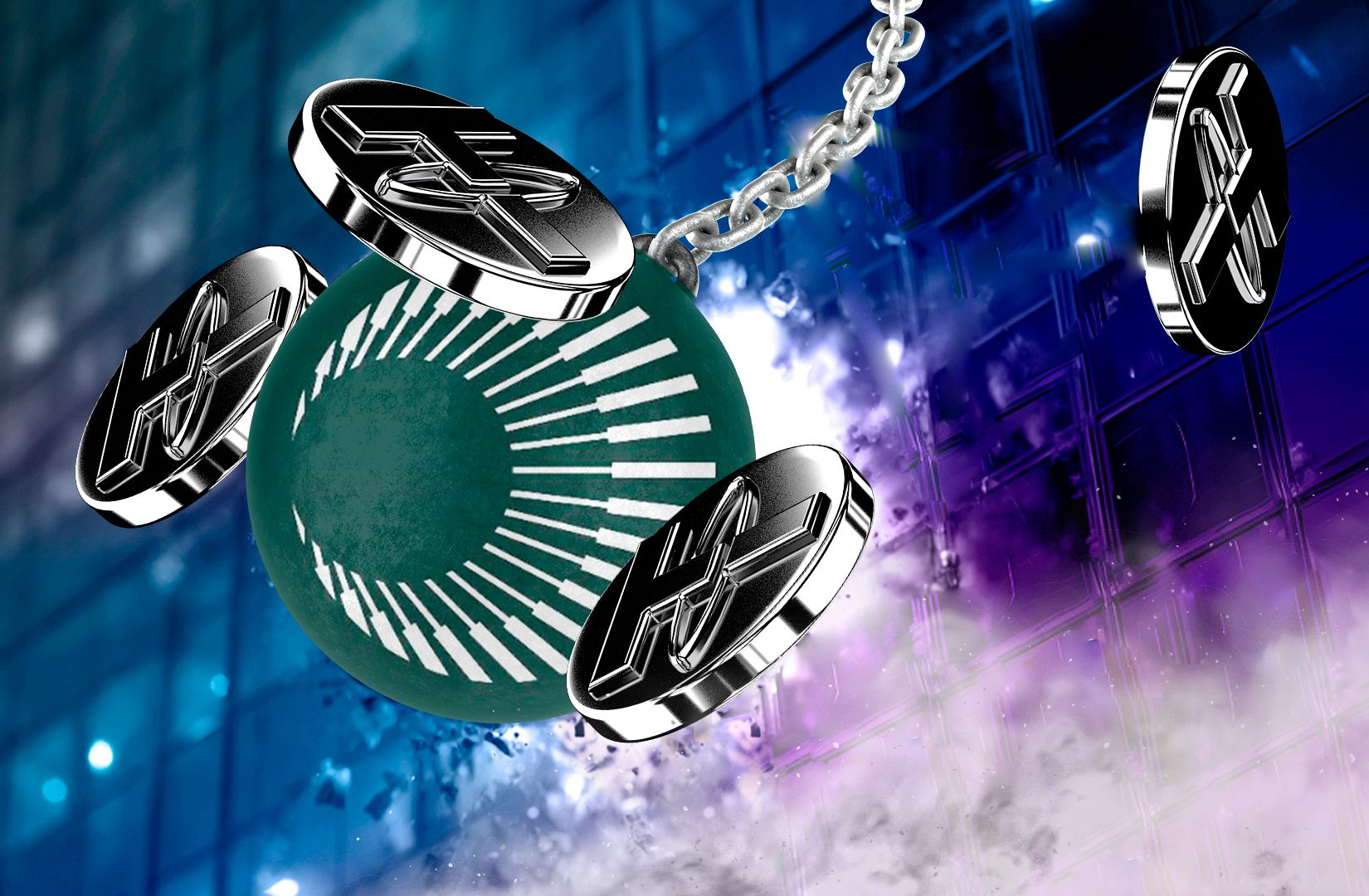
Plasma feels like one of those technologies that suddenly appear in the conversation and people ask where it came from because it grows silently in the background without hype or noise. The more I explore how it works and what it enables the more clear it becomes that Plasma is not trying to become a copy of any existing chain. It is trying to become something that the stablecoin world badly needs which is a consistent and reliable way for USDT to move in a single flow across all networks without additional steps and without thinking about gas payments or the usual friction points people face every day. This is exactly why Plasma is quietly positioning itself as the chain that anchors the next phase of stablecoin adoption even if most of the market has not caught up to this reality yet.
Plasma is fundamentally about simplicity. It is not simplicity in the sense of fewer features but simplicity in experience. Most stablecoin transfers today pretend to be simple but the moment you switch chains you end up paying unnecessary gas, bridging through multiple hops, dealing with approvals, understanding the routing of liquidity, and hoping that the destination chain has enough support to complete the transaction smoothly. Plasma removes all this by establishing a common settlement layer where the user only interacts with value and not with the underlying complexity. When you move USDT on Plasma it feels like transferring within a single ecosystem through a single pipeline rather than jumping through ten systems that pretend to be connected.
What makes this work is the combination of several architectural decisions that Plasma has made from the beginning. The chain is built with Reth compatibility which means it inherits the speed, efficiency, and tooling environment that developers already recognize. There is Bitcoin anchoring that gives Plasma an additional assurance layer and adds a form of finality confidence that is rare in most stablecoin focused networks. Then there is the intent system powered through NEAR which allows transfers to be executed without forcing the user to think about gas or approvals. The paymaster layer that Plasma introduced takes care of the fees in USDT so that users never need to hold native tokens just to perform basic value transfers. All these components merge into a single picture where the user simply acts and the system resolves everything else in the background.
This is why people who understand architecture keep calling Plasma the stability layer. Stability does not mean lack of innovation. It means predictable behavior under load and predictable user outcomes regardless of where the transfer begins. Stability is the hardest thing to build in crypto because every new feature introduces new attack surfaces and every new network introduces new fragmentation. Plasma went the opposite direction by building the chain that behaves like the central nervous system of stablecoin movement. At a time when stablecoins are becoming the largest on chain asset class it makes sense for the market to consolidate toward a network that specializes in doing one thing extremely well instead of trying to do everything at the same time.
Plasma becomes even more relevant when you look at how liquidity is expanding. Every major chain now relies on stablecoins for real usage whether it is DeFi, payments, lending, remittances, gaming, or simple wallet transfers. Stablecoins have become the actual money of crypto. But the infrastructure for them is still fragmented because each network has its own versions, its own bridge pathways, and its own fees. Plasma converts this fragmented environment into a unified flow. The best way to imagine it is to think of the global banking system. Banks are different but SWIFT gives them a channel to communicate in one consistent way regardless of internal differences. Plasma wants to become that for Web3. It is the SWIFT layer for on chain stablecoin movement but with speed, cost efficiency, and programmability that legacy systems could never match.
The real magic of Plasma is that the experience feels invisible. Users simply feel like everything works. Developers simply feel like the environment is easier to build on. Liquidity providers feel like transfers settle smoothly and markets stay efficient. This kind of invisible excellence is the strongest indicator of a real infrastructure project because the more transparent the experience becomes for users the more complex the engineering becomes behind the scenes. Plasma handles that complexity while giving the user nothing but simplicity. This is the highest form of good design in crypto.
Plasma also aligns perfectly with the real world direction of stablecoin usage. As regulation increases and as institutions begin interacting with tokenized dollars at scale the need for consistency and settlement finality becomes even more important. A chain that can anchor stablecoin flows with predictable execution will naturally become the preferred routing layer for large volume transfers. This is what makes Plasma so important. It acts like the digital plumbing that moves value without noise. When billions move across chains it should feel as smooth as sending a message. That is what Plasma makes possible.
Another unique part of Plasma is its vision for the StableFlow experience. StableFlow is the idea that users and institutions should not feel any chain level friction. Gasless transfers paid in USDT turn the stablecoin into more than a simple asset. It becomes the actual medium for execution. With Plasma the stablecoin itself becomes the fuel which means users finally operate in a world where the currency they rely on is the same currency powering the network. This eliminates the classic problem where people must hold native tokens that they never wanted just to perform basic transactions. When the network disappears from the user’s perspective the product becomes complete. Plasma is one of the few projects that actually understands this principle and it shows in its architecture.
Even the broader picture of cross chain movement changes with Plasma. Interoperability has always been marketed in crypto but very few chains have delivered a true cross network flow without unnecessary complexity or hidden risks. Plasma uses a combination of anchoring, intents, routing, and predictable settlement to make value flow naturally between ecosystems. Instead of bridging and splitting assets across pools Plasma treats stablecoin movement as a global pipeline. This prevents fragmentation and lets liquidity stay unified which is essential for sustainable growth. In the next few years as more capital moves on chain the demand for this type of infrastructure will grow faster than people expect.
Plasma is not here to compete for narrative dominance. It is here to solve a problem that every user and every institution faces whether they notice it or not. Stablecoin complexity has become too messy across different chains. Plasma eliminates that complexity and converts the entire experience into something intuitive. When I look at what Plasma represents it becomes obvious that the next era of stablecoin adoption will not be built by the loudest voices but by the most dependable networks. Stability always wins long term and Plasma is building that stability from the ground up.
This is why I believe Plasma is positioned for massive relevance in the next cycle. It is the infrastructure that moves quietly because it does not need hype. It has real utility and real adoption use cases. As stablecoins become the backbone of global digital finance the networks that support their flow will become the most valuable infrastructure layers in Web3. Plasma is exactly that layer. It is the chain that understands how users actually move value and how institutions will demand consistency and reliability. The more I explore its systems and the way it approaches cross network liquidity the more clear the picture becomes. Plasma is not just another chain. Plasma is the settlement engine of the stablecoin economy and it is only getting started.