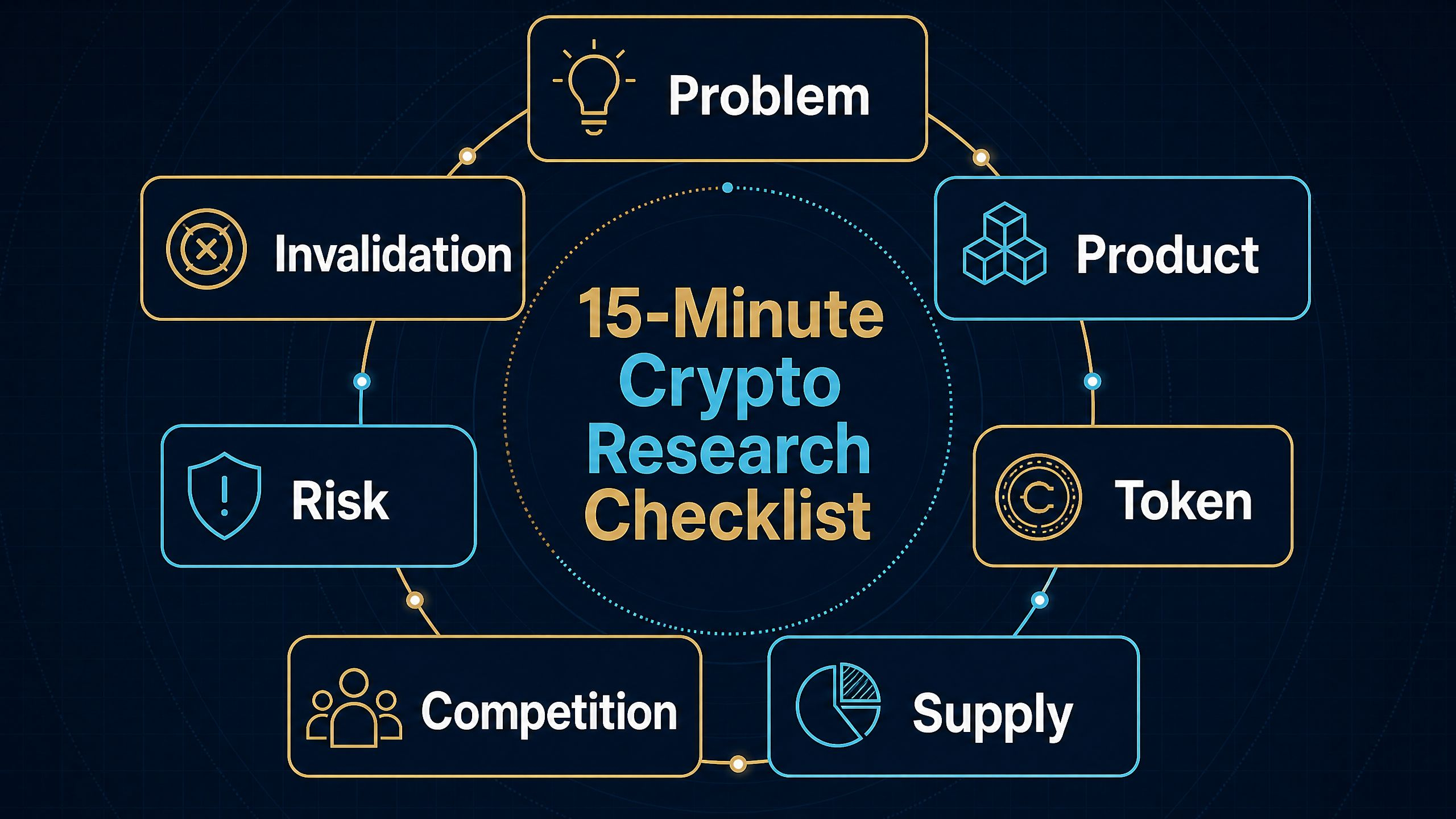
Most bad crypto decisions begin with the chart and end with a story invented after the purchase. Reverse that order.
Problem: State the problem in one sentence. If the problem is unclear, the project probably is too.
Product: Find evidence that people use it—transactions, active users, fees, integrations or developer activity. Followers are attention, not adoption.
Token: Ask why the token must exist. Does it pay fees, secure the network, govern scarce resources or capture value? “Utility” without necessity is weak.
Supply: Compare circulating supply with total supply. Check unlocks, team allocation and emissions. A growing project can still produce a falling token if supply grows faster than demand.
Competition: Name two alternatives and explain why users would switch.
Risk: Write the strongest bear case. Include smart-contract, liquidity, governance and regulatory risks.
Invalidation: Decide what evidence would prove your thesis wrong before money is involved.
I start with the product and on-chain usage, then check token supply before reading the chart.
The goal is not certainty. It is to replace excitement with a decision you can explain. Save this checklist and improve it with every project you review.
Which step do most people skip? #DYOR #CryptoResearch