
Global Rate-Cut Story Starts to Reverse as Inflation Stays Sticky
The global monetary-policy narrative is beginning to shift. Instead of asking when central banks will cut rates, markets are increasingly considering whether some may need to raise them again.
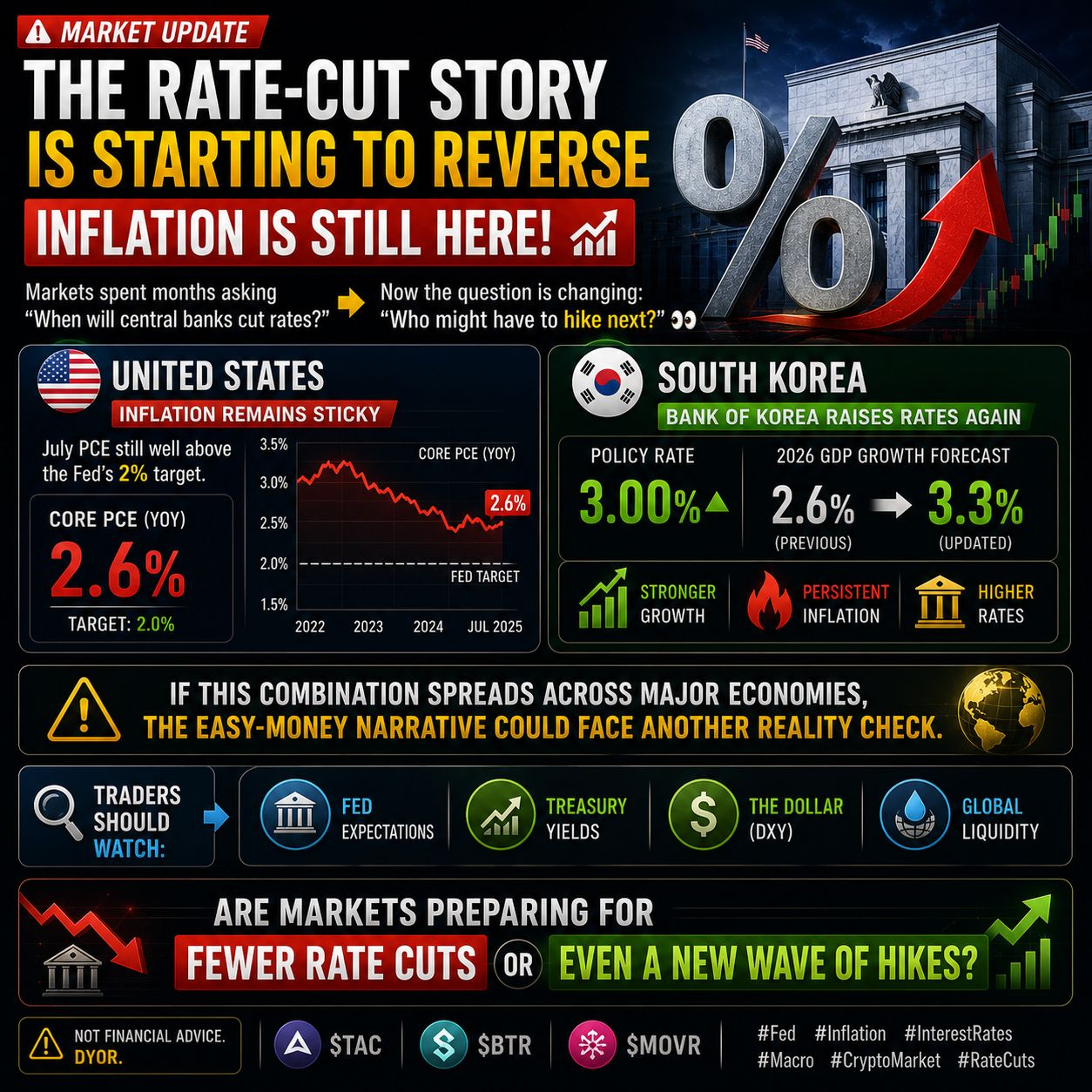
In the US, the Fed's preferred inflation gauge, PCE, remained elevated in July, keeping inflation above the central bank's 2% target. That has pushed traders to reassess expectations for the Fed's next move.
🇺🇸 Fed Faces a Tougher Inflation Battle
Persistent inflation makes aggressive rate cuts more difficult.
Markets are now pricing a meaningful possibility of a September Fed hike, while expectations for at least one increase by December have also risen.
If inflation remains stubborn while economic activity stays resilient, the Fed could face increasing pressure to keep policy restrictive—or potentially tighten further.
🇰🇷 South Korea Is Already Tightening
South Korea provides an interesting example.
The Bank of Korea raised its benchmark interest rate by 25 basis points to 3.00%, marking another step toward tighter monetary policy.
What's unusual is that the rate increase came alongside a major improvement in the country's economic outlook.
The BOK reportedly raised its 2026 GDP growth forecast from 2.6% to 3.3%, suggesting stronger growth is giving policymakers more room to focus on inflation.
📊 The Bigger Macro Shift
This creates an important signal for global markets:
Stronger growth + persistent inflation = less room for monetary easing.
For investors, that could mean higher-for-longer interest rates, tighter liquidity and increased volatility across equities, currencies and crypto.
The question that dominated markets for years was:
“When will central banks cut?”
Now, a different question is becoming increasingly important:
“Who has to hike next?” 👀




#Fed #Inflation #InterestRates #BankOfKorea #Macro #CryptoMarket