


CATI-Münze: Was ist sie, wie funktioniert sie und was könnte ihre Zukunft antreiben?

In der überfüllten Welt der Telegram-Mini-Spiele hat eine katzenbezogene App namens Catizen Millionen von Nutzern angezogen – und CATI ist das Token, das daraus entstanden ist. Wenn du den Namen schon gehört hast und eine klare Antwort darauf willst, was es tatsächlich macht, statt Hype oder Abwertung: Das ist die Antwort.
Was ist die CATI-Münze?
CATI ist das offizielle Token von Catizen, einer Telegram-basierten Plattform, die zwanglose Mini-Games, Unterhaltung in Kurzform und leichte E-Commerce-Funktionen zu einem einzigen „Super-App“-Erlebnis kombiniert. Entwickelt für Menschen, die den größten Teil ihres Tages bereits in Telegram verbringen, statt separate Apps herunterzuladen.
Catizen begann selbst als Tap-to-Earn-Katzenspiel während der Welle der Telegram-Gaming-Apps im Jahr 2024 – derselbe Trend, der Projekte wie Notcoin und Hamster Kombat hervorgebracht hat. Was Catizen von den anderen abgesetzt hat und was es länger am Laufen gehalten hat als den Rest dieser Gruppe, ist, dass es sich über das einfache Tapping hinaus in eine breitere Palette an Minispielen, interaktiven Kurzdramen und Commerce-Funktionen ausgeweitet hat – alles weiterhin in die vertraute Telegram-Oberfläche eingebettet.
CATI läuft auf der TON-Blockchain – das passt, weil TON eng mit Telegram selbst verbunden ist. Der Token ist das Verbindungsstück zwischen der In-App-Ökonomie und dem offenen Krypto-Markt: Er ist an Börsen handelbar, während eine separate In-Game-Währung namens vKITTY die täglichen Belohnungen im eigentlichen App-Gameplay übernimmt.
Wie funktioniert CATI?
Der einfachste Weg, CATI zu verstehen, ist, zwei Ebenen zu trennen: die Spiel-Ökonomie und die handelbare Token-Ökonomie.
Bei Catizen verdienen Spieler vKITTY durch Gameplay, tägliche Aktivitäten und verschiedene Aufgaben in der App. vKITTY ist im Alltag die Währung, um sich durch die Funktionen des Spiels zu bewegen. CATI liegt hingegen auf einer anderen Ebene: Es ist der Token, der das Projekt on-chain repräsentiert, der an Börsen gelistet ist und der mit breiteren Ökosystem-Aktivitäten wie größeren Reward-Ausschüttungen verbunden ist.
Diese Zweitoken-Struktur ist in Web3-Gaming aus einem praktischen Grund verbreitet: Sie ermöglicht es Entwicklern, die In-Game-Inflation getrennt vom Token zu steuern, der auf offenen Märkten gehandelt wird. Wenn jede kleine In-Game-Belohnung direkt im an der Börse gelisteten Token ausgezahlt würde, würde der ständige Verkaufsdruck von Gelegenheitsspielern den Preis vermutlich viel stärker belasten. Die Aufteilung gibt dem Team mehr Spielraum, die Spiel-Ökonomie feinzujustieren, ohne dass jede Designentscheidung sofort in einem Kurschart sichtbar wird.
Auch dass es auf TON aufgebaut ist, ist praktisch relevant. Transaktionen sind schnell und günstig – passend für ein eher zwangloses Mobile-Game-Publikum, das für kleine In-Game-Aktionen keine langsamen Bestätigungen oder hohe Gas-Gebühren tolerieren würde.
Wofür wird CATI verwendet?
Basierend auf dem, was Catizen dokumentiert hat, liegt der Nutzen von CATI in einigen bestätigten Bereichen:
Handel und Marktexposure. CATI ist der Token, der an zentralisierten Börsen verfügbar ist und den Inhabern eine direkte Preisexposition gegenüber dem Projekt gibt – getrennt von den In-Game-vKITTY-Salden.
Belohnungen im Ökosystem. Größere Belohnungs-Ausschüttungen und Airdrop-ähnliche Zuteilungen im Catizen-Ökosystem nutzten CATI statt vKITTY.
Anreize zur Nutzerbeteiligung. Catizen hat CATI-verknüpfte Kampagnen genutzt, um ein tieferes Engagement mit dem wachsenden Feature-Set der Plattform zu fördern – einschließlich der Minispiele und Content-Angebote.
Eine Sache, die man offen ansprechen sollte: Nicht jeder Web3-Gaming-Token hat in der Praxis ein vollständig ausgebautes Governance-System, selbst wenn Governance als Teil der langfristigen Vision erwähnt wird. Wenn du konkret an CatIis Stimmrechten oder formalen Governance-Mechaniken interessiert bist, lohnt es sich, das direkt gegen die aktuelle Dokumentation von Catizen zu prüfen, bevor du annimmst, dass es auf eine bestimmte Art funktioniert. Denn in diesem Bereich entwickeln sich die Nutzungsdetails oft weiter, wenn Projekte reifer werden.
CATI-Tokenomics
Stand: anhand der zuletzt verfügbaren Daten hat CATI ein gesamtes und maximales Angebot von 1 Milliarde Tokens. Davon sind ungefähr 680 Millionen Tokens derzeit im Umlauf. Das bedeutet: Etwa zwei Drittel des gesamten Angebots sind bereits freigeschaltet und handelbar – eine deutlich reifere Verteilung, als man sie bei einem frisch gelaunchten Token erwarten würde.
Die Aufschlüsselung der verbleibenden Zuteilungen umfasst Kategorien, die für Projekte dieser Art typisch sind: eine Team-Zuteilung, Advisor-Zuteilungen, ein Treasury-Reserve sowie Airdrop-bezogene Ausschüttungen, die genutzt wurden, um frühe Nutzer und Community-Mitglieder zu belohnen. Teile des Treasuries und anderer reservierter Zuteilungen sind noch ausstehend statt vollständig im Umlauf zu sein. Das bedeutet, dass es auch in Zukunft noch ein gewisses Angebot geben kann, das im Laufe der Zeit in den Markt gelangt.
Die praktische Kernaussage ist unkompliziert: Da bereits zwei Drittel des Angebots im Umlauf sind, steht CATI nicht vor den extremen, abrupten Unlock-Cliffs, mit denen neuere Projekte manchmal zu kämpfen haben. Investoren sollten aber trotzdem alle noch geplanten Veröffentlichungen im Blick behalten, bevor sie Entscheidungen treffen – denn selbst kleinere Unlocks können bei der aktuellen Marktgröße eines Tokens wie CATI Auswirkungen haben.
Warum hat CATI Aufmerksamkeit erregt?
Ein paar echte Faktoren erklären, warum CATI so häufig in der Web3-Gaming-Ecke von Krypto besprochen wird.
Telegram spielt bei Crypto-Gaming wahrscheinlich die größte Rolle. Telegram-Mini-Apps haben eine echte Einstiegshürde abgebaut: kein separater Download, kein neues Konto – nur das Abtippen in etwas, das auf deinem Smartphone ohnehin schon geöffnet ist. Dieser Distributionsvorteil hat Catizen geholfen, relativ schnell eine große Nutzerbasis aufzubauen, verglichen mit klassischen Mobile-Game-Launches.
Ein weiterer Faktor ist Catizens Ausbau über einfache Tap-to-Earn-Mechaniken hinaus. Viele Telegram-Gaming-Token aus dem Jahr 2024 waren im Grunde Ein-Feature-Apps, die es schwer hatten, Aufmerksamkeit zu halten, sobald die anfängliche Neuheit verflogen war. Dass Catizen Minispiele, Kurzvideo-Inhalte und Commerce-Elemente ergänzt hat, gibt den Nutzern mehr Gründe, immer wieder zurückzukommen. Das ist besonders relevant für einen Token, dessen langfristiger Wert von anhaltendem Engagement abhängt – nicht von einem einmaligen Download-Peak.
Auch die Verfügbarkeit an Börsen spielte eine Rolle. CATI wird auf etablierten Plattformen gehandelt, darunter Binance, OKX und Bybit. Das verschafft ihm mehr Sichtbarkeit und Liquidität als vielen kleineren Web3-Gaming-Tokens, die weiterhin auf dezentrale Börsen beschränkt bleiben.
Nichts davon garantiert, dass die Aufmerksamkeit auch in Zukunft anhalten wird. Das Interesse an Telegram-Gaming-Tokens als Kategorie ist seit dem Peak des Tap-to-Earn-Trends 2024 deutlich abgekühlt – und CATIs Fähigkeit, weiterhin Aufmerksamkeit zu ziehen, hängt davon ab, ob Catizen weiterhin Features liefert, die Menschen wirklich nutzen.
CATI-Preisanalysen
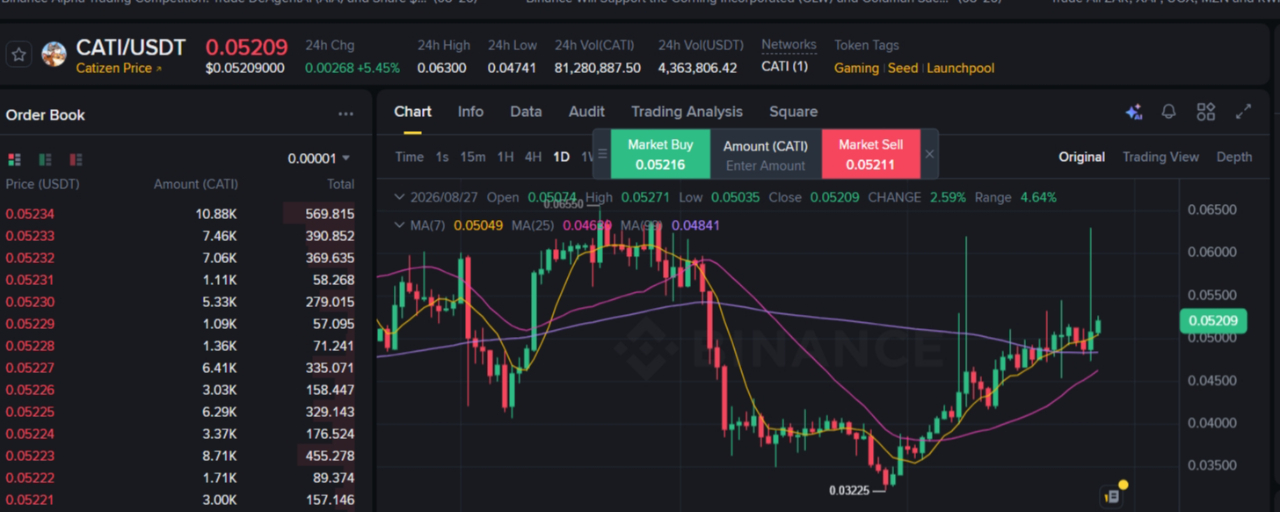
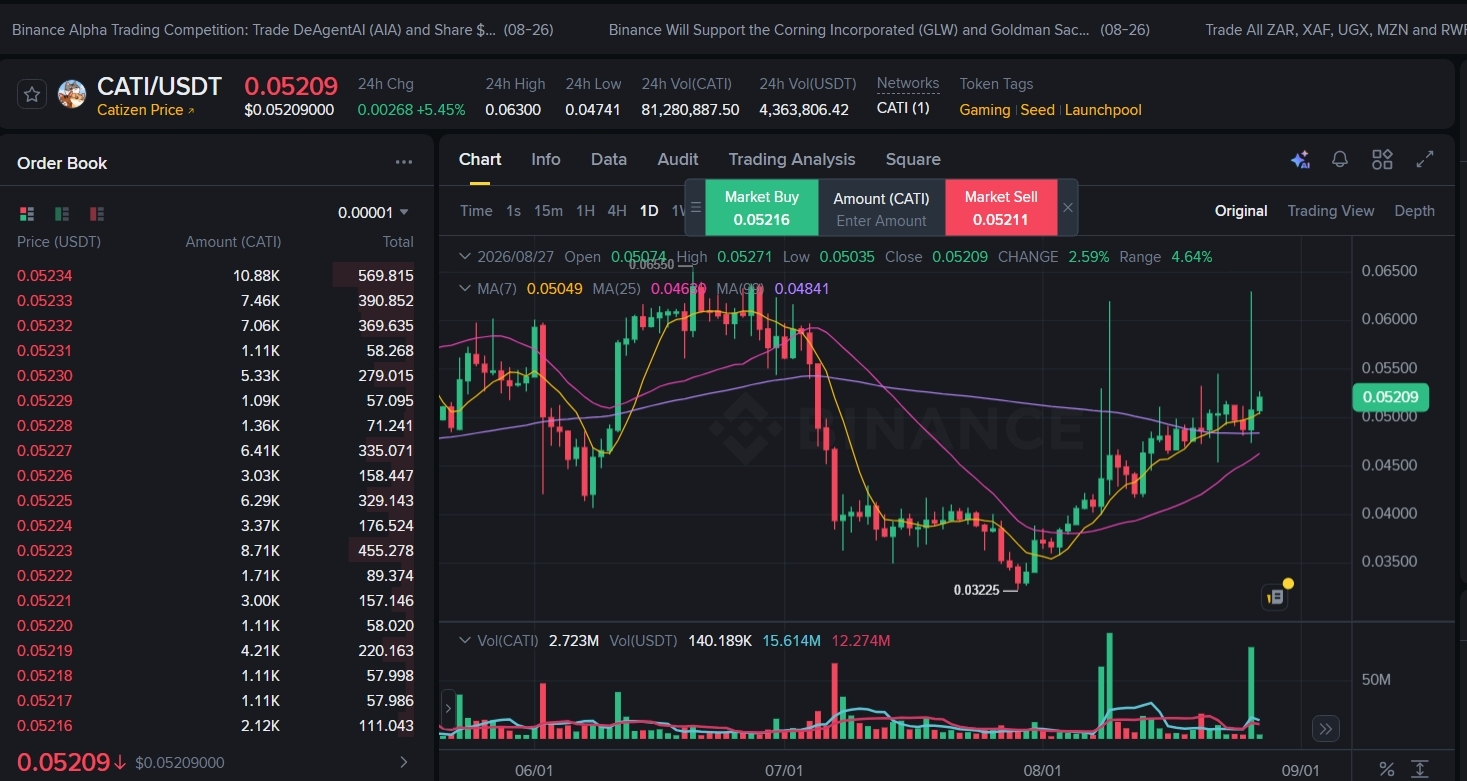
Stand: Ende August 2026 handelt CATI etwa bei 0,0508 US-Dollar. Das 24-Stunden-Handelsvolumen liegt bei rund 17,4 Millionen US-Dollar, die Marktkapitalisierung bei ungefähr 34,5 Millionen US-Dollar.
Das Kursbild hier lohnt es, genau zu betrachten. CATI erreichte im September 2024 ein Allzeithoch von 1,11 US-Dollar – nahe dem Peak des breiten Booms bei Telegram-Gaming-Tokens. Aktuell wird es mehr als 95% unter diesem Niveau gehandelt. Auf der anderen Seite hat CATI vor wenigen Wochen ein frisches Allzeittief von ungefähr 0,0323 US-Dollar erreicht, Ende Juli 2026. Das bedeutet: Der aktuelle Preis liegt nur moderat über dem niedrigsten Punkt der gesamten Handelshistorie des Tokens.
Die Kursbewegung war in der vergangenen Woche nach diesem Tief relativ flach – sie stieg nur leicht an, nachdem es zuvor zu einem stärkeren Rückgang gekommen war. Die eigene Marktkommentierung von CoinGecko stellte fest, dass CATI aktuell „ohne klare Narrative“ unterwegs ist. Das ist an sich schon ein nützliches, ehrliches Signal: Im Moment gibt es keinen offensichtlichen News-Auslöser, der die Kursbewegungen treibt, und kurzfristige Bewegungen scheinen eher den allgemeinen Marktfluss zu widerspiegeln als spezifische Entwicklungen bei Catizen.
Das gesagt, ist diese Momentaufnahme genau das: eine Momentaufnahme. Da sich Small-Cap-Tokens schnell bewegen können, prüfe aktuelle Kurse am besten direkt bei Binance oder CoinGecko, bevor du aus irgendeiner konkreten Zahl hier Rückschlüsse ziehst.
Was könnte den CATI-Preis beeinflussen?
Bitcoin- und breitere Trends im Krypto-Markt. Als Small-Cap-Altcoin wird CATI typischerweise von dem mitgezogen, was der Gesamtmarkt gerade macht – oft mit mehr Ausschlag nach oben oder unten als Coins mit größerer Marktkapitalisierung.
Wachstum im Catizen-Ökosystem. Neue Feature-Launches, erweiterte Content-Angebote oder Wachstum bei den aktiven Nutzern wären die direktesten fundamentalen Treiber für erneutes Interesse, da der Wert von CATI letztlich an die fortlaufende Relevanz der Plattform gebunden ist.
Trends bei der Nutzerakzeptanz. Telegram-Gaming-Apps leben und sterben mit der täglichen aktiven Nutzung. Eine Plattform, die weiter wächst, gibt CATI mehr Gründe, Wert zu behalten, als eine, die stagniert.
Börsenliquidität. Fortgesetzter Support und Volumen über große Börsen wie Binance und OKX helfen, die Handelsbedingungen stabil zu halten. Ein Rückzug beim Listing-Support oder der Liquidität könnte den Token volatiler machen.
Token-Unlocks und Angebotsdynamik. Mit ungefähr einem Drittel des gesamten Angebots, das noch aussteht, könnten geplante Unlocks, die dem Markt spürbar neues Angebot zuführen, zusätzlichen Verkaufsdruck erzeugen, falls die Nachfrage nicht im gleichen Maße wächst.
Community-Stimmung. Web3-Gaming-Tokens sind – mehr als die meisten anderen Krypto-Kategorien – empfindlich gegenüber sozialer Aufmerksamkeit und Community-Engagement, weil ein großer Teil der Nutzerakquise über Mundpropaganda und Social Sharing innerhalb von Telegram passiert.
CATI-Preisprognose und Ausblick
Nichts davon ist ein garantiertes Ergebnis. Das sind Szenarien auf Basis der aktuell bekannten Faktoren – keine Vorhersagen darüber, was tatsächlich passieren wird.
Bullisches Szenario
Wenn Catizen das Set an Funktionen weiter ausbaut und die Zahl aktiver Nutzer spürbar wächst, könnte neue Aufmerksamkeit frischen Bedarf an CATI bringen – besonders dann, wenn zur gleichen Zeit die breiteren Bedingungen im Kryptomarkt günstig werden. Ein Rücklauf in Richtung früherer Unterstützungsniveaus oberhalb der aktuellen Preise ist unter diesen Umständen nicht ausgeschlossen, würde aber sehr wahrscheinlich sowohl Fortschritte im Ökosystem als auch einen insgesamt freundlich(er)en Markt erfordern.
Neutrales Szenario
Wenn Catizen seine aktuelle Nutzerbasis beibehält, ohne nennenswertes Wachstum oder einen Rückgang, und die breiteren Marktbedingungen ungefähr stabil bleiben, könnte CATI weiterhin in einer relativ engen Spanne nahe den aktuellen Kursen handeln. Dabei würde die Kursentwicklung stärker von allgemeinen Marktströmen getrieben werden als von einem konkreten Auslöser – ähnlich dem Muster, das man in den letzten Wochen gesehen hat.
Bärisches Szenario
Wenn die Nutzerbindung bei Catizen nachlässt oder wenn die breitere Kategorie der Telegram-Gaming-Tokens innerhalb der sich wandelnden Kryptonarrativen weiter an Relevanz verliert, könnte CATI wieder stärkerem Abwärtsdruck ausgesetzt sein – insbesondere dann, wenn das mit einem schwächeren Gesamt-Kryptomarkt zusammenfällt oder zusätzliche Token-Unlocks in Umlauf geraten.
Die größere Frage ist ehrlich gesagt nicht, welcher dieser drei Ansätze isoliert betrachtet funktioniert. Entscheidend ist, ob Catizen den Menschen weiterhin regelmäßig gute Gründe geben kann, die App aufzumachen – denn davon hängt letztlich alles andere in diesem Abschnitt ab.
Risiken einer Investition in CATI
Hohe Volatilität. CATI hat bereits gezeigt, dass es sich von seinen Hochs um mehr als 95% bewegen kann, und Small-Cap-Tokens wie dieser können sich in kurzen Zeiträumen stark drehen.
Risiko der Verwässerung. Mit ungefähr einem Drittel des gesamten Angebots, das noch aussteht, bleiben zukünftige Unlocks ein Faktor, den man im Blick behalten sollte.
Abhängigkeit vom Ökosystem. Der Wert von CATI hängt eng an Catizens fortlaufender Relevanz. Wenn die Plattform Nutzer verliert, hat der Token kaum ein unabhängiges Wertversprechen, auf das er zurückfallen könnte.
Konkurrenz in der Kategorie. Web3-Gaming und Telegram-Mini-Apps sind ein stark umkämpfter Bereich, und die Aufmerksamkeit der Nutzer kann sich schnell auf neuere Projekte verlagern.
Liquiditätsrisiko. Obwohl CATI an großen Börsen gehandelt wird, bleibt die Marktkapitalisierung relativ klein. Das bedeutet, dass größere Trades den Kurs stärker bewegen können, als das bei größeren Assets der Fall wäre.
Sensibilität gegenüber Stimmung. Wie auch die eigene Kommentierung von CoinGecko nahelegt, handelt CATI derzeit ohne eine starke Narrative. Das kann dazu führen, dass der Token stärker auf die allgemeine Marktlage reagiert als auf seine eigenen Fundamentaldaten.
Regulatorische Unsicherheit. Wie die meisten Tokens operiert CATI in einem Regulierungsumfeld, das sich weiterentwickelt. Künftige Regeln zu Gaming-Tokens oder zu telegrambasierten Krypto-Produkten könnten das Projekt beeinflussen.
CATI vs. andere Web3-Gaming-Tokens
CATI sitzt in einer sehr spezifischen Nische: Telegram-native Mini-App-Gaming, aufgebaut auf TON. Damit befindet es sich in loser Konkurrenz zu früheren Telegram-Tap-to-Earn-Tokens wie Notcoin und Hamster Kombat – beides Projekte, die ebenfalls um die Welle der Gaming-Begeisterung bei Telegram herum gestartet sind.
Der entscheidende Unterschied ist der Umfang. Notcoin wurde fast ausschließlich um eine einzige Tap-to-Earn-Mechanik herum gebaut, und sein Token wurde im Wesentlichen eher von dem anfänglichen Momentum gehandelt als von fortlaufender Feature-Entwicklung. Catizen hingegen ergänzt weiterhin Minispiele, Content im Kurzformat und Commerce-Funktionen weit über die anfängliche Launch-Phase hinaus. Das verschafft Catizen eine breitere, stärker diversifizierte Nutzererfahrung als ein reines Tap-Game mit einer einzigen Mechanik.
Im Vergleich zu Web3-Gaming-Tokens, die auf größeren, allgemeineren Gaming-Ketten basieren, liegt der Vorteil von CATI in der Distribution über die enorme bestehende Nutzerbasis von Telegram. Der Nachteil ist jedoch, dass es stärker in genau dieses Ökosystem „eingekästet“ ist, statt als eigenständiges Spiel mit eigener dedizierter App und Infrastruktur zu funktionieren. Keine der beiden Ansätze ist objektiv besser; es sind unterschiedliche Wetten darauf, wo sich die Gaming-Aufmerksamkeit künftig konzentrieren wird.
Ist CATI eine Beobachtung wert?
CATI ist ein wirklich interessantes Fallbeispiel dafür, was nach dem Ende des anfänglichen Hypes bei einem Telegram-Gaming-Token passiert. Anders als viele seiner 2024er-Mitstreiter hat Catizen weitergebaut, echte Funktionen ergänzt und hat auch fast zwei Jahre später noch Börsen-Support auf wichtigen Plattformen. Das ist nicht „nichts“ in einer Kategorie, in der die meisten Projekte aus derselben Welle still und leise verblasst sind.
Gleichzeitig sind die Zahlen ehrlich, wo die Dinge gerade stehen: CATI handelt mehr als 95% unter seinem Allzeithoch, hat kürzlich ein frisches Tief erreicht und es fehlt derzeit an einem klaren Katalysator für erneutes Interesse. Betrachtet man das Projekt aus einer praktischen Perspektive, hängt die Zukunft wahrscheinlich weniger von allgemeinen Krypto-Marktzyklen ab und mehr davon, ob Catizens erweitertes Feature-Set es schafft, Nutzer jeden Tag wieder zurückzuholen.
Ob das bedeutet, dass CATI es wert ist, beobachtet zu werden, hängt davon ab, wonach du suchst. Als Momentaufnahme dafür, wie weit ein Telegram-Gaming-Token vom Peak des Jahres 2024 gefallen ist, ist es ein klares Beispiel. Als Wette darauf, ob Catizens breitere „Super-App“-Strategie die engere Tap-to-Earn-Welle, die es zusammen mit anderen Projekten gestartet hat, überdauern kann, bleibt das wirklich offen.
Häufig gestellte Fragen
Was ist CATI Coin? CATI ist der offizielle Token von Catizen, einer telegrambasierten Plattform mit Minispielen, Unterhaltung im Kurzformat und Commerce-Funktionen, aufgebaut auf der TON-Blockchain.
Wofür wird CATI verwendet? CATI fungiert als von der Börse handelbarer Token von Catizen und wird für größere Belohnungs-Ausschüttungen im Ökosystem sowie Teilnahmeanreize genutzt – getrennt von der In-App-Währung vKITTY, die für tägliche Gameplay-Belohnungen verwendet wird.
Was ist Catizen? Catizen ist eine Telegram-Mini-App, die als Katzenthemen-Tap-to-Earn-Spiel begann und sich seitdem zu Minispielen, interaktiven Kurzdramen und Commerce-Funktionen erweitert hat – alles direkt innerhalb von Telegram verfügbar.
Ist CATI auf Binance verfügbar? Ja. CATI wird auf Binance gehandelt, zusammen mit anderen großen Börsen wie OKX und Bybit.
Was beeinflusst den Preis von CATI? Breitere Trends am Krypto-Markt, Catizens Nutzerwachstum und Feature-Entwicklung, Börsenliquidität, verbleibende Token-Unlocks sowie die allgemeine Stimmung in der Community spielen eine Rolle. Entscheidendster fundamentaler Faktor ist dabei die fortlaufende Nutzerbindung auf der Plattform.
Ist CATI eine gute langfristige Investition? Das hängt komplett von deiner eigenen Risikotoleranz und Recherche ab. CATI bringt reale Risiken mit, die typisch für Small-Cap-Web3-Gaming-Tokens sind – darunter eine hohe Volatilität und die Abhängigkeit von anhaltendem Plattform-Engagement. Das ist also nichts, was man als garantiertes Ergebnis in jede Richtung behandeln sollte.
Was sind die Haupt-Risiken von CATI? Die wichtigsten Risiken sind eine hohe Preisvolatilität, eine mögliche Verwässerung durch noch ausstehende Token-Zuteilungen, die Abhängigkeit von Catizens anhaltendem Nutzerwachstum sowie Konkurrenz durch andere Web3-Gaming- und Telegram-Mini-App-Projekte.
Meta-Titel
CATI Coin: Was es ist, wie es funktioniert und wie es künftig aussehen könnte
Meta-Beschreibung
CATI-Coin erklärt: Was Catizen ist, wie der Token funktioniert, aktuelle Preisanalyse und ein ausgewogener Blick auf mögliche zukünftige Szenarien für CATI.
Haupt-Keyword
CATI Coin
Sekundäre Keywords
CATI, CATI-Krypto, CATI-Token, CATI-Preis, Catizen, CATI-Preis-Analyse
Vorgeschlagener URL-Slug
/cati-coin-price-analysis/
5 SEO-Hashtags
#CATI #CATICoin #Catizen #Crypto #Web3Gaming