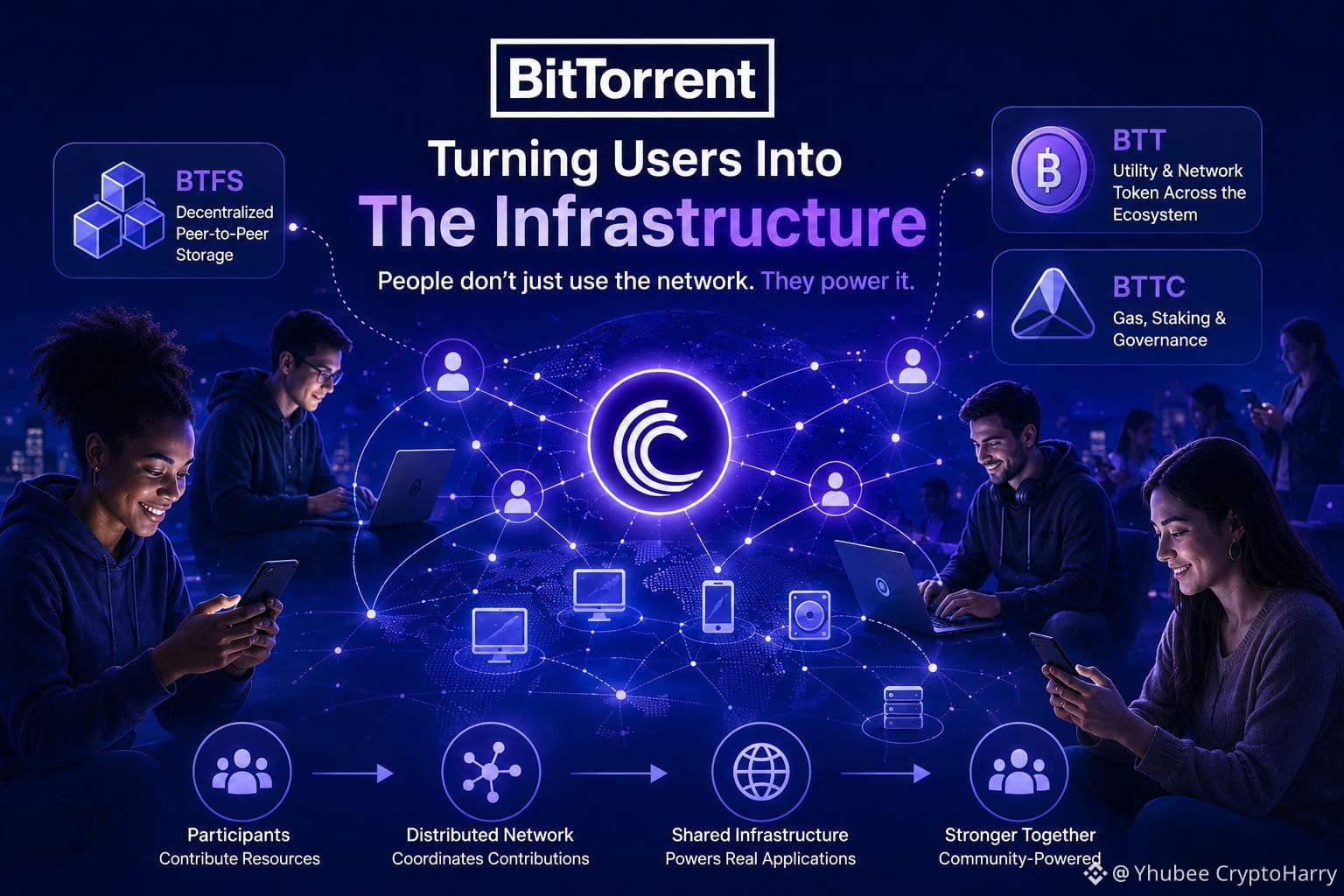
𝗕𝗶𝘁𝗧𝗼𝗿𝗿𝗲𝗻𝘁 𝗧𝘂𝗿𝗻𝗲𝗱 𝗨𝘀𝗲𝗿𝘀 𝗜𝗻𝘁𝗼 𝗧𝗵𝗲 𝗜𝗻𝗳𝗿𝗮𝘀𝘁𝗿𝘂𝗰𝘁𝘂𝗿𝗲!
The internet became more powerful when BitTorrent introduced a simple idea:
People connected to a network do not have to be just consumers.
𝗧𝗵𝗲𝘆 𝗰𝗮𝗻 𝗮𝗹𝘀𝗼 𝗯𝗲𝗰𝗼𝗺𝗲 𝗽𝗮𝗿𝘁 𝗼𝗳 𝘄𝗵𝗮𝘁 𝗽𝗼𝘄𝗲𝗿𝘀 𝗶𝘁.
Instead of relying entirely on a central server to distribute files, the BitTorrent protocol enables peers to share pieces of data with one another, reducing dependence on a single source. That peer-to-peer principle remains at the heart of BitTorrent's approach to decentralized infrastructure.
Today, that idea extends beyond file sharing.
Modern digital applications require storage, bandwidth, computing resources and efficient ways to distribute data. As these demands continue to grow, infrastructure built entirely around a limited number of centralized providers is not the only possible model.
𝗕𝗶𝘁𝗧𝗼𝗿𝗿𝗲𝗻𝘁 𝗼𝗳𝗳𝗲𝗿𝘀 𝗮𝗻𝗼𝘁𝗵𝗲𝗿 𝗽𝗲𝗿𝘀𝗽𝗲𝗰𝘁𝗶𝘃𝗲.
With BTFS exploring decentralized peer-to-peer storage and BTT serving as a utility and network token across parts of the broader ecosystem, BitTorrent is extending its distributed-network philosophy into Web3 infrastructure. BTTC also uses BTT for gas, staking and governance within its network.
The bigger idea is worth paying attention to:
➡ Participants can contribute resources
➡ Distributed networks can coordinate those contributions
➡ Infrastructure can become something communities actively help power
BitTorrent is therefore more than a technology from the early internet era.
It remains an evolving example of what happens when the network itself becomes part of the infrastructure.
@Justin Sun孙宇晨 @BitTorrent_Official
#TRONEcoStar #BTTC $BTTC
The internet became more powerful when BitTorrent introduced a simple idea:
People connected to a network do not have to be just consumers.
𝗧𝗵𝗲𝘆 𝗰𝗮𝗻 𝗮𝗹𝘀𝗼 𝗯𝗲𝗰𝗼𝗺𝗲 𝗽𝗮𝗿𝘁 𝗼𝗳 𝘄𝗵𝗮𝘁 𝗽𝗼𝘄𝗲𝗿𝘀 𝗶𝘁.
Instead of relying entirely on a central server to distribute files, the BitTorrent protocol enables peers to share pieces of data with one another, reducing dependence on a single source. That peer-to-peer principle remains at the heart of BitTorrent's approach to decentralized infrastructure.
Today, that idea extends beyond file sharing.
Modern digital applications require storage, bandwidth, computing resources and efficient ways to distribute data. As these demands continue to grow, infrastructure built entirely around a limited number of centralized providers is not the only possible model.
𝗕𝗶𝘁𝗧𝗼𝗿𝗿𝗲𝗻𝘁 𝗼𝗳𝗳𝗲𝗿𝘀 𝗮𝗻𝗼𝘁𝗵𝗲𝗿 𝗽𝗲𝗿𝘀𝗽𝗲𝗰𝘁𝗶𝘃𝗲.
With BTFS exploring decentralized peer-to-peer storage and BTT serving as a utility and network token across parts of the broader ecosystem, BitTorrent is extending its distributed-network philosophy into Web3 infrastructure. BTTC also uses BTT for gas, staking and governance within its network.
The bigger idea is worth paying attention to:
➡ Participants can contribute resources
➡ Distributed networks can coordinate those contributions
➡ Infrastructure can become something communities actively help power
BitTorrent is therefore more than a technology from the early internet era.
It remains an evolving example of what happens when the network itself becomes part of the infrastructure.
@Justin Sun孙宇晨 @BitTorrent_Official
#TRONEcoStar #BTTC $BTTC