I’ve watched enough crypto cycles to know that privacy is one of those ideas that always comes back when the industry realizes transparency has limits. Every few years, we hear that the next breakthrough will solve the problems of trust, ownership, and financial freedom. Sometimes the technology is interesting. Sometimes it is just a new story wrapped around old expectations.
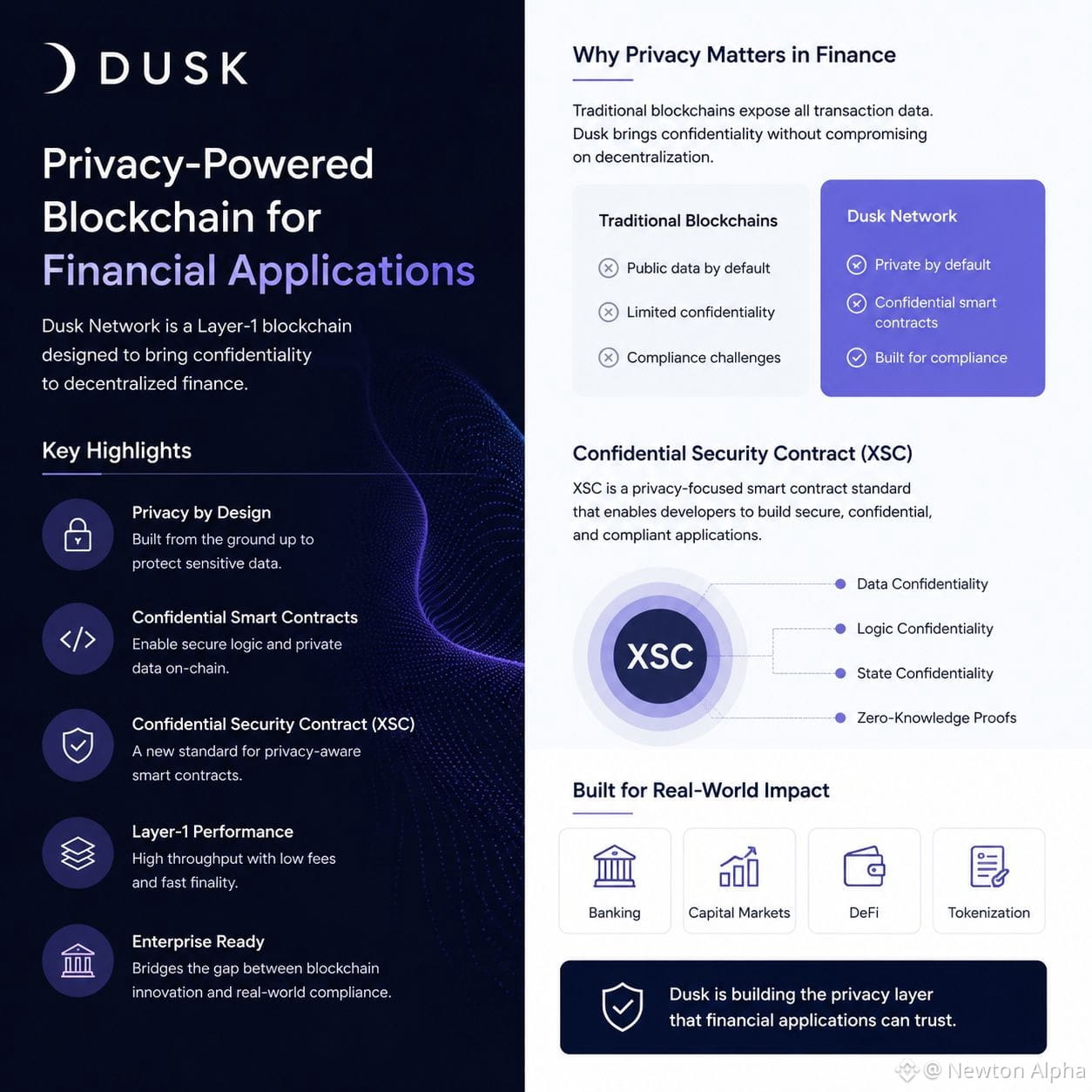
Dusk is one of the projects that makes me pay attention because it is focused on a problem that feels more practical than many narratives: how financial applications can use blockchain without exposing every detail of every transaction. The idea of confidential smart contracts sounds logical, especially for institutions that may want the benefits of blockchain without giving up privacy.
But I’ve seen this before. A strong technical concept does not automatically translate into adoption. The difficult part is rarely proving that something can be built. The difficult part is convincing real users, businesses, and regulators that it fits into the messy reality of finance.
I keep noticing that crypto often underestimates friction. Privacy brings its own trade-offs. More confidentiality can create questions around transparency, compliance, and trust. The balance is not simple, and anyone pretending it is probably ignores the hardest parts.
I’m not fully convinced by any project just because the vision sounds right. Dusk still has to prove that its technology can survive beyond the early attention phase and become something people actually use.
Still, something about focusing on privacy in financial infrastructure feels more grounded than chasing another temporary trend. In a market full of recycled promises, I think the projects worth watching are the ones quietly solving problems that might still matter years from now.
@Dusk #dusk $DUSK
Dusk is one of the projects that makes me pay attention because it is focused on a problem that feels more practical than many narratives: how financial applications can use blockchain without exposing every detail of every transaction. The idea of confidential smart contracts sounds logical, especially for institutions that may want the benefits of blockchain without giving up privacy.
But I’ve seen this before. A strong technical concept does not automatically translate into adoption. The difficult part is rarely proving that something can be built. The difficult part is convincing real users, businesses, and regulators that it fits into the messy reality of finance.
I keep noticing that crypto often underestimates friction. Privacy brings its own trade-offs. More confidentiality can create questions around transparency, compliance, and trust. The balance is not simple, and anyone pretending it is probably ignores the hardest parts.
I’m not fully convinced by any project just because the vision sounds right. Dusk still has to prove that its technology can survive beyond the early attention phase and become something people actually use.
Still, something about focusing on privacy in financial infrastructure feels more grounded than chasing another temporary trend. In a market full of recycled promises, I think the projects worth watching are the ones quietly solving problems that might still matter years from now.
@Dusk #dusk $DUSK