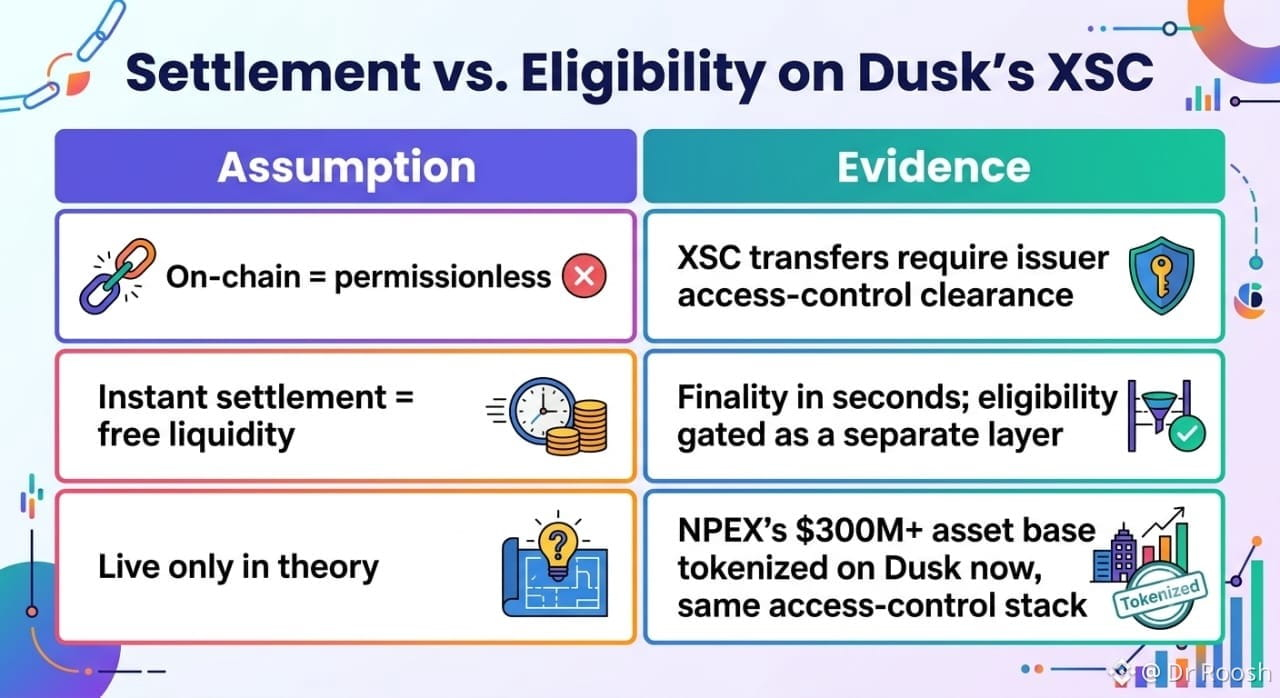
Ich beschäftige mich schon eine Weile mit Dusks XSC-Standard. Was mir dabei besonders aufgefallen ist: Abwicklung und Transferberechtigung sind zwei getrennte Ebenen, nicht eine. #dusk @Dusks Phoenix-/Moonlight-Schienen sorgen bei einem Security-Token innerhalb von Sekunden für kryptografische Finalität. Für einen XSC-Transfer muss die empfangende Wallet jedoch weiterhin von der Zugriffskontrollschicht des Emittenten freigegeben werden – ohne Freigabe kein Transfer, unabhängig von der Finalität.
Das steht nicht nur in alten Designdokumenten. Dusks eigenes STO-Framework von 2019 beschreibt eine Whitelist, mit der Emittenten nicht berechtigte Parteien auch nach Abschluss eines Angebots ausschließen können. Noch aufschlussreicher: Laut Dusks aktueller Website ist der gesamte verwaltete Vermögensbestand von NPEX im Wert von über 300 Mio. US-Dollar inzwischen auf Dusk tokenisiert. Er läuft auf einem gemeinsamen Stack aus „Zugriffskontrollen, Datenschutz mit selektiver Offenlegung und deterministischer Finalität“ – diese Zugangsbeschränkung ist also keine Theorie, sondern eine aktive Infrastruktur unter realen Vermögenswerten.
Für mich änderte sich die Perspektive, als mir klar wurde, dass tokenisierte RWA auf $DUSK SK keine erlaubnisfreie Liquidität bedeuten. Sie bedeuten programmierbare Berechtigungen. Die Blockchain beseitigt Reibungsverluste bei der Abwicklung; sie schafft den Gatekeeper nicht ab, sondern gibt ihm lediglich schnellere Werkzeuge.
Als Nächstes möchte ich prüfen, ob eine Zugriffskontrollentscheidung bei einem live von NPEX ausgegebenen Vermögenswert – also die Freigabe oder Sperrung einer Wallet – selbst als On-Chain-Ereignis abgefragt werden kann oder ob sie sich nur darin zeigt, dass eine Transaktion fehlschlägt, während die Begründung off-chain bleibt.
#dusk
@Dusk
Das steht nicht nur in alten Designdokumenten. Dusks eigenes STO-Framework von 2019 beschreibt eine Whitelist, mit der Emittenten nicht berechtigte Parteien auch nach Abschluss eines Angebots ausschließen können. Noch aufschlussreicher: Laut Dusks aktueller Website ist der gesamte verwaltete Vermögensbestand von NPEX im Wert von über 300 Mio. US-Dollar inzwischen auf Dusk tokenisiert. Er läuft auf einem gemeinsamen Stack aus „Zugriffskontrollen, Datenschutz mit selektiver Offenlegung und deterministischer Finalität“ – diese Zugangsbeschränkung ist also keine Theorie, sondern eine aktive Infrastruktur unter realen Vermögenswerten.
Für mich änderte sich die Perspektive, als mir klar wurde, dass tokenisierte RWA auf $DUSK SK keine erlaubnisfreie Liquidität bedeuten. Sie bedeuten programmierbare Berechtigungen. Die Blockchain beseitigt Reibungsverluste bei der Abwicklung; sie schafft den Gatekeeper nicht ab, sondern gibt ihm lediglich schnellere Werkzeuge.
Als Nächstes möchte ich prüfen, ob eine Zugriffskontrollentscheidung bei einem live von NPEX ausgegebenen Vermögenswert – also die Freigabe oder Sperrung einer Wallet – selbst als On-Chain-Ereignis abgefragt werden kann oder ob sie sich nur darin zeigt, dass eine Transaktion fehlschlägt, während die Begründung off-chain bleibt.
#dusk
@Dusk