#dusk $DUSK @Dusk
When I first studied public blockchains I mostly compared TPS, ecosystem size, and developer activity. Looking closer at Dusk shifted my focus. The real question became: once complex assets like securities and funds move on-chain, how does a network simultaneously deliver privacy, controlled state, and verifiable settlement?
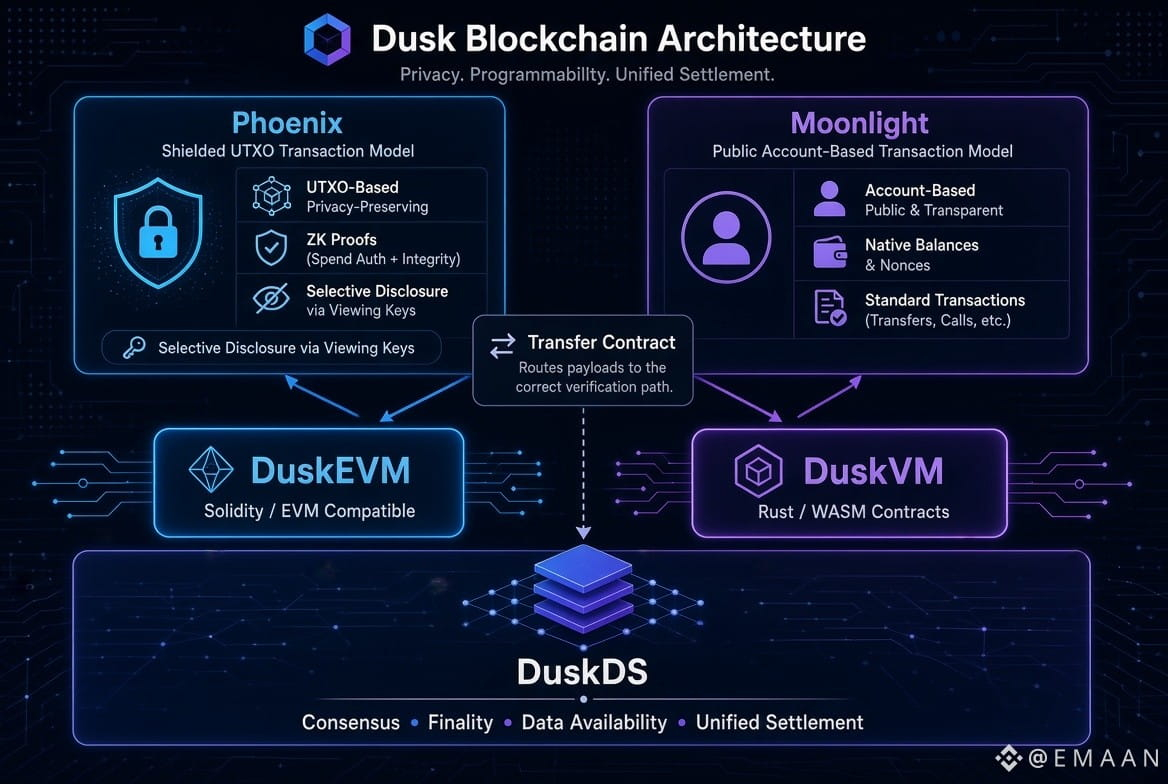
Dusk’s design offers a clear answer. DuskDS handles consensus, finality, data availability, and the native transaction layer. DuskEVM supplies a familiar Solidity environment, while DuskVM lets Rust and WASM contracts run directly on L1.
The element that stood out most is Phoenix. It uses a shielded UTXO model. Zero-knowledge proofs confirm validity and stop double-spending without revealing amounts or parties, yet viewing keys still allow selective disclosure. Moonlight provides the public, account-based counterpart.
The Transfer Contract ties everything together. Different transaction payloads are routed to the right verification path, but all of them settle into the same unified state managed by DuskDS. The architecture’s real strength is giving each asset type its own execution entry point while sharing a single settlement foundation.
Open questions remain. If most developers stay inside the EVM, will DuskVM prove its worth? And if demand for private assets rises, can the native privacy layer turn into a lasting advantage?
What keeps me watching Dusk long-term is whether it can open genuine new paths for complex financial assets on-chain. That outcome will decide if the architecture ultimately creates real-world value.
When I first studied public blockchains I mostly compared TPS, ecosystem size, and developer activity. Looking closer at Dusk shifted my focus. The real question became: once complex assets like securities and funds move on-chain, how does a network simultaneously deliver privacy, controlled state, and verifiable settlement?
Dusk’s design offers a clear answer. DuskDS handles consensus, finality, data availability, and the native transaction layer. DuskEVM supplies a familiar Solidity environment, while DuskVM lets Rust and WASM contracts run directly on L1.
The element that stood out most is Phoenix. It uses a shielded UTXO model. Zero-knowledge proofs confirm validity and stop double-spending without revealing amounts or parties, yet viewing keys still allow selective disclosure. Moonlight provides the public, account-based counterpart.
The Transfer Contract ties everything together. Different transaction payloads are routed to the right verification path, but all of them settle into the same unified state managed by DuskDS. The architecture’s real strength is giving each asset type its own execution entry point while sharing a single settlement foundation.
Open questions remain. If most developers stay inside the EVM, will DuskVM prove its worth? And if demand for private assets rises, can the native privacy layer turn into a lasting advantage?
What keeps me watching Dusk long-term is whether it can open genuine new paths for complex financial assets on-chain. That outcome will decide if the architecture ultimately creates real-world value.