


𝗗𝗔𝗦 𝗡𝗔𝗖𝗛𝗦𝗧𝗘 𝗜𝗡𝗧𝗘𝗥𝗡𝗘𝗧 𝗕𝗥𝗔𝗨𝗖𝗛𝗧 𝗞𝗘𝗜𝗡 𝗚𝗥𝗢ß𝗘𝗥𝗘𝗦 𝗭𝗘𝗡𝗧𝗥𝗨𝗠
Und was wäre, wenn die Zukunft des Internets nicht darin bestünde, noch größere zentralisierte Infrastruktur aufzubauen, sondern einen größeren Teil der bereits im Netzwerk verfügbaren Ressourcen zu koordinieren?
Dieser Gedanke stand im Mittelpunkt von @BitTorrent_Official seit mehr als zwei Jahrzehnten.
Anstatt dass ein Server jede Anfrage verarbeitet, ermöglicht das BitTorrent-Protokoll den Peers, Datei-Bausteine direkt miteinander auszutauschen. Jeder Teilnehmer kann Bandbreite und Ressourcen beisteuern und so dabei helfen, die Arbeitslast im gesamten Swarm zu verteilen.
𝗩𝗢𝗡 𝗣𝗘𝗘𝗥-𝗭𝗨-𝗣𝗘𝗘𝗥 𝗭𝗨𝗥 𝗩𝗘𝗥𝗧𝗘𝗜𝗟𝗧𝗘𝗡 𝗜𝗡𝗙𝗥𝗔𝗦𝗧𝗥𝗨𝗞𝗧𝗨𝗥
Dieses Prinzip wird noch interessanter, wenn das Internet immer mehr Ressourcen verlangt.
KI braucht enorme Mengen an Rechenleistung.
Web3-Anwendungen benötigen Speicher.
Plattformen mit hohem Datenbedarf brauchen eine zuverlässige Infrastruktur.
Und auf der ganzen Welt gibt es bereits eine enorme Menge an Rechenleistung, Speicher und Bandbreitenkapazität, die über einzelne Rechner und Netzwerke verteilt ist.
Die Herausforderung besteht darin, diese verstreuten Ressourcen in eine nutzbare Infrastruktur zu verwandeln.
𝗗𝗔𝗦 𝗜𝗦𝗧 𝗗𝗘𝗥 𝗢𝗥𝗧, 𝗔𝗡 𝗗𝗘𝗠 𝗕𝗜𝗧𝗧𝗢𝗥𝗥𝗘𝗡𝗧-Ö𝗞𝗢𝗦𝗬𝗦𝗧𝗘𝗠 𝗚𝗘𝗛𝗧 𝗜𝗡𝗧𝗘𝗥𝗘𝗦𝗦𝗜𝗘𝗥𝗧
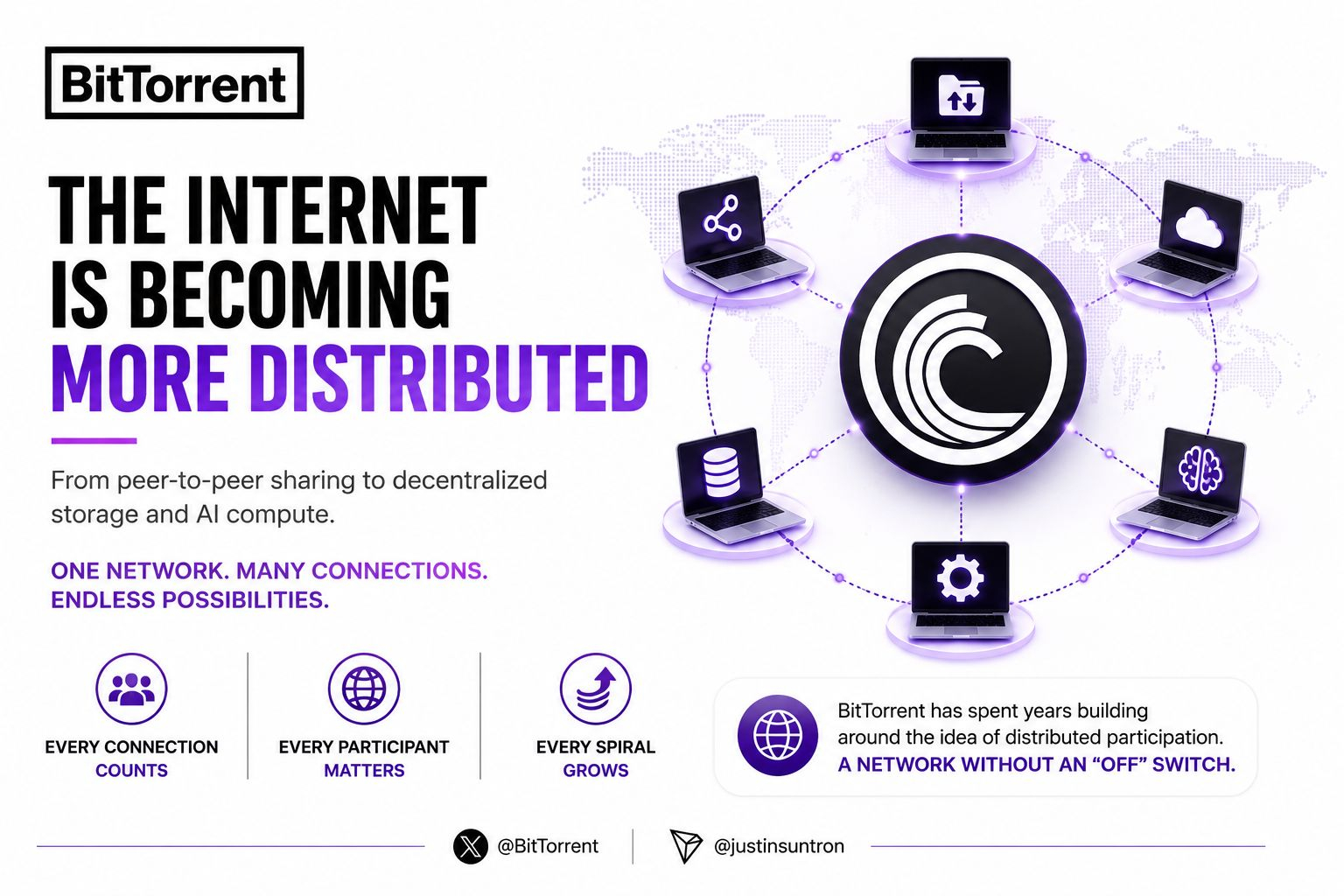
BTFS erweitert den verteilten Ansatz auf die dezentrale Speicherung und bietet ein Peer-to-Peer-System zum Speichern und Teilen digitaler Inhalte.
BTTInferGrid greift eine ähnliche Idee verteilter Infrastruktur für KI-Compute auf: Es verbindet unabhängige GPU-Ressourcen mit KI-Inferenz-Workloads und nutzt Validatoren sowie kryptökonomische Mechanismen, um die Berechnung zu verifizieren. ([BTT Infergrid][2])
So sieht das Gesamtbild ungefähr so aus:
➟ BitTorrent → verteilte Datenübertragung
➟ BTFS → verteilter Speicher
➟ BTTInferGrid → verteiltes KI-Compute
Verschiedene Technologien, aber ein verwandtes Prinzip:
𝗩𝗘𝗥𝗧𝗘𝗜𝗟𝗘 𝗗𝗜𝗘 𝗥𝗘𝗦𝗦𝗢𝗨𝗥𝗖𝗘𝗡.
𝗩𝗘𝗥𝗧𝗘𝗜𝗟𝗘 𝗗𝗔𝗦 𝗪𝗢𝗥𝗞.
𝗗𝗜𝗘 𝗡𝗘𝗧𝗭𝗪𝗘𝗥𝗞𝗘 𝗭𝗨𝗦𝗔𝗠𝗠𝗘𝗡𝗙𝗔𝗦𝗦𝗘𝗡.
Das heißt nicht, dass zentrale Infrastruktur verschwindet.
Das bedeutet, dass dezentrale Netzwerke eine andere Möglichkeit bieten können, Ressourcen zu koordinieren und die Abhängigkeit von einem einzelnen Infrastruktur-Anbieter zu verringern.
Die ursprüngliche Innovation von BitTorrent bestand darin zu zeigen, dass ein globales Netzwerk Informationen verteilen kann, indem die Teilnehmenden Teil des Auslieferungssystems werden.
Heute wird diese gleiche übergreifende Philosophie über Speicher, Compute und andere dezentrale Dienste hinweg erforscht.
Das Internet entwickelt sich ständig weiter.
Aber eine Idee bleibt erstaunlich kraftvoll:
𝗘𝗜𝗡 𝗡𝗘𝗧𝗭 𝗞𝗔𝗡𝗡 𝗦𝗧𝗥𝗢𝗡𝗚 𝗪𝗘𝗥𝗗𝗘𝗡, 𝗪𝗘𝗡𝗡 𝗘𝗦 𝗗𝗜𝗘 𝗥𝗘𝗦𝗦𝗢𝗨𝗥𝗖𝗘𝗡 𝗦𝗘𝗜𝗡𝗘𝗥 𝗣𝗔𝗥𝗧𝗜𝗭𝗜𝗣𝗔𝗡𝗧𝗘𝗡 𝗡𝗨𝗧𝗭𝗘𝗡 𝗞𝗔𝗡𝗡.