#dusk $DUSK @Dusk
Settlement and execution keep getting talked about as though they are The same job with two names. On Dusks architecture they are not and the separation is deliberate not incidental.
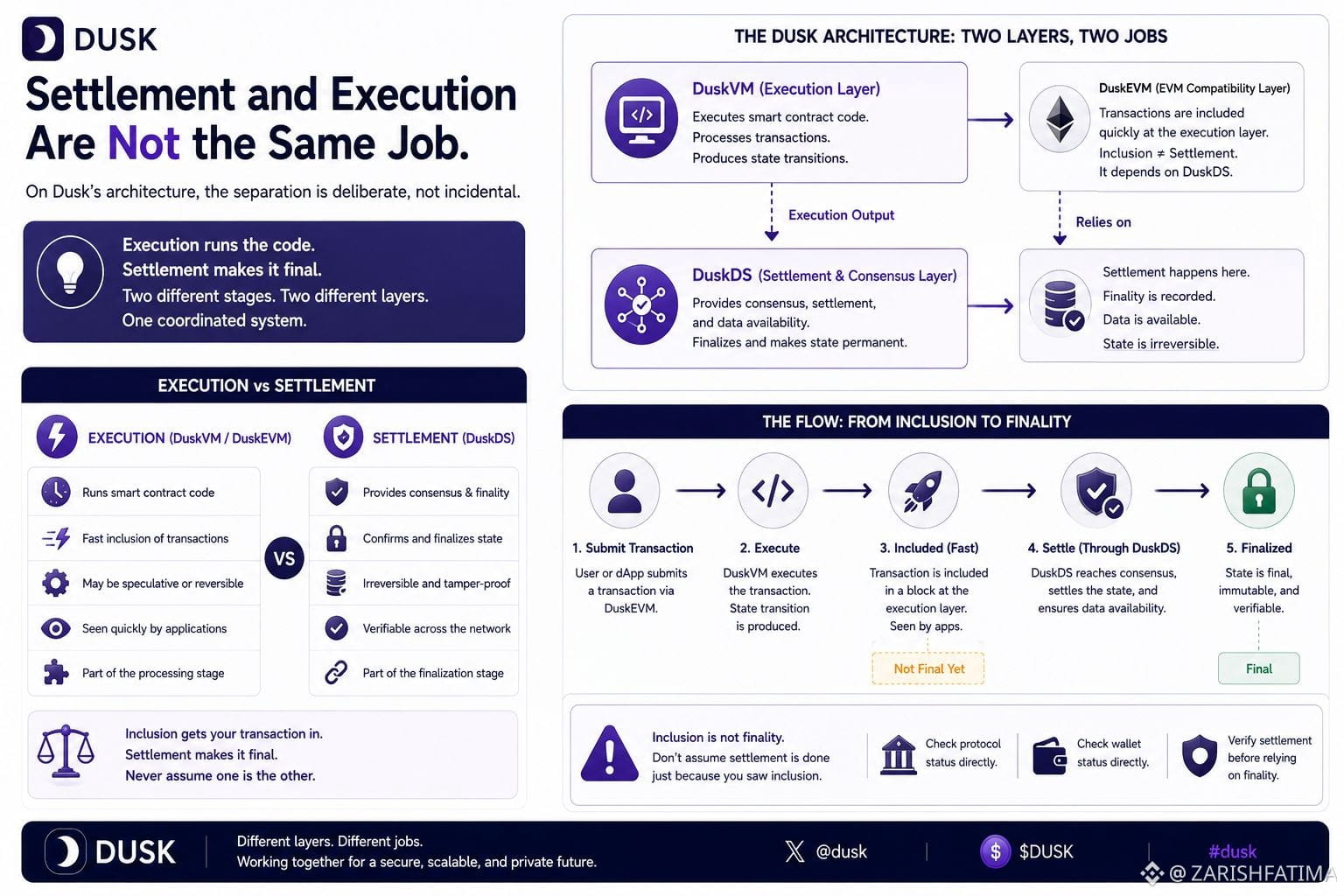
DuskVM executes contract code. DuskDS provides the consensus Settlement and data availability foundation that finalizes whatever DuskVM produced. DuskEVM depends on the same foundation from a different direction transactions get included quickly at the execution layer but that inclusion is a separate stage from settlement which happens Through DuskDS.
That gap between the two stages is the whole point of Keeping them Separate. An application built on DuskEVM can see a transaction included fast, while the part that actually finalizes it settlement is still being handled underneath by DuskDS. Anyone moving value across these layers is better off checking protocol or wallet status directly rather than assuming settlement finished Just because inclusion did.
@Dusk $DUSK #dusk
Settlement and execution keep getting talked about as though they are The same job with two names. On Dusks architecture they are not and the separation is deliberate not incidental.
DuskVM executes contract code. DuskDS provides the consensus Settlement and data availability foundation that finalizes whatever DuskVM produced. DuskEVM depends on the same foundation from a different direction transactions get included quickly at the execution layer but that inclusion is a separate stage from settlement which happens Through DuskDS.
That gap between the two stages is the whole point of Keeping them Separate. An application built on DuskEVM can see a transaction included fast, while the part that actually finalizes it settlement is still being handled underneath by DuskDS. Anyone moving value across these layers is better off checking protocol or wallet status directly rather than assuming settlement finished Just because inclusion did.
@Dusk $DUSK #dusk