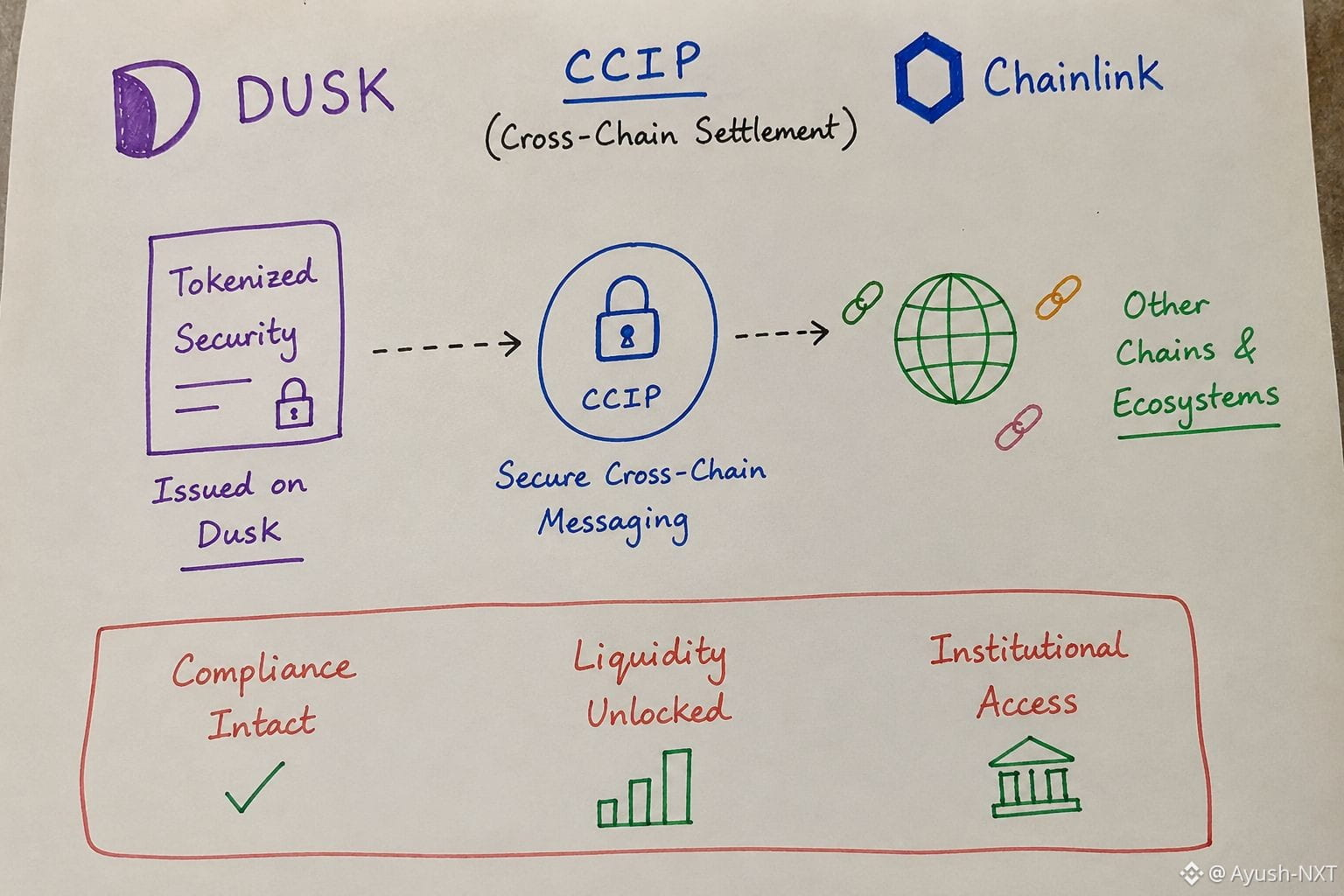
I was looking into the Chainlink integration Dusk announced, specifically the CCIP piece meant to help with cross-chain settlement of tokenized securities, and it made me think about liquidity fragmentation in a way I hadn't fully considered before. I noticed the pitch isn't just about connecting Dusk to other chains generically, it's framed around solving a specific problem, assets issued on Dusk needing to move or settle across ecosystems without losing the compliance guarantees baked into the original issuance.
What seems interesting is how this could address a real gap in RWA tokenization. If tokenized securities stay locked to a single chain, their usefulness narrows considerably, since institutional liquidity often spans multiple venues and counterparties. Bringing in an established interoperability protocol like CCIP suggests Dusk is trying to plug into existing infrastructure rather than expecting the market to consolidate around one chain alone.
The question that comes to mind is whether compliance guarantees actually survive the trip across chains intact. Cross-chain messaging introduces its own trust assumptions, and I sometimes wonder if a security tokenized under Dusk's privacy and auditability framework retains the same legal footing once it's represented or settled somewhere else entirely.
Looking from the outside, this partnership feels like a meaningful technical step, but whether it translates into actual cross-chain liquidity for regulated assets is a separate question from whether the integration works mechanically. The pieces seem to be falling into place, yet real usage will tell a different story... anyway, time will tell🚀
#dusk $DUSK @Dusk
What seems interesting is how this could address a real gap in RWA tokenization. If tokenized securities stay locked to a single chain, their usefulness narrows considerably, since institutional liquidity often spans multiple venues and counterparties. Bringing in an established interoperability protocol like CCIP suggests Dusk is trying to plug into existing infrastructure rather than expecting the market to consolidate around one chain alone.
The question that comes to mind is whether compliance guarantees actually survive the trip across chains intact. Cross-chain messaging introduces its own trust assumptions, and I sometimes wonder if a security tokenized under Dusk's privacy and auditability framework retains the same legal footing once it's represented or settled somewhere else entirely.
Looking from the outside, this partnership feels like a meaningful technical step, but whether it translates into actual cross-chain liquidity for regulated assets is a separate question from whether the integration works mechanically. The pieces seem to be falling into place, yet real usage will tell a different story... anyway, time will tell🚀
#dusk $DUSK @Dusk