

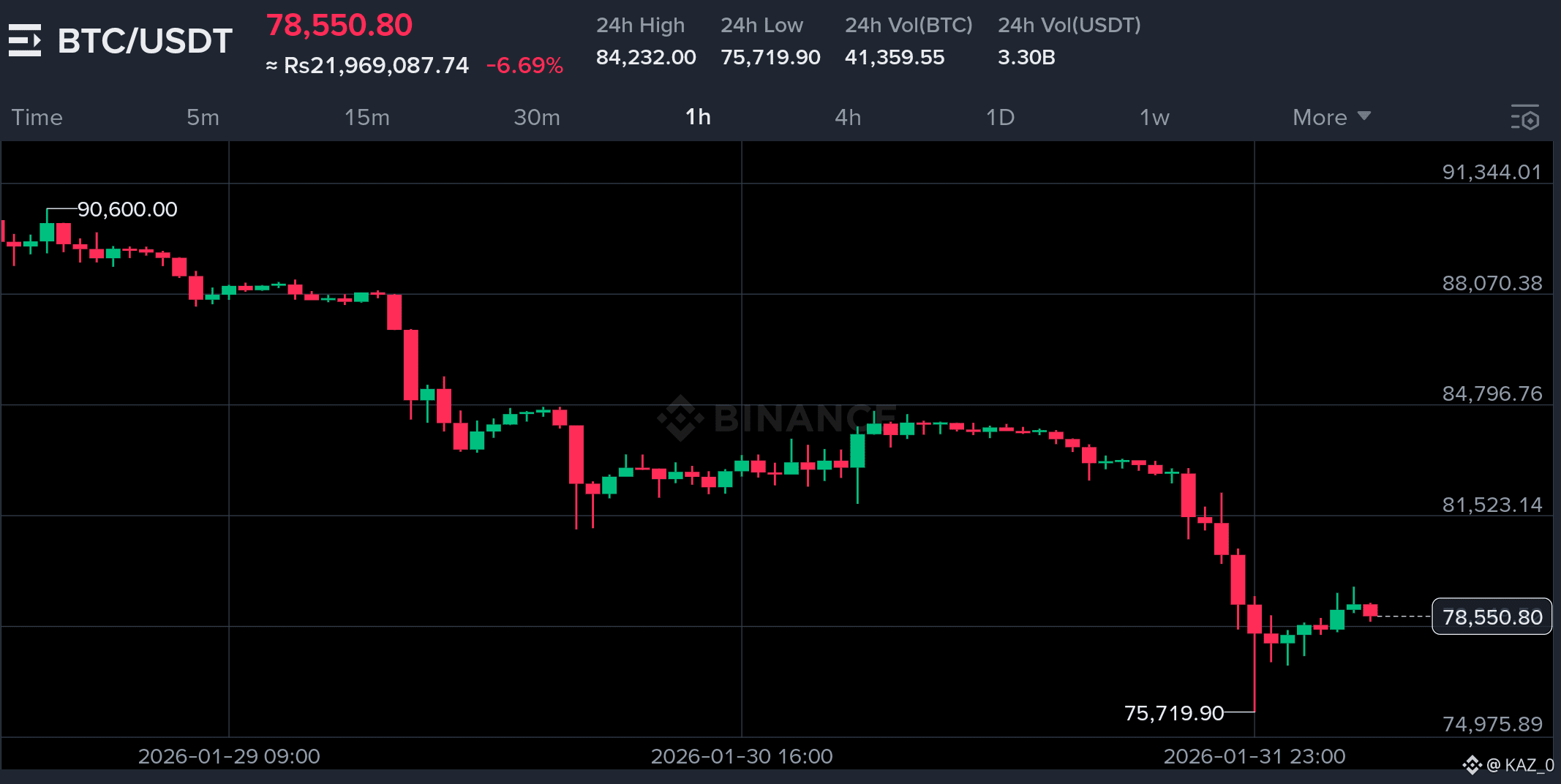
Over the past few days, the charts felt unusually quiet. Prices were high, but conviction was fading. So when Bitcoin dropped below 80,000 and Ethereum lost the 2,500 level, it didn’t feel like a shock — it felt like confirmation.
For Bitcoin, 80K wasn’t just another number. It was a zone buyers had been defending repeatedly. Once that floor gave way, the tone of the market shifted quickly. Dip buying slowed, and risk reduction took over.
Ethereum followed a similar path. The 2.5K level had held through multiple tests, but once it broke, selling picked up pace. When both major assets lose key support at the same time, it’s rarely an isolated move — it usually signals a broader reset across the market.
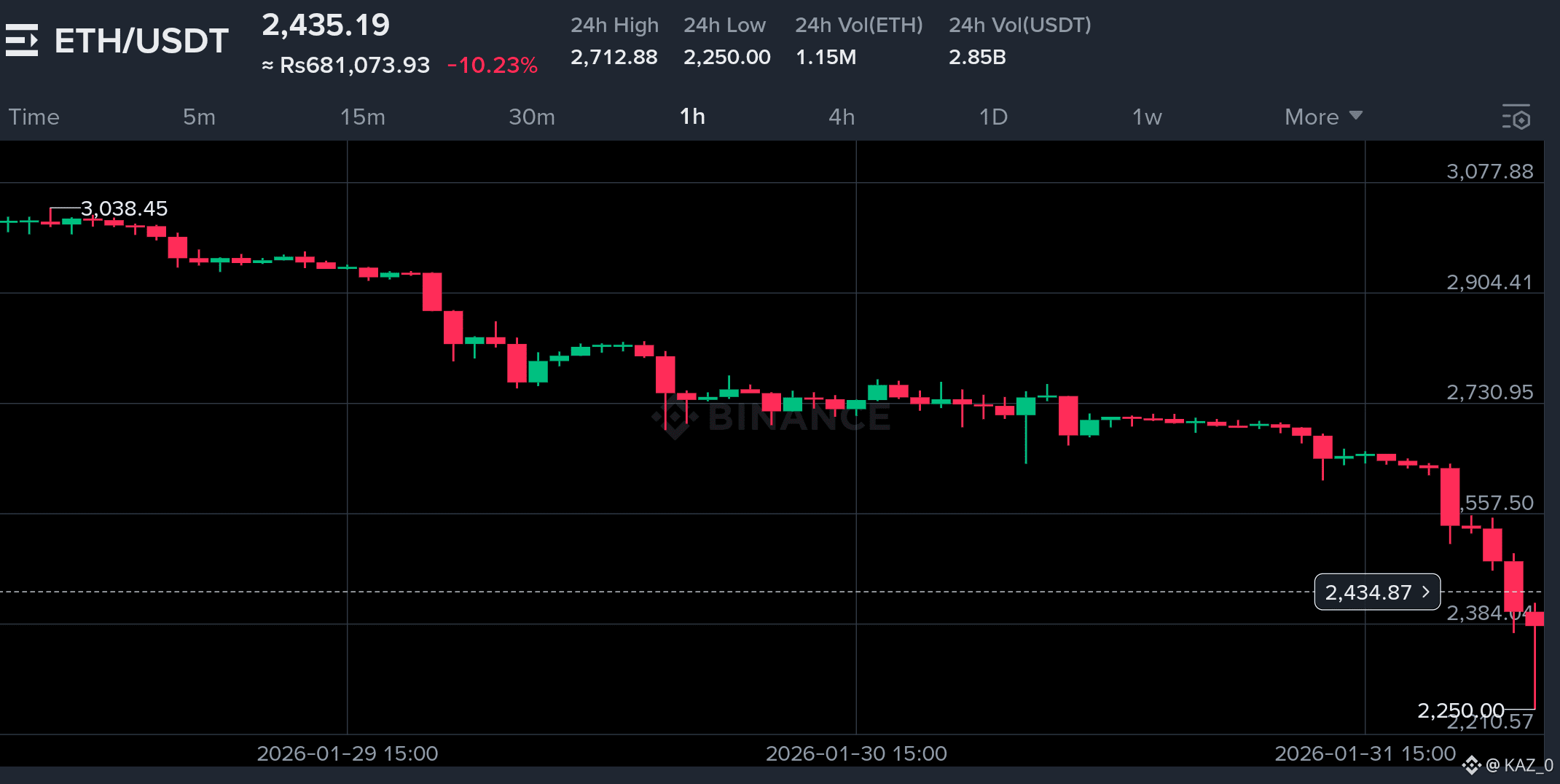
Leverage also played its part. As supports failed, liquidations added fuel to the downside. In phases like this, the market tends to flush excess first before finding a new balance.
On the macro side, uncertainty remains. Without clear signals for risk assets, buyers hesitate to step in aggressively. Short-term rebounds can happen, but sustaining them becomes difficult.
This doesn’t mean the market story is over, but it does mean this phase shouldn’t be ignored. Crypto moves in cycles, not emotions, and moments like these are part of that rhythm.
If Bitcoin manages to reclaim and hold above 80K, confidence can gradually return. For Ethereum, regaining 2.5K will be just as important. Until then, patience and observation matter more than prediction.
#CryptoNews #BTC #MarketCorrection #ContentCreation #Binance

