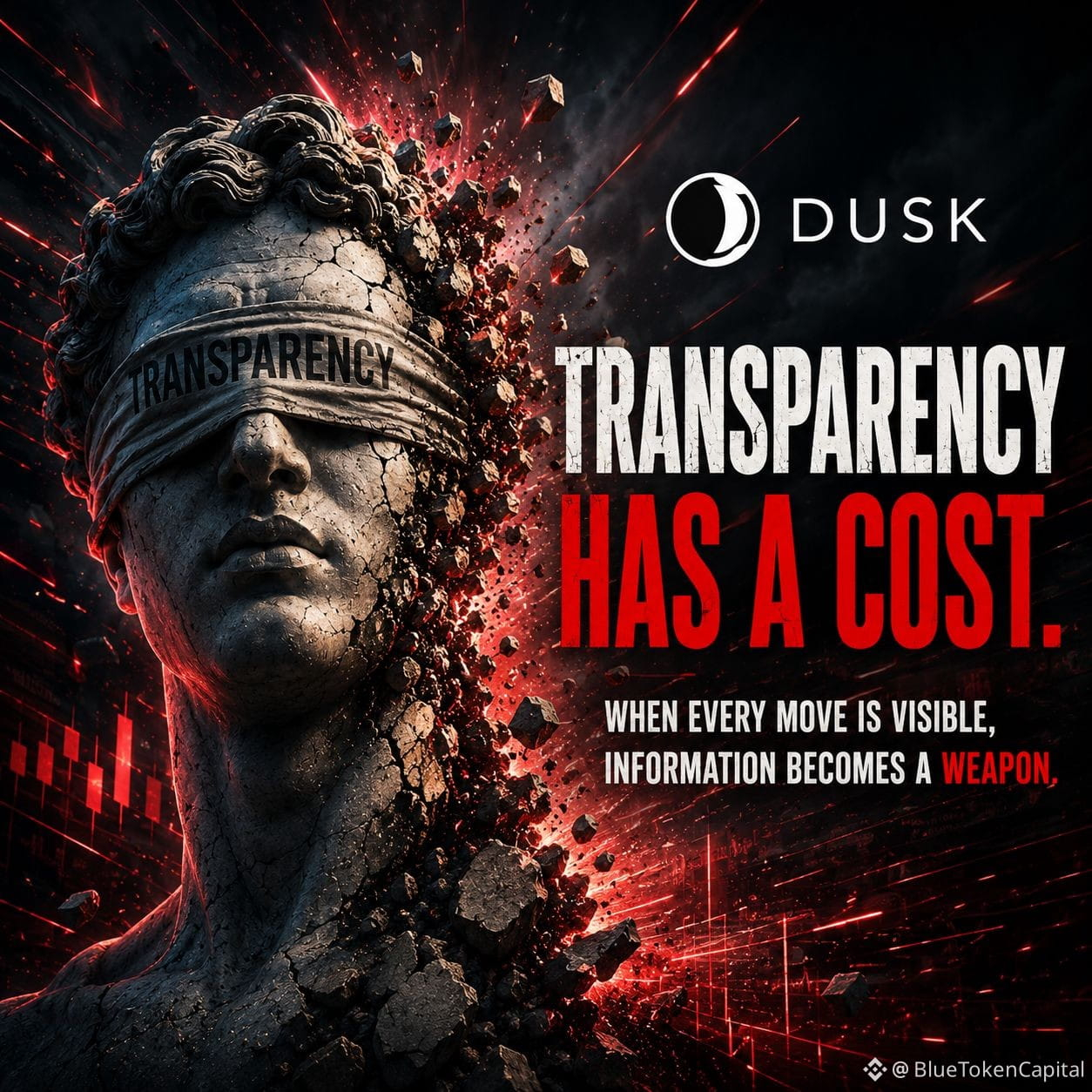
A $50M TRADE HAS A PRIVACY PROBLEM🤫
A trading desk moves $50M into a tokenized fund. On a traditional system, that order isn't broadcast to the entire market while it is being executed. On a public blockchain, the transaction, timing and counterparties can become visible, allowing others to piece together what the desk is doing. The problem isn't that the trade is illegal or that the institution wants to hide from regulators. The market simply doesn't need to know your strategy before you finish executing it. For an institution moving tens of millions, that information can have a real economic cost.
This is where Dusk started making more sense to me. I don't see it as trying to make finance invisible. Phoenix provides shielded transactions, ZK proofs can verify validity without exposing sensitive data, and Hedger is designed for confidential EVM workflows and obfuscated order books. The idea is simple: protect the information that can hurt execution, without hiding the proof that creates trust. A trader can protect intent, an institution can protect its position, while authorized parties can still verify what matters. That's very different from simply calling something a “privacy blockchain.”
Because tokenizing an asset is only the beginning. If every trade exposes strategy and every position becomes market intelligence, blockchain may solve tokenization while creating another problem. That's the gap Dusk is trying to address through privacy, programmable financial assets, compliance and deterministic settlement. The goal isn't to hide the market. It's to stop transparency from becoming a tax on participation. If a $50M trade can be verified without exposing the strategy behind it, that's a much more interesting use of blockchain infrastructure to me than simply putting another asset onchain.
@Dusk
$DUSK
#dusk
A trading desk moves $50M into a tokenized fund. On a traditional system, that order isn't broadcast to the entire market while it is being executed. On a public blockchain, the transaction, timing and counterparties can become visible, allowing others to piece together what the desk is doing. The problem isn't that the trade is illegal or that the institution wants to hide from regulators. The market simply doesn't need to know your strategy before you finish executing it. For an institution moving tens of millions, that information can have a real economic cost.
This is where Dusk started making more sense to me. I don't see it as trying to make finance invisible. Phoenix provides shielded transactions, ZK proofs can verify validity without exposing sensitive data, and Hedger is designed for confidential EVM workflows and obfuscated order books. The idea is simple: protect the information that can hurt execution, without hiding the proof that creates trust. A trader can protect intent, an institution can protect its position, while authorized parties can still verify what matters. That's very different from simply calling something a “privacy blockchain.”
Because tokenizing an asset is only the beginning. If every trade exposes strategy and every position becomes market intelligence, blockchain may solve tokenization while creating another problem. That's the gap Dusk is trying to address through privacy, programmable financial assets, compliance and deterministic settlement. The goal isn't to hide the market. It's to stop transparency from becoming a tax on participation. If a $50M trade can be verified without exposing the strategy behind it, that's a much more interesting use of blockchain infrastructure to me than simply putting another asset onchain.
@Dusk
$DUSK
#dusk