#dusk $DUSK @Dusk
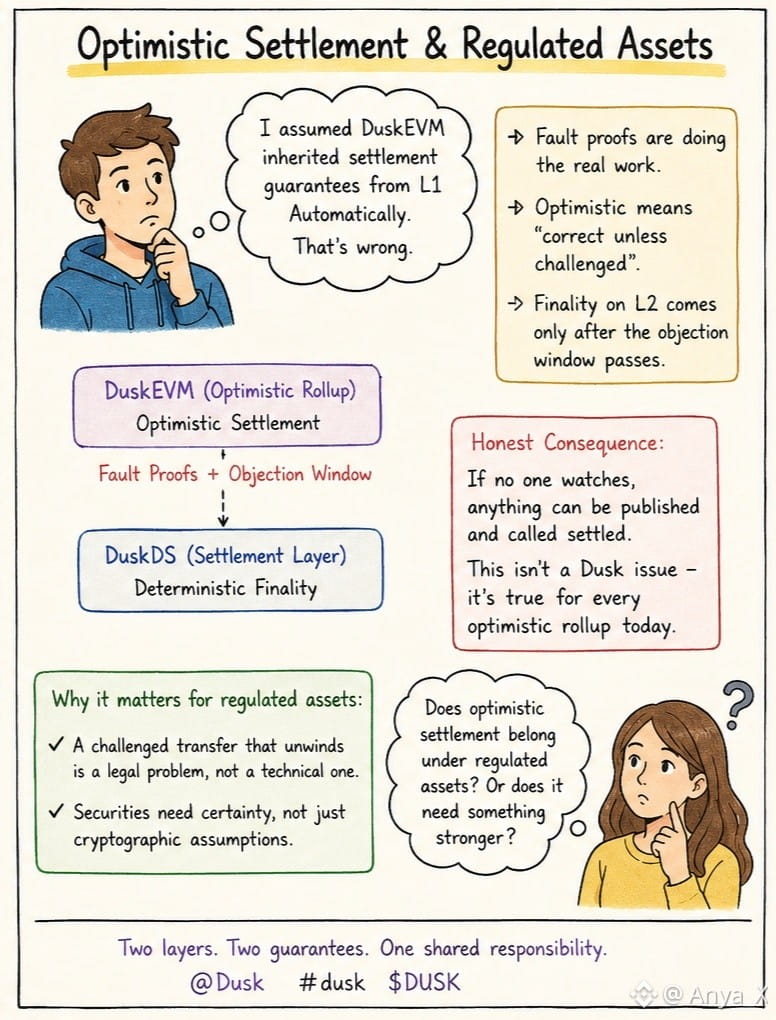
I assumed the settlement guarantees on DuskEVM were inherited from the L1 automatically. thats wrong and I want to correct it becuse I think I implied otherwise earlier in the week.
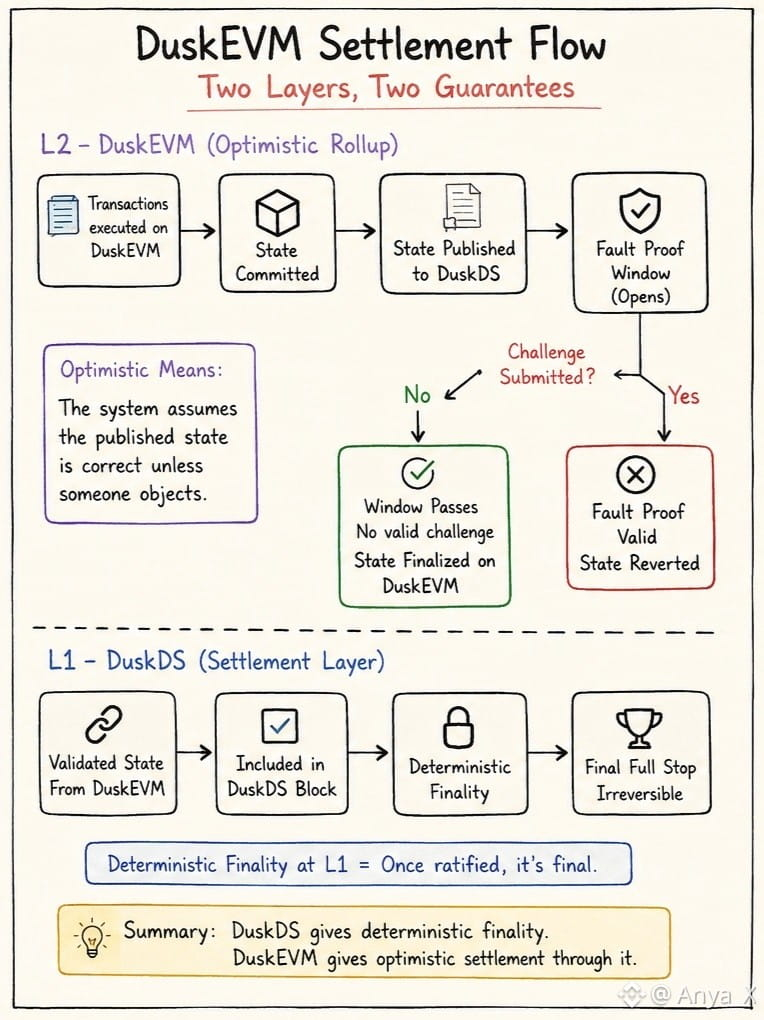
DuskEVM is an optimistic rollup. Dusk describe state commitments AND fault proofs connecting the resulting state back to DuskDS settlement.
the word fault proof is doing all the work there.
optimistic means the system assumes the published state is correct unless someone objects. thats a completely different security model to the L1, where deterministic finality means a ratified block is final full stop. on the rollup layer, finality arrives when the objection window has passed without a valid challenge
so you have two different settlement guarantees stacked on top of each other. DuskDS gives you deterministic finality on the settlement layer. DuskEVM gives you optimistic settlement THROUGH it
and the honest consequence is that a fault proof system only works if somebody is actually watching. an optimistic roll up with no active challengers is a chain publishing whatever it likes and calling it settled
thats not a Dusk criticism, its true of every optimistic rollup running today. but for regulated assets it matters more, because a securities transfer that unwinds after a successful challenge is a legal problem and not a technical one
whats your take, does optimistic settlement belong under regulated assets or does it need something stronger
@Dusk #dusk $DUSK
I assumed the settlement guarantees on DuskEVM were inherited from the L1 automatically. thats wrong and I want to correct it becuse I think I implied otherwise earlier in the week.
DuskEVM is an optimistic rollup. Dusk describe state commitments AND fault proofs connecting the resulting state back to DuskDS settlement.
the word fault proof is doing all the work there.
optimistic means the system assumes the published state is correct unless someone objects. thats a completely different security model to the L1, where deterministic finality means a ratified block is final full stop. on the rollup layer, finality arrives when the objection window has passed without a valid challenge
so you have two different settlement guarantees stacked on top of each other. DuskDS gives you deterministic finality on the settlement layer. DuskEVM gives you optimistic settlement THROUGH it
and the honest consequence is that a fault proof system only works if somebody is actually watching. an optimistic roll up with no active challengers is a chain publishing whatever it likes and calling it settled
thats not a Dusk criticism, its true of every optimistic rollup running today. but for regulated assets it matters more, because a securities transfer that unwinds after a successful challenge is a legal problem and not a technical one
whats your take, does optimistic settlement belong under regulated assets or does it need something stronger
@Dusk #dusk $DUSK