#dusk $DUSK @Dusk
Ich bin die Dokumentation von Dusk erneut durchgegangen, in der Erwartung, mich auf die Datenschutzmechanismen zu konzentrieren, aber eine kleinere Frage ließ mich nicht los:
Wo endet die Vertraulichkeit tatsächlich?
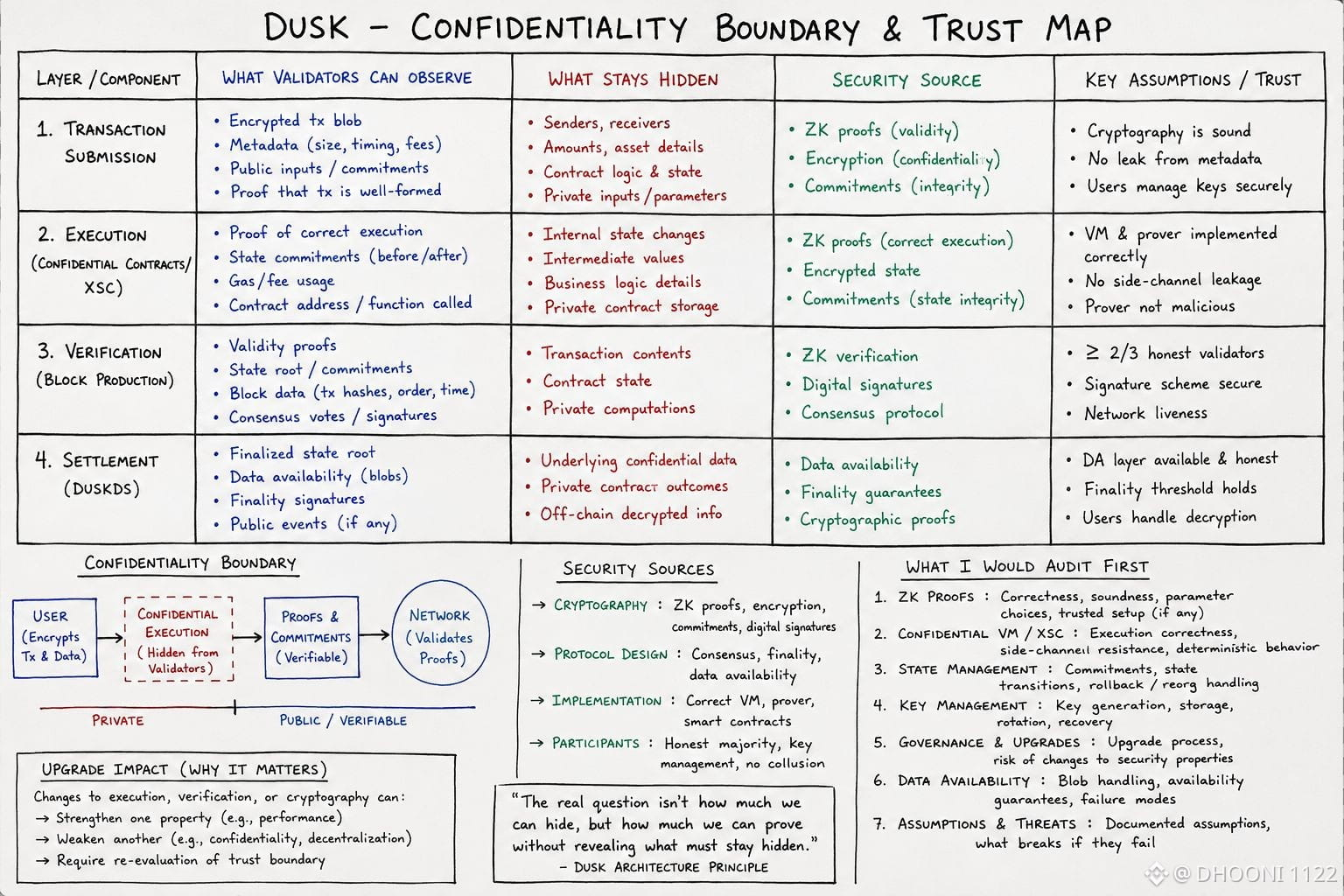
Dusk versucht nicht nur, finanzielle Aktivitäten zu verbergen. Es muss dem Netzwerk auch genügend Nachweise geben, um zu verifizieren, dass vertrauliche Verträge und Transaktionen sich korrekt verhalten.
Das schafft eine Vertrauensgrenze, die ich noch versuche, zu kartieren.
Mit vertraulichen Smart Contracts und dem XSC-Standard: Was können Validatoren während der Ausführung tatsächlich beobachten? Was bleibt ihnen verborgen? Und welche Teile der Sicherheitsgarantie stammen aus der Kryptografie, und welche aus Annahmen über Teilnehmer oder die Implementierung?
Die Governance-Seite macht das Ganze noch spannender.
Wenn Vertraulichkeit Teil der Sicherheitserwartungen für Finanzanwendungen wird, ist ein Protokoll-Upgrade nicht einfach ein Funktionsupdate. Eine Änderung von Ausführung oder Verifikation könnte eine Sicherheits-Eigenschaft stärken, dabei aber stillschweigend eine andere verändern.
Ich sage nicht, dass das eine Schwäche in Dusk ist.
Ich glaube nur, dass es der Punkt ist, an dem die eigentliche Architektur stärker ins Gewicht fällt als die Datenschutz-Schlagzeile.
Je mehr ich lese, desto weniger sehe ich Dusk nur als „eine private Blockchain“.
Ich betrachte es eher als ein System, das versucht, eine schwierigere Frage zu beantworten:
Wie viel kann man verbergen, während man dennoch genug nachweist für alle, die dem System vertrauen müssen?
Diese Grenze wäre wahrscheinlich der Bereich, in dem ich die meiste Zeit beim Auditing verbringen würde.
Was würdet ihr zuerst prüfen?
$DUSK #DUSK @Dusk
Ich bin die Dokumentation von Dusk erneut durchgegangen, in der Erwartung, mich auf die Datenschutzmechanismen zu konzentrieren, aber eine kleinere Frage ließ mich nicht los:
Wo endet die Vertraulichkeit tatsächlich?
Dusk versucht nicht nur, finanzielle Aktivitäten zu verbergen. Es muss dem Netzwerk auch genügend Nachweise geben, um zu verifizieren, dass vertrauliche Verträge und Transaktionen sich korrekt verhalten.
Das schafft eine Vertrauensgrenze, die ich noch versuche, zu kartieren.
Mit vertraulichen Smart Contracts und dem XSC-Standard: Was können Validatoren während der Ausführung tatsächlich beobachten? Was bleibt ihnen verborgen? Und welche Teile der Sicherheitsgarantie stammen aus der Kryptografie, und welche aus Annahmen über Teilnehmer oder die Implementierung?
Die Governance-Seite macht das Ganze noch spannender.
Wenn Vertraulichkeit Teil der Sicherheitserwartungen für Finanzanwendungen wird, ist ein Protokoll-Upgrade nicht einfach ein Funktionsupdate. Eine Änderung von Ausführung oder Verifikation könnte eine Sicherheits-Eigenschaft stärken, dabei aber stillschweigend eine andere verändern.
Ich sage nicht, dass das eine Schwäche in Dusk ist.
Ich glaube nur, dass es der Punkt ist, an dem die eigentliche Architektur stärker ins Gewicht fällt als die Datenschutz-Schlagzeile.
Je mehr ich lese, desto weniger sehe ich Dusk nur als „eine private Blockchain“.
Ich betrachte es eher als ein System, das versucht, eine schwierigere Frage zu beantworten:
Wie viel kann man verbergen, während man dennoch genug nachweist für alle, die dem System vertrauen müssen?
Diese Grenze wäre wahrscheinlich der Bereich, in dem ich die meiste Zeit beim Auditing verbringen würde.
Was würdet ihr zuerst prüfen?
$DUSK #DUSK @Dusk