
$DUSK
I’ll admit, my first reaction to Dusk was familiar: another privacy blockchain, another strong narrative, and potentially the usual crypto cycle—attention, incentives, speculation, then fading interest.
But looking closer, Dusk feels slightly more deliberate.
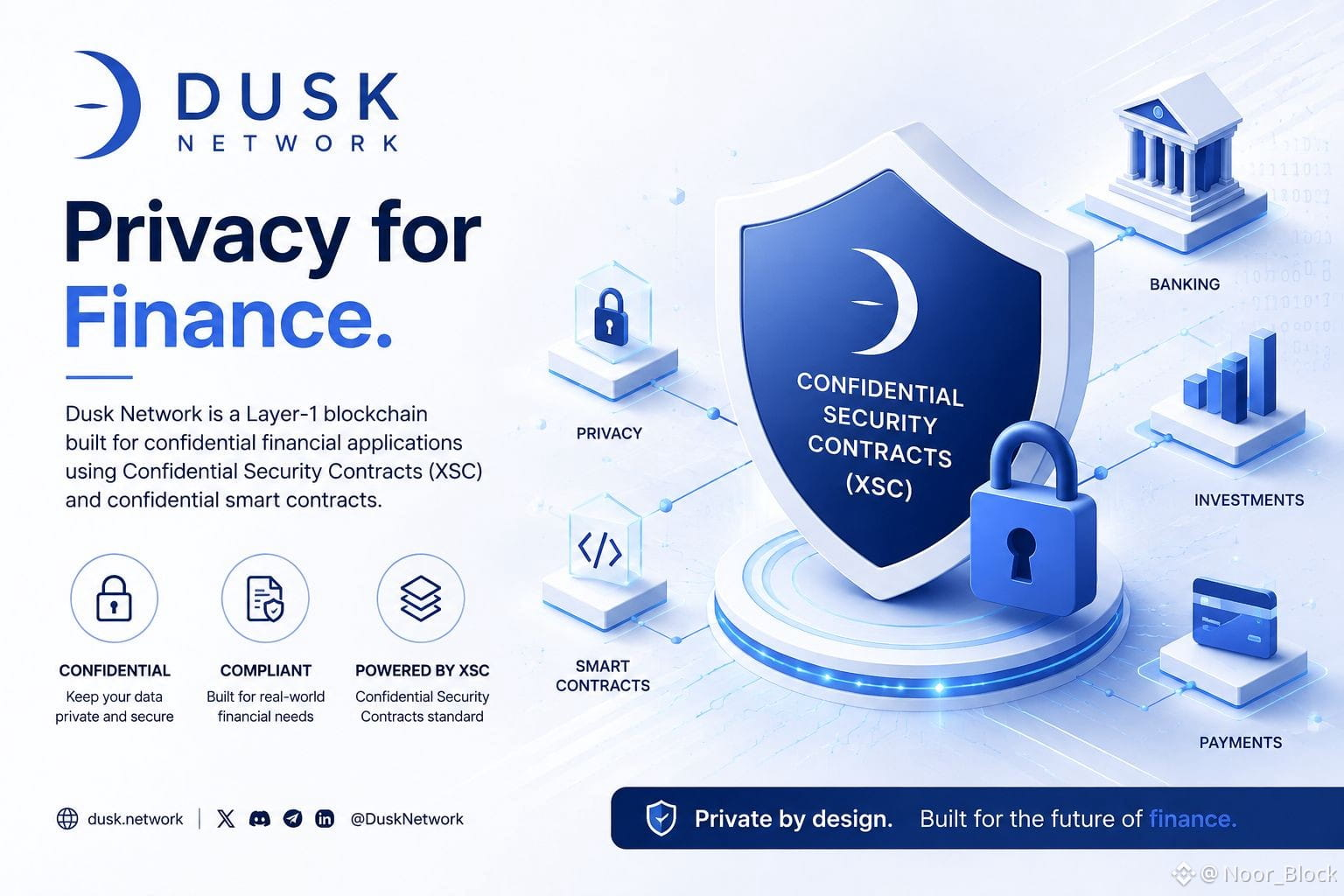
Its focus is financial applications where privacy actually matters. Instead of treating confidentiality as a marketing feature, it is building a Layer-1 around Confidential Security Contracts (XSC) and confidential smart contracts.
The interesting part is the economic loop. Users interact with the network, pay fees, stake or participate in securing the ecosystem, while DUSK provides the native utility layer. But I’m less interested in token activity alone. The real test is whether people use the network because the infrastructure solves something genuinely difficult.
That is where Dusk becomes interesting.
Financial systems often need privacy without completely abandoning transparency, compliance, or programmability. That is a harder problem than simply making transactions hidden.
Still, there are obvious risks. Technical complexity can slow adoption, developer tooling can become a bottleneck, and incentives can attract temporary farmers rather than genuine users. If real applications don’t create sustainable demand, the token economy can still become another speculative loop.
So I’m cautiously curious.
Dusk isn’t a finished success story. It’s an experiment whose real validation will come from developers, users, and execution—not hype.
$DUSK
#dusk $DUSK @Dusk
I’ll admit, my first reaction to Dusk was familiar: another privacy blockchain, another strong narrative, and potentially the usual crypto cycle—attention, incentives, speculation, then fading interest.
But looking closer, Dusk feels slightly more deliberate.
Its focus is financial applications where privacy actually matters. Instead of treating confidentiality as a marketing feature, it is building a Layer-1 around Confidential Security Contracts (XSC) and confidential smart contracts.
The interesting part is the economic loop. Users interact with the network, pay fees, stake or participate in securing the ecosystem, while DUSK provides the native utility layer. But I’m less interested in token activity alone. The real test is whether people use the network because the infrastructure solves something genuinely difficult.
That is where Dusk becomes interesting.
Financial systems often need privacy without completely abandoning transparency, compliance, or programmability. That is a harder problem than simply making transactions hidden.
Still, there are obvious risks. Technical complexity can slow adoption, developer tooling can become a bottleneck, and incentives can attract temporary farmers rather than genuine users. If real applications don’t create sustainable demand, the token economy can still become another speculative loop.
So I’m cautiously curious.
Dusk isn’t a finished success story. It’s an experiment whose real validation will come from developers, users, and execution—not hype.
$DUSK
#dusk $DUSK @Dusk