



Wenn du DeFi auf TON erkundest, lohnt es sich, das Farming von STON.fi über die reinen APR-Highlights hinaus zu verstehen.
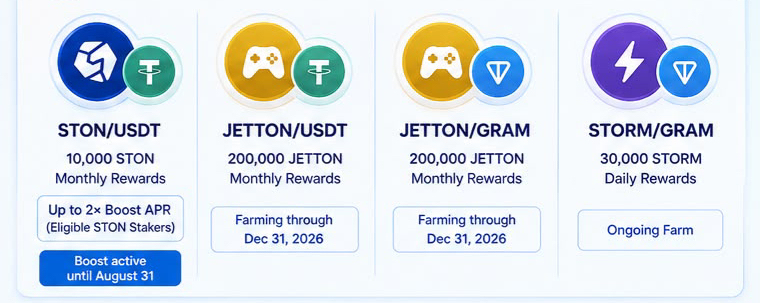
STON.fi hat kürzlich mehrere aktive Farming-Möglichkeiten auf TON hervorgehoben, darunter:
• STON/USDT
• JETTON/USDT
• JETTON/GRAM
• STORM/GRAM
Aber die größere Geschichte geht nicht nur darum: „Wie viel kann man farmen?“
Es geht darum zu verstehen, warum diese Farms existieren und wie Liquiditätsanbieter tatsächlich verdienen.
🔹 STON/USDT
Der STON/USDT-Pool hebt derzeit hervor:
• 10.000 STON monatliche Belohnungen
• Bis zu 2× Boost Farm APR für berechtigte STON-Staker
• Kein LP-Token-Lock-up
• Laufendes Farming
• Boost ist aktuell aktiv bis zum 31. August
Der Boost-Mechanismus ist besonders interessant, weil berechtigte STON-Staker unter den genannten Bedingungen ihre Farming-APR möglicherweise erhöhen können.
🔹 JETTON/USDT & JETTON/GRAM
Diese beiden Pools sind mit JETTON und dem JetTon Games-Ökosystem auf TON verbunden.
Die angegebenen Incentives beinhalten:
• 200.000 JETTON monatliche Belohnungen für jede Farm
• Farming verfügbar bis zum 31. Dezember 2026
• Kein LP-Token-Lock-up
Dies ist ein gutes Beispiel dafür, wie Projekte Farming-Incentives nutzen können, um eine tiefere Liquidität rund um ihre Tokens zu fördern.
🔹 STORM/GRAM
Die STORM/GRAM-Farm bietet:
• 30.000 STORM tägliche Belohnungen
• Laufendes Farming
• Kein LP-Token-Lock-up
Die Belohnungszahl mag attraktiv wirken, sollte aber nicht isoliert betrachtet werden.
Wie funktioniert Liquidity Farming also tatsächlich?
Stell dir vor, du zahlst STON und USDT in den STON/USDT-Pool ein.
Deine Assets werden Teil der Liquidität, die Händlern zur Verfügung steht.
Während Händler den Pool nutzen, können Liquiditätsanbieter einen Anteil der jeweils anfallenden Handelsgebühren verdienen, und das Farming-Programm kann zusätzlich Token-Incentives bereitstellen.
Einfach ausgedrückt:
Du stellst Liquidität bereit → Händler nutzen den Pool → der Markt wird tiefer → Incentives fördern mehr Liquidität.
Das ist einer der Kernmechanismen hinter DeFi.
Aber das ist am wichtigsten 👇
Farming-Belohnungen sind nicht automatisch ein garantierter Gewinn.
Eine Farm kann eine beeindruckende APR bieten, während die zugrunde liegenden Assets an Wert verlieren.
Du musst Folgendes berücksichtigen:
• Impermanent Loss (vorübergehender Verlust)
• Token-Preisvolatilität
• Wechselnde APRs
• Inflation des Belohnungstokens
• Pool-Liquidität und Handelsvolumen
• Risiken von Smart Contracts
• Risiken, die mit den zugrunde liegenden Projekten verbunden sind
Wenn du zum Beispiel mehr STON verdienst, heißt das nicht automatisch, dass du mehr Geld verdient hast, wenn STON selbst deutlich an Wert verliert.
Darum sollte eine APR niemals der einzige Grund sein, in ein Farm-Programm einzusteigen.
Der echte DeFi-Ansatz
Bevor du deine Assets einzahlst, frage:
Was stelle ich bereit?
Was genau verdiene ich?
Woher kommen die Belohnungen?
Wie lange sollen die Incentives voraussichtlich anhalten?
Was passiert, wenn sich der Token-Preis gegen mich bewegt?
Welche Risiken nehme ich damit in Kauf?
Diese Fragen sind viel wichtiger, als einfach eine hohe APR zu sehen und „Farm“ zu klicken.
Die Farming-Möglichkeiten von STON.fi zeigen, wie Incentives dabei helfen können, Liquidität anzuziehen und die Handelsaktivität im gesamten TON-Ökosystem zu unterstützen.
Aber die Verantwortung liegt weiterhin beim Liquiditätsanbieter.
Farming nicht nur deshalb, weil die APR gut aussieht.
Farm, weil du den Pool verstehst.
Recherchiere zuerst. Berechne die Risiken. Dann entscheide.
So wechselst du vom reinen Hinterherjagen nach Rendite zum tatsächlichen Verständnis von DeFi.
gSTON. 🟢