
good

Veröffentlichen

Fouz_Khan
·
--
Bullisch#termmax @TermMax
Yesterday a friend showed me his crypto vault portfolio and said, "the curator handles it, I don't have to think about anything." I got that same old feeling I used to get with a bank relationship manager your money in someone else's hands, the decisions someone else's.
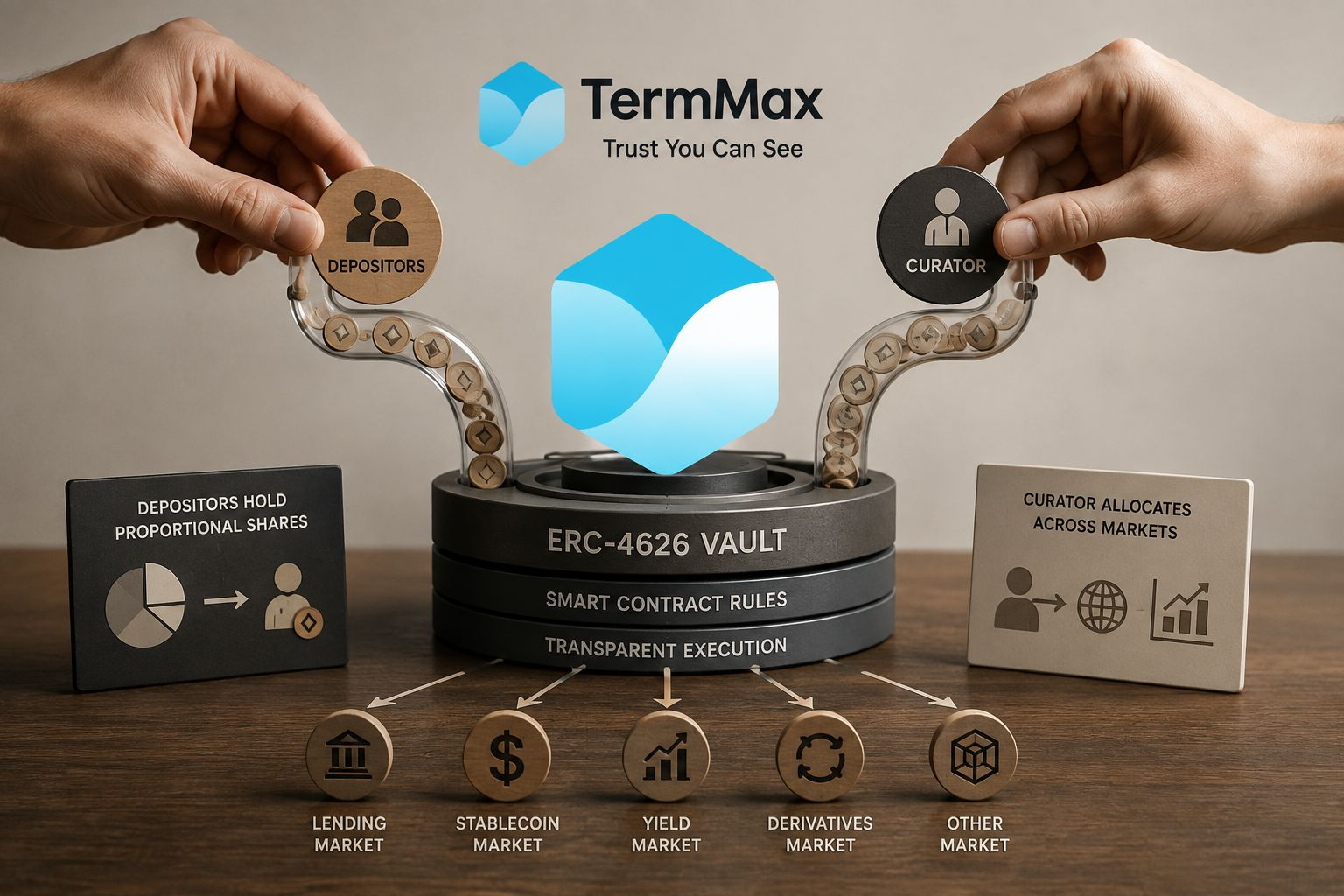
So I went and read TermMax's vault design. It's built on the ERC-4626 standard, with a curator role sitting on top of it curators allocate capital across multiple markets, depositors just hold proportional shares, and the vault logic itself runs through smart contract rules. No discretionary fund management from the issuer's side, the docs say.
That's where I had to stop and actually think. "No discretionary management by the issuer" doesn't mean discretion disappears entirely. The curator is still the one deciding which market to enter, how much risk to take on. The ERC-4626 standard only defines how shares and assets move it doesn't decide where the capital goes. Code just executes what the curator already chose. It doesn't remove trust, it moves it to a different person.
I hadn't caught that the first time around. I assumed "smart contract rules" meant the human element was gone. It isn't. It just changed seats.
The real difference between a fund manager and a curator isn't that one decides and the other doesn't. It's that one's decision happens off chain, the other's happens where you can actually watch it on chain. The trust still rests on a person either way only the visibility changes.
So genuinely, when code executes the decision but a human still makes it is that actually trustless, or is it just trust you can see?
@TermMax $TMX #TermMax
$ONG $PEOPLE $AAVE
Yesterday a friend showed me his crypto vault portfolio and said, "the curator handles it, I don't have to think about anything." I got that same old feeling I used to get with a bank relationship manager your money in someone else's hands, the decisions someone else's.
So I went and read TermMax's vault design. It's built on the ERC-4626 standard, with a curator role sitting on top of it curators allocate capital across multiple markets, depositors just hold proportional shares, and the vault logic itself runs through smart contract rules. No discretionary fund management from the issuer's side, the docs say.
That's where I had to stop and actually think. "No discretionary management by the issuer" doesn't mean discretion disappears entirely. The curator is still the one deciding which market to enter, how much risk to take on. The ERC-4626 standard only defines how shares and assets move it doesn't decide where the capital goes. Code just executes what the curator already chose. It doesn't remove trust, it moves it to a different person.
I hadn't caught that the first time around. I assumed "smart contract rules" meant the human element was gone. It isn't. It just changed seats.
The real difference between a fund manager and a curator isn't that one decides and the other doesn't. It's that one's decision happens off chain, the other's happens where you can actually watch it on chain. The trust still rests on a person either way only the visibility changes.
So genuinely, when code executes the decision but a human still makes it is that actually trustless, or is it just trust you can see?
@TermMax $TMX #TermMax
$ONG $PEOPLE $AAVE
Haftungsausschluss: Enthält Meinungen von Drittanbietern. Keine Beratung. Binance AI wird ohne Gewähr bereitgestellt. Siehe AGB.