

Why Persistent Memory Feels Like the Real Game-Changer for Long-Term Blockchain Utility ?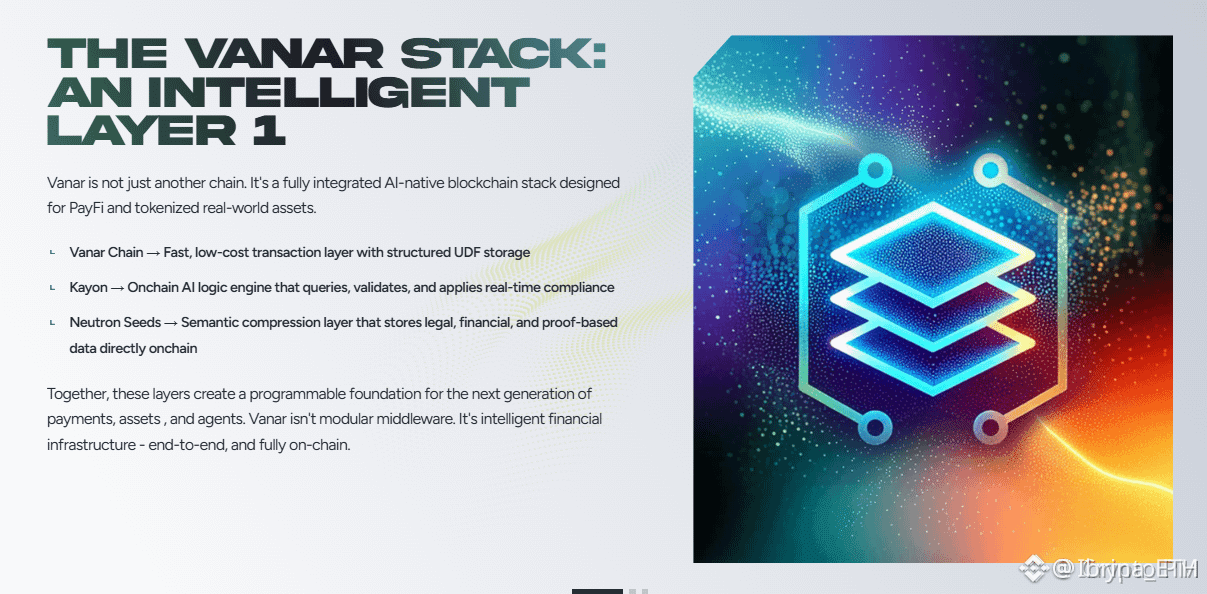
Hey everyone, I’m Ibrina
When I look back at most blockchain innovation over the past few years, I notice a clear pattern. Many projects focus heavily on faster block times or cheaper fees. Those improvements matter, but they don’t solve a deeper limitation: blockchains usually forget everything beyond the current transaction. From my personal perspective, this is where Vanar AI-native stack launch in mid-January 2026 feels meaningful. Instead of only optimizing speed, Vanar is focusing on memory and reasoning as part of the base layer, which changes how applications can behave over time.
What stood out to me about this launch is that it did not arrive as marketing noise. On January 19, 2026, Vanar activated its AI infrastructure in a practical way. Neutron began turning large files, notes, or datasets into compact, structured “seeds” that can be stored and queried on-chain. At the same time, Kayon was introduced as a reasoning layer designed to help applications work with that stored context. From my point of view, this moves blockchain systems away from being simple ledgers and closer to systems that can build knowledge gradually.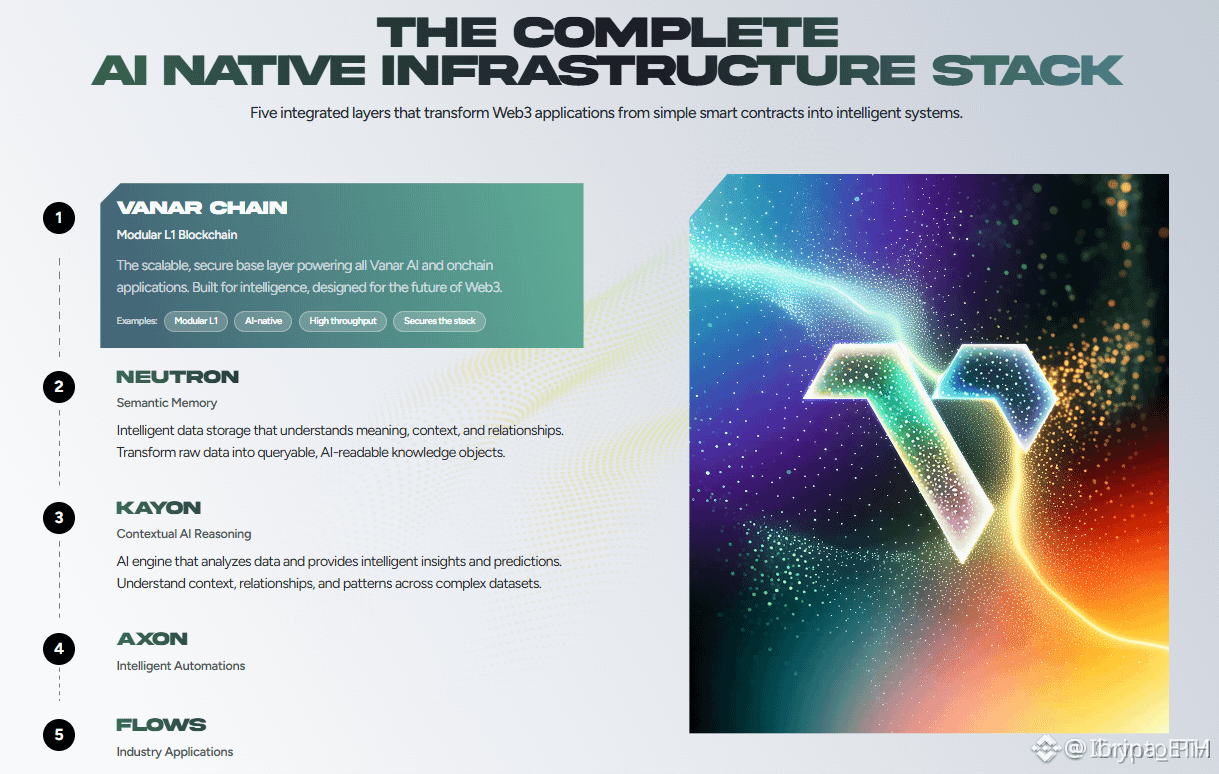
In simple terms, Neutron helps information stay useful instead of being forgotten. Rather than storing raw data that is hard to reuse, it compresses information into summaries that AI agents can reference later. This means applications no longer need to restart from zero every time a session ends. Kayon complements this by enabling logic and decision-making on top of stored context. Together, these layers allow applications to react based on what already happened before, not just what is happening now.
I find this educational because it highlights a key difference between fast execution and meaningful intelligence. Speed helps transactions settle quickly, but memory allows systems to improve over time. A good comparison is the difference between a calculator and a notebook. A calculator gives instant results but remembers nothing. A notebook allows patterns, lessons, and history to accumulate. Vanar design leans toward the second approach, which feels more suitable for AI-driven applications.
This becomes especially relevant when thinking about long-term use cases. In gaming or virtual environments, AI characters could remember player behavior across sessions. In productivity or automation tools, agents could refine actions based on past outcomes. From my perspective, this kind of continuity is necessary if AI is meant to be more than a short-term tool. Persistent memory turns isolated actions into ongoing processes.
Another part that supports this long-term thinking is how the network is structured. Fixed, predictable fees and short block times help keep usage practical even as activity grows. Earlier upgrades already showed the network expanding its validator participation, which suggests the system can handle more complex workloads over time. To me, this shows that the memory and reasoning layers are not being added without considering stability.
What I also appreciate is that this approach does not push immediate excitement. It feels designed for gradual adoption. Builders can experiment slowly, users can interact naturally, and intelligence can compound quietly in the background. In my experience, infrastructure that lasts usually grows this way. It does not rely on constant attention, but on being useful again and again.
Looking ahead, I see Vanar AI-native stack as an educational example for the broader blockchain space. It shows that long-term value may come less from raw speed and more from systems that can remember, adapt, and evolve. As AI becomes more common in everyday applications, blockchains that support continuity instead of constant resets may become increasingly relevant.
From my personal point of view, this launch represents a shift in priorities. It suggests that the next phase of blockchain utility may focus on intelligence that builds over time rather than transactions that disappear instantly. That kind of design may not feel dramatic at first, but it often matters most in the long run.
Do you think persistent memory will matter more than raw speed as AI becomes a bigger part of blockchain applications? Share your thoughts in comments
