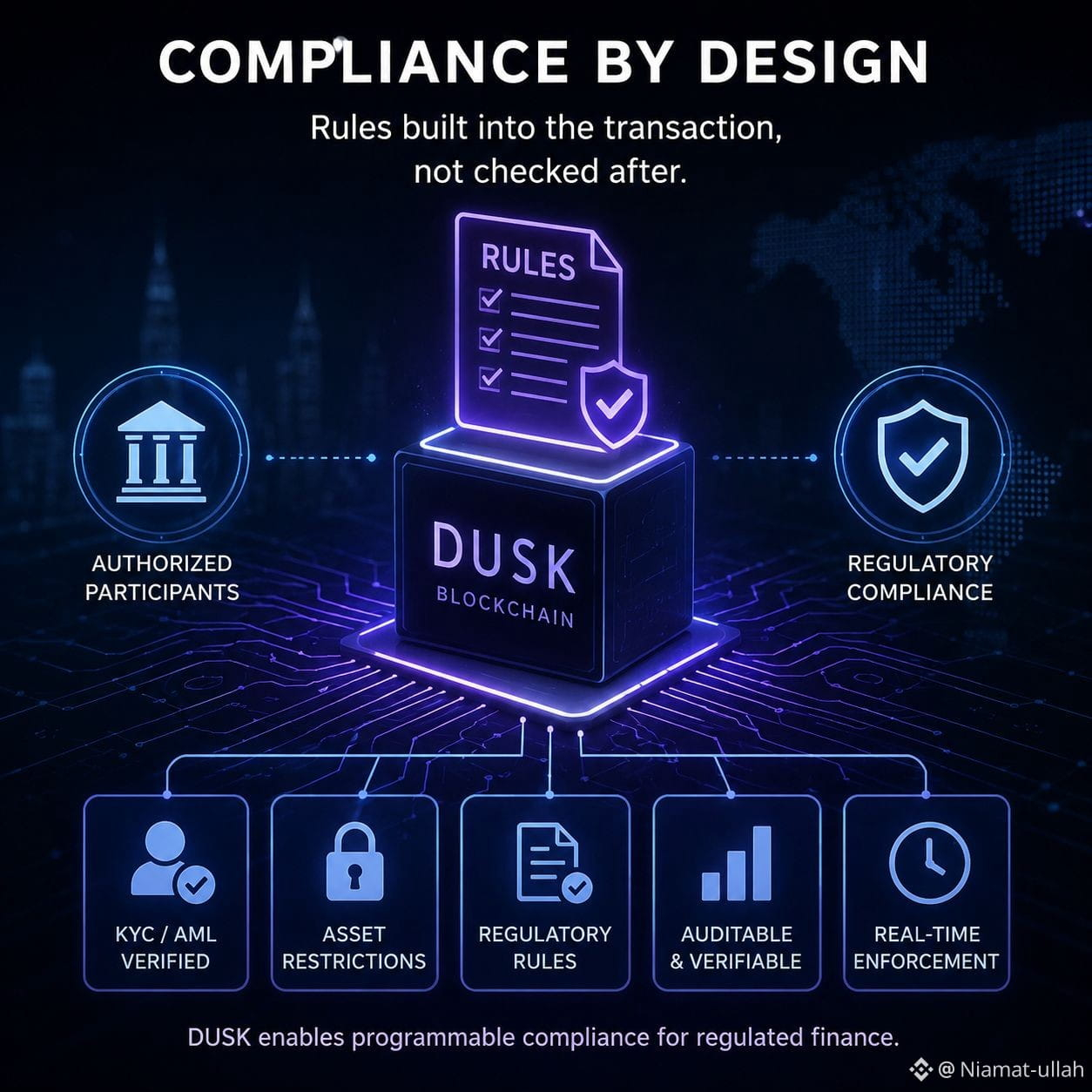
Was, wenn Compliance selbst zu einem Bestandteil der Transaktion wird?
Das ist ein DUSK-Aspekt, den ich interessant finde.
Im traditionellen Finanzwesen wird Compliance oft vor oder nach einer Transaktion in separaten Systemen geprüft – über Freigaben und Berichte.
DUSK verfolgt dabei einen anderen Ansatz: Compliance-Regeln können Teil der Blockchain-Infrastruktur selbst werden.
So könnten Transaktionen automatisch festgelegten Bedingungen folgen – wer teilnehmen darf, welche Vermögenswerte übertragen werden können und nach welchen Regeln.
Für regulierte Märkte könnte das eine große Veränderung bedeuten.
Das Ziel ist nicht nur, die Blockchain privat zu machen. Es geht darum, die Blockchain in realen regulatorischen Rahmenbedingungen nutzbar zu machen.
Das ist der DUSK-Use-Case, den ich genau beobachten werde.
$DUSK #Dusk @Dusk
Das ist ein DUSK-Aspekt, den ich interessant finde.
Im traditionellen Finanzwesen wird Compliance oft vor oder nach einer Transaktion in separaten Systemen geprüft – über Freigaben und Berichte.
DUSK verfolgt dabei einen anderen Ansatz: Compliance-Regeln können Teil der Blockchain-Infrastruktur selbst werden.
So könnten Transaktionen automatisch festgelegten Bedingungen folgen – wer teilnehmen darf, welche Vermögenswerte übertragen werden können und nach welchen Regeln.
Für regulierte Märkte könnte das eine große Veränderung bedeuten.
Das Ziel ist nicht nur, die Blockchain privat zu machen. Es geht darum, die Blockchain in realen regulatorischen Rahmenbedingungen nutzbar zu machen.
Das ist der DUSK-Use-Case, den ich genau beobachten werde.
$DUSK #Dusk @Dusk