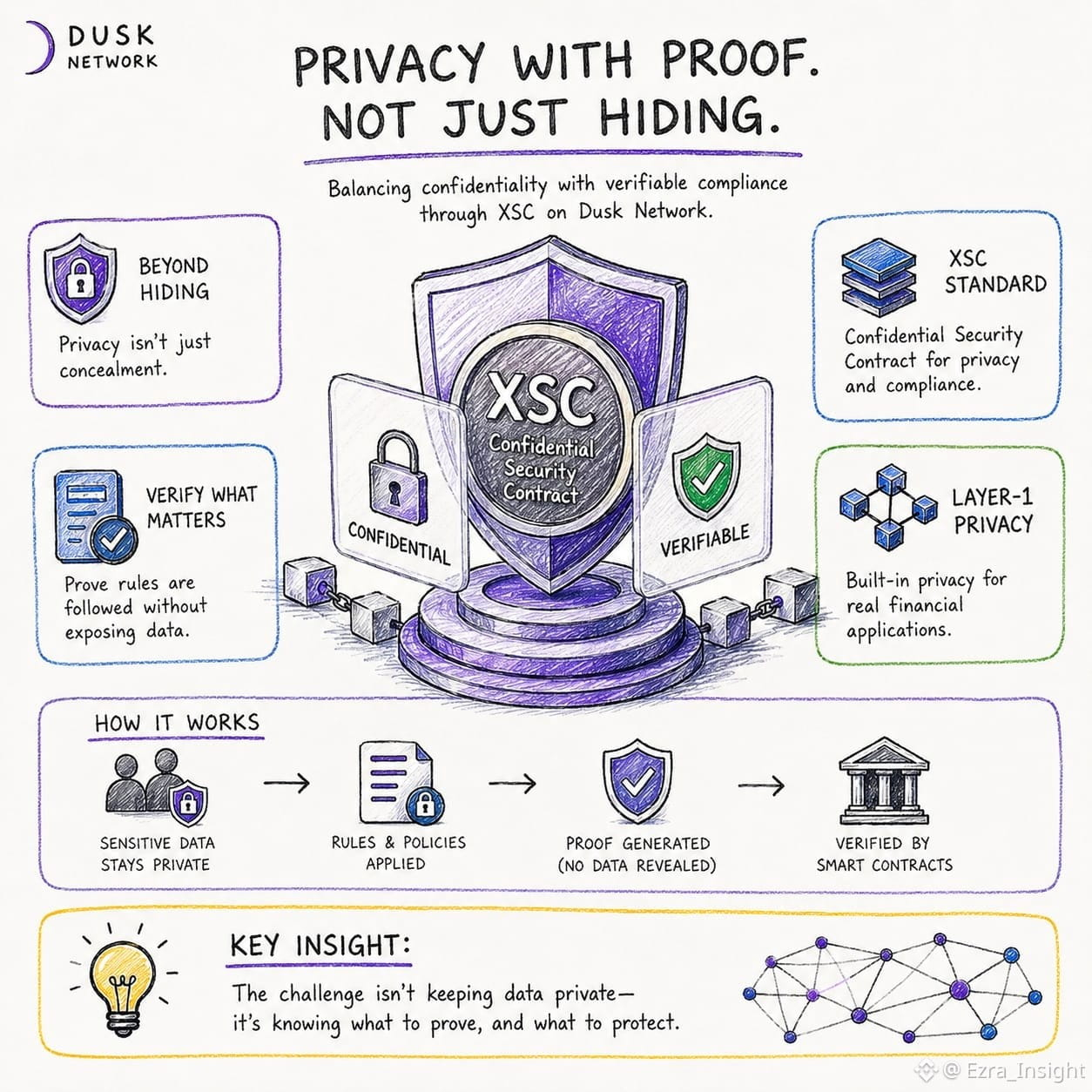
I kept thinking about how easily “privacy” gets treated as simply hiding transaction details. The more I looked at financial applications, though, the more that idea started to feel incomplete. Finance often needs the opposite at the same time: some information must remain confidential, while certain facts still need to be verified. That’s what made Dusk Network catch my attention. Its Layer-1 design around confidential smart contracts and the Confidential Security Contract (XSC) standard seems to approach privacy from that harder angle. What I find more interesting now is not whether data can be kept private, but where that privacy should actually stop. A financial application may need to protect sensitive information while still proving that a transaction follows the rules. I’m still working through that part myself, especially when workflows become more complicated. The technology sounds clear in theory, but real financial activity is rarely that simple. So I keep coming back to one question: how does XSC decide what should stay hidden, and what must be proven?
@Dusk $DUSK #dusk
@Dusk $DUSK #dusk