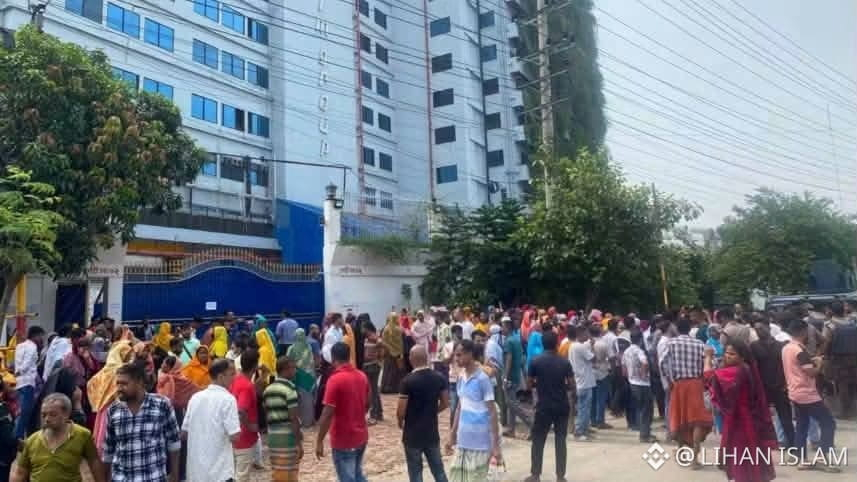
Die Bangladesh Nationalist Party (BNP) hatte versprochen, innerhalb ihrer ersten 18 Monate an der Macht 10 Millionen Arbeitsplätze zu schaffen. Die derzeitige Lage im Industriesektor des Landes wirft jedoch ernsthafte Fragen zur Umsetzbarkeit dieses Ziels auf.
Laut der Bangladesh Textile Mills Association (BTMA) ist die Produktion in mehr als 900 ihrer über 1.800 Mitglieds-Textilfabriken vollständig zum Stillstand gekommen. Gleichzeitig zeigen Daten der Bangladesh Garment Manufacturers and Exporters Association (BGMEA), dass in den ersten sechs Monaten des Jahres 19.188 Beschäftigte entlassen wurden oder ihre Jobs in 80 Mitgliedsbetrieben der Bekleidungsindustrie verloren haben. Von diesen Fabriken wurden 27 dauerhaft geschlossen.
Die Frist von 18 Monaten ist noch nicht abgelaufen, und es gibt möglicherweise weiterhin Chancen, in anderen Branchen neue Arbeitsplätze zu schaffen. Der Gegensatz wird jedoch zunehmend schwer zu übersehen: Während die Regierung darauf abzielt, 10 Millionen neue Arbeitsplätze zu schaffen, erleben einige der größten arbeitsplatzerzeugenden Industrien in Bangladesch Fabrikschließungen, Produktionsstillstände und massive Entlassungen von Beschäftigten.
Damit steht die Regierung vor einer großen Herausforderung: Wie kann sie bestehende Arbeitsplätze schützen und gleichzeitig 10 Millionen neue Beschäftigungsmöglichkeiten schaffen?
Laut der Bangladesh Textile Mills Association (BTMA) ist die Produktion in mehr als 900 ihrer über 1.800 Mitglieds-Textilfabriken vollständig zum Stillstand gekommen. Gleichzeitig zeigen Daten der Bangladesh Garment Manufacturers and Exporters Association (BGMEA), dass in den ersten sechs Monaten des Jahres 19.188 Beschäftigte entlassen wurden oder ihre Jobs in 80 Mitgliedsbetrieben der Bekleidungsindustrie verloren haben. Von diesen Fabriken wurden 27 dauerhaft geschlossen.
Die Frist von 18 Monaten ist noch nicht abgelaufen, und es gibt möglicherweise weiterhin Chancen, in anderen Branchen neue Arbeitsplätze zu schaffen. Der Gegensatz wird jedoch zunehmend schwer zu übersehen: Während die Regierung darauf abzielt, 10 Millionen neue Arbeitsplätze zu schaffen, erleben einige der größten arbeitsplatzerzeugenden Industrien in Bangladesch Fabrikschließungen, Produktionsstillstände und massive Entlassungen von Beschäftigten.
Damit steht die Regierung vor einer großen Herausforderung: Wie kann sie bestehende Arbeitsplätze schützen und gleichzeitig 10 Millionen neue Beschäftigungsmöglichkeiten schaffen?