#termmax
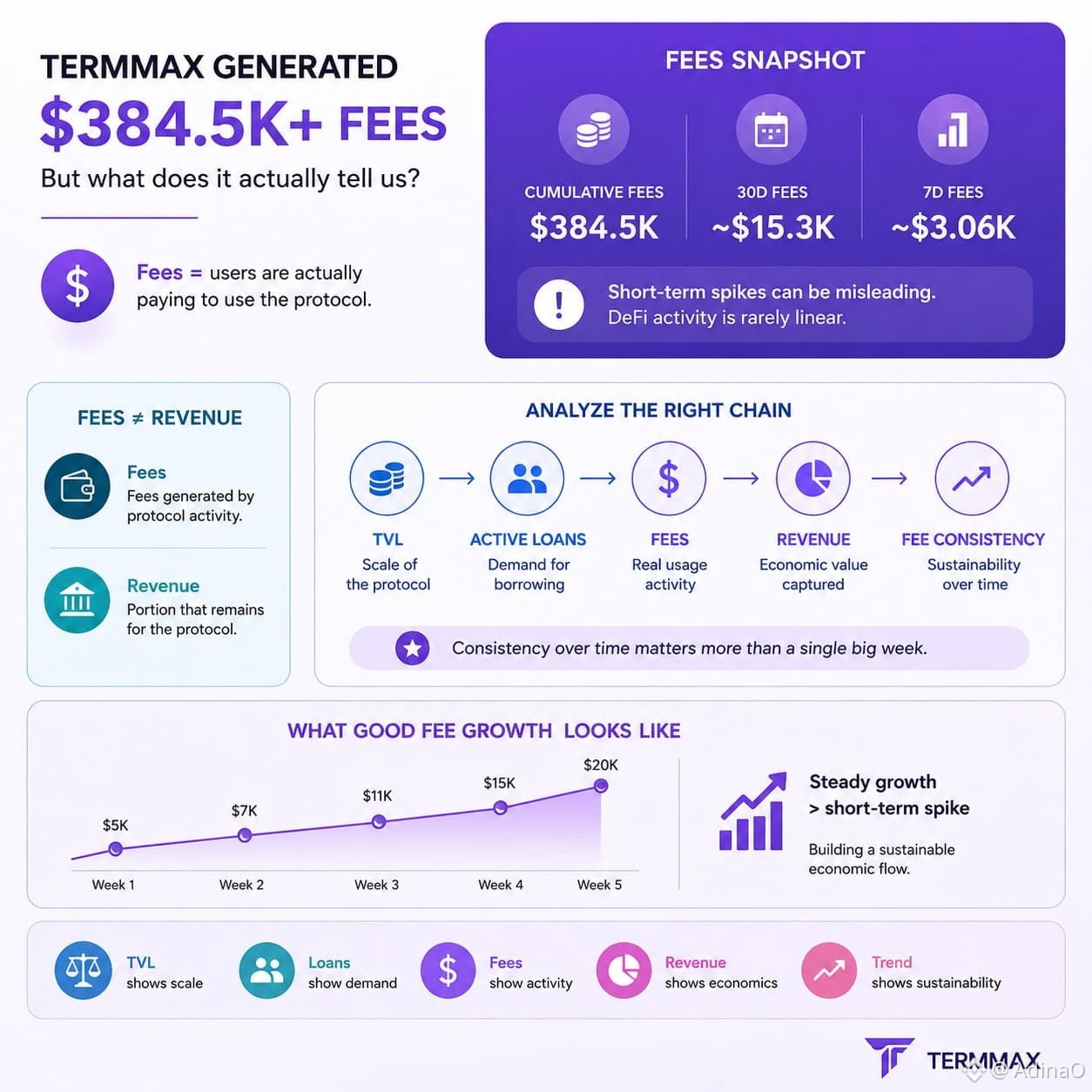
TermMax hat Hunderttausende Gebühren generiert. Aber was sagt uns das eigentlich?
Eine der DeFi-Kennzahlen, die ich interessanter finde als APY, ist:
Gebühren.
Warum?
Weil APY attraktiv aussehen kann, selbst wenn die tatsächliche Nachfrage nach einem Produkt begrenzt ist.
Gebühren sagen etwas anderes:
Nutzer zahlen tatsächlich, um das Protokoll zu verwenden.
In einem früheren DeFiLlama-Snapshot hatte TermMax ungefähr:
$384,5K kumulierte Gebühren
mit etwa:
30T: ~$15,3K
7T: ~$3,06K
Aber es gibt einen wichtigen Haken.
Man kann einfach den neuesten 7-Tage-Wert nehmen und nicht davon ausgehen, dass er einen neuen nachhaltigen Jahrestrend repräsentiert.
DeFi-Aktivität verläuft selten linear.
Ein großer Markt, ein paar große Transaktionen oder Änderungen bei den Anreizen können die kurzzeitige Gebührengenerierung deutlich beeinflussen.
Die bessere Frage lautet also:
Wird der Fee-Flow konsistenter?
Zum Beispiel:
TVL ↑
Aktive Loans ↑
Gebühren ↑
Das deutet darauf hin, dass sich Skalierung und tatsächliche Nutzung gemeinsam entwickeln.
Aber:
TVL ↑
Aktive Loans →
Gebühren →
erzählt eine ganz andere Geschichte.
Das Protokoll hat möglicherweise mehr Kapital angezogen, ohne die gleiche Steigerung der Nachfrage zu sehen.
Und es gibt noch eine weitere Unterscheidung, die wichtig ist:
Gebühren ≠ Umsatz
Diese Begriffe werden oft verwechselt.
Gebühren sind die Gebühren, die durch die Protokollaktivität generiert werden.
Umsatz ist der Anteil, der nach den jeweils anwendbaren Ausschüttungen letztlich dem Protokoll zufließt.
Deshalb würde ich TermMax über eine Kette von Kennzahlen analysieren:
TVL
↓
Aktive Loans
↓
Gebühren
↓
Umsatz
↓
Konsistenz der Gebühren
Die letzte könnte die wichtigste sein.
Denn:
$15K an monatlichen Gebühren sind nur eine Zahl.
Aber etwas wie:
$5K → $7K → $11K → $15K → $20K
würde eine viel interessantere Geschichte erzählen.
Das könnte darauf hindeuten, dass das Protokoll einen konsistenteren wirtschaftlichen Geldfluss aufbaut, statt nur einen kurzfristigen Peak zu erleben.
Und genau dort sehe ich eine interessante Frage rund um @TermMax :
Das ist für mich eine viel spannendere Frage als das APY eines einzelnen Vaults.
TVL zeigt die Skalierung.
Loans zeigen die Nachfrage.
Gebühren zeigen die Aktivität.
Umsatz zeigt die Ökonomie.
Der Trend zeigt Nachhaltigkeit.
TermMax hat Hunderttausende Gebühren generiert. Aber was sagt uns das eigentlich?
Eine der DeFi-Kennzahlen, die ich interessanter finde als APY, ist:
Gebühren.
Warum?
Weil APY attraktiv aussehen kann, selbst wenn die tatsächliche Nachfrage nach einem Produkt begrenzt ist.
Gebühren sagen etwas anderes:
Nutzer zahlen tatsächlich, um das Protokoll zu verwenden.
In einem früheren DeFiLlama-Snapshot hatte TermMax ungefähr:
$384,5K kumulierte Gebühren
mit etwa:
30T: ~$15,3K
7T: ~$3,06K
Aber es gibt einen wichtigen Haken.
Man kann einfach den neuesten 7-Tage-Wert nehmen und nicht davon ausgehen, dass er einen neuen nachhaltigen Jahrestrend repräsentiert.
DeFi-Aktivität verläuft selten linear.
Ein großer Markt, ein paar große Transaktionen oder Änderungen bei den Anreizen können die kurzzeitige Gebührengenerierung deutlich beeinflussen.
Die bessere Frage lautet also:
Wird der Fee-Flow konsistenter?
Zum Beispiel:
TVL ↑
Aktive Loans ↑
Gebühren ↑
Das deutet darauf hin, dass sich Skalierung und tatsächliche Nutzung gemeinsam entwickeln.
Aber:
TVL ↑
Aktive Loans →
Gebühren →
erzählt eine ganz andere Geschichte.
Das Protokoll hat möglicherweise mehr Kapital angezogen, ohne die gleiche Steigerung der Nachfrage zu sehen.
Und es gibt noch eine weitere Unterscheidung, die wichtig ist:
Gebühren ≠ Umsatz
Diese Begriffe werden oft verwechselt.
Gebühren sind die Gebühren, die durch die Protokollaktivität generiert werden.
Umsatz ist der Anteil, der nach den jeweils anwendbaren Ausschüttungen letztlich dem Protokoll zufließt.
Deshalb würde ich TermMax über eine Kette von Kennzahlen analysieren:
TVL
↓
Aktive Loans
↓
Gebühren
↓
Umsatz
↓
Konsistenz der Gebühren
Die letzte könnte die wichtigste sein.
Denn:
$15K an monatlichen Gebühren sind nur eine Zahl.
Aber etwas wie:
$5K → $7K → $11K → $15K → $20K
würde eine viel interessantere Geschichte erzählen.
Das könnte darauf hindeuten, dass das Protokoll einen konsistenteren wirtschaftlichen Geldfluss aufbaut, statt nur einen kurzfristigen Peak zu erleben.
Und genau dort sehe ich eine interessante Frage rund um @TermMax :
Das ist für mich eine viel spannendere Frage als das APY eines einzelnen Vaults.
TVL zeigt die Skalierung.
Loans zeigen die Nachfrage.
Gebühren zeigen die Aktivität.
Umsatz zeigt die Ökonomie.
Der Trend zeigt Nachhaltigkeit.