Als ich durch Dusk’ Privacy-Architektur geblickt habe, ist mir etwas aufgefallen, das meine Sicht auf Zero-Knowledge-Technologie verändert hat.
Das Beeindruckende ist nicht nur, dass Informationen privat bleiben können. Das schwierigere Problem besteht darin, dass diese Privatsphäre reibungslos in einem Finanzsystem funktioniert, in dem Nutzer Geschwindigkeit, Verlässlichkeit und Einfachheit erwarten.
Genau diese Frage macht Proof-Systeme wie PLONK interessant.
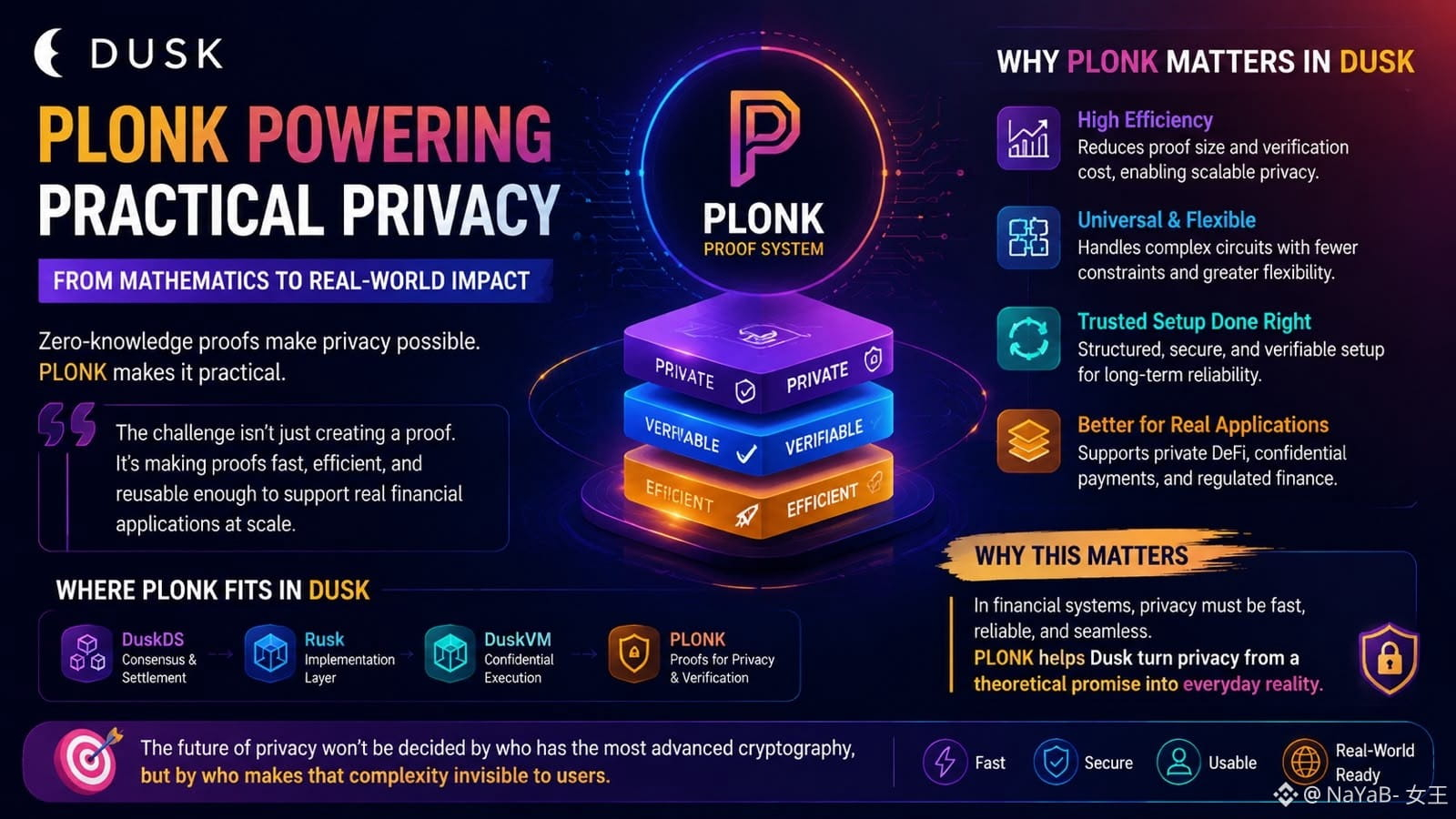
Ein Zero-Knowledge-Beweis ermöglicht es jemandem zu zeigen, dass eine Aussage wahr ist, ohne die zugrunde liegenden Informationen offenzulegen. Die eigentliche Herausforderung ist jedoch nicht nur, einen Beweis zu erstellen. Es geht darum, ein System aufzubauen, in dem Beweise so effizient generiert, verifiziert und wiederverwendet werden können, dass sie für praktische Anwendungen taugen.
Das hat mich dazu gebracht, PLONK anders zu betrachten. Es ist nicht einfach eine kryptografische Technik im Hintergrund; es ist Teil der Ingenieursaufgabe, Privatsphäre von einer theoretischen Fähigkeit in eine nutzbare Infrastruktur zu verwandeln.
Für @Dusk ist diese Unterscheidung entscheidend. Finanzanwendungen können sich nicht auf Privatsphäre verlassen, die nur unter idealen Bedingungen funktioniert. Sie brauchen Privatsphäre, die echte Aktivitäten unterstützt, ohne unnötige Komplexität für die Nutzer hinzuzufügen.
Was mir besonders auffällt, ist: Die Datenschutzinfrastruktur wird immer weniger zu einem einzelnen Feature und immer mehr zu der Gestaltung eines gesamten Erlebnisses rund um Vertraulichkeit. Vielleicht wird die Zukunft der Privacy-Technologie nicht davon entschieden, welches System die fortschrittlichste Kryptografie hat, sondern davon, welches System diese Komplexität verschwinden lassen kann, während es gleichzeitig ein nahtloses Nutzererlebnis liefert.
@Dusk $DUSK #dusk
Das Beeindruckende ist nicht nur, dass Informationen privat bleiben können. Das schwierigere Problem besteht darin, dass diese Privatsphäre reibungslos in einem Finanzsystem funktioniert, in dem Nutzer Geschwindigkeit, Verlässlichkeit und Einfachheit erwarten.
Genau diese Frage macht Proof-Systeme wie PLONK interessant.
Ein Zero-Knowledge-Beweis ermöglicht es jemandem zu zeigen, dass eine Aussage wahr ist, ohne die zugrunde liegenden Informationen offenzulegen. Die eigentliche Herausforderung ist jedoch nicht nur, einen Beweis zu erstellen. Es geht darum, ein System aufzubauen, in dem Beweise so effizient generiert, verifiziert und wiederverwendet werden können, dass sie für praktische Anwendungen taugen.
Das hat mich dazu gebracht, PLONK anders zu betrachten. Es ist nicht einfach eine kryptografische Technik im Hintergrund; es ist Teil der Ingenieursaufgabe, Privatsphäre von einer theoretischen Fähigkeit in eine nutzbare Infrastruktur zu verwandeln.
Für @Dusk ist diese Unterscheidung entscheidend. Finanzanwendungen können sich nicht auf Privatsphäre verlassen, die nur unter idealen Bedingungen funktioniert. Sie brauchen Privatsphäre, die echte Aktivitäten unterstützt, ohne unnötige Komplexität für die Nutzer hinzuzufügen.
Was mir besonders auffällt, ist: Die Datenschutzinfrastruktur wird immer weniger zu einem einzelnen Feature und immer mehr zu der Gestaltung eines gesamten Erlebnisses rund um Vertraulichkeit. Vielleicht wird die Zukunft der Privacy-Technologie nicht davon entschieden, welches System die fortschrittlichste Kryptografie hat, sondern davon, welches System diese Komplexität verschwinden lassen kann, während es gleichzeitig ein nahtloses Nutzererlebnis liefert.
@Dusk $DUSK #dusk