@Dusk I’ve been looking at Dusk Network from a different angle lately.
The interesting part isn’t simply that it is a privacy-focused Layer-1. It’s the financial problem sitting underneath it.
DeFi gave us transparent markets, but transparency can become a liability. Large positions are visible. Trading intentions can be exposed. Borrowers can be liquidated during temporary volatility. Liquidity can disappear when incentives dry up.
I keep wondering whether financial infrastructure really needs everyone to see everything.
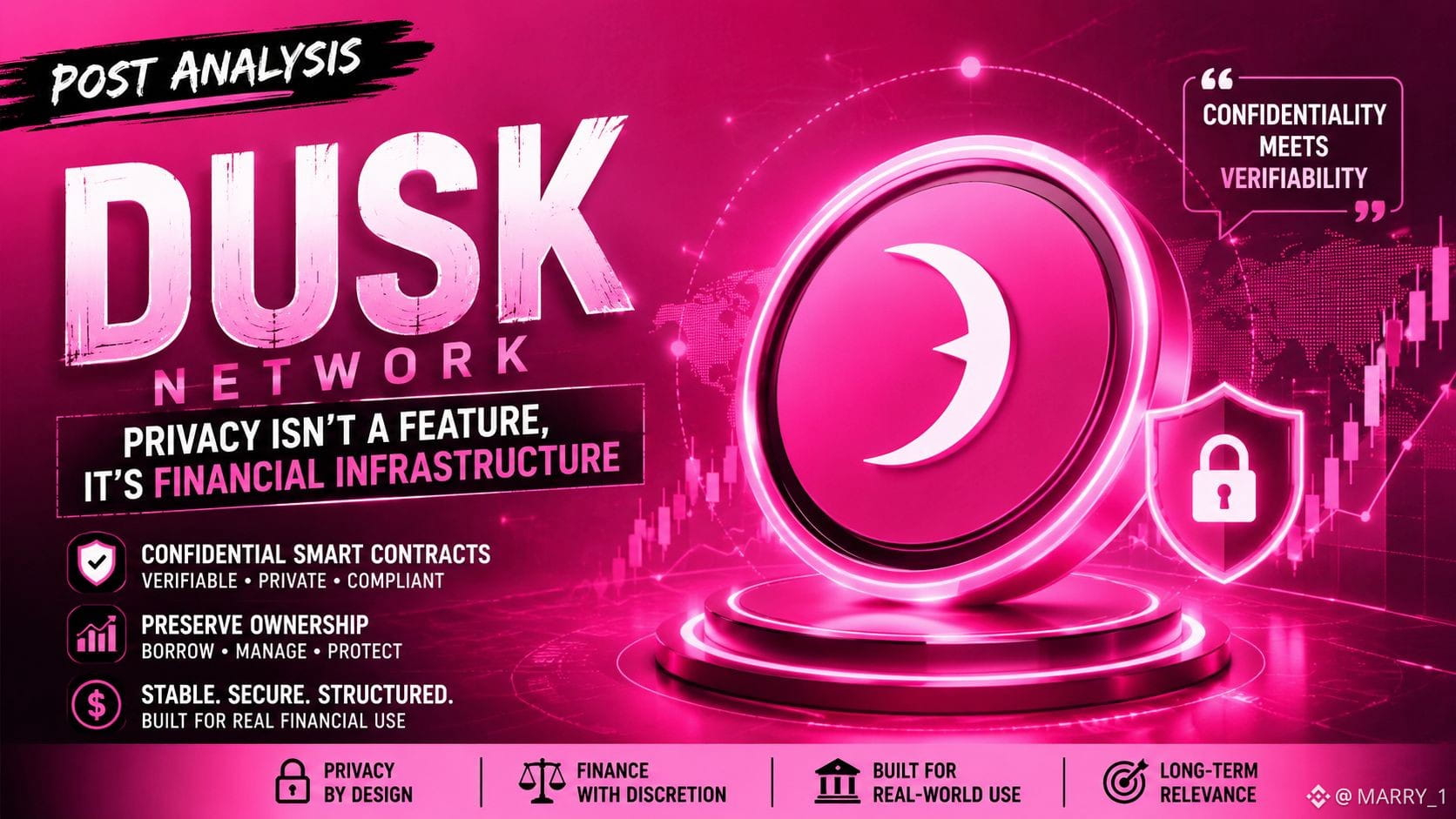
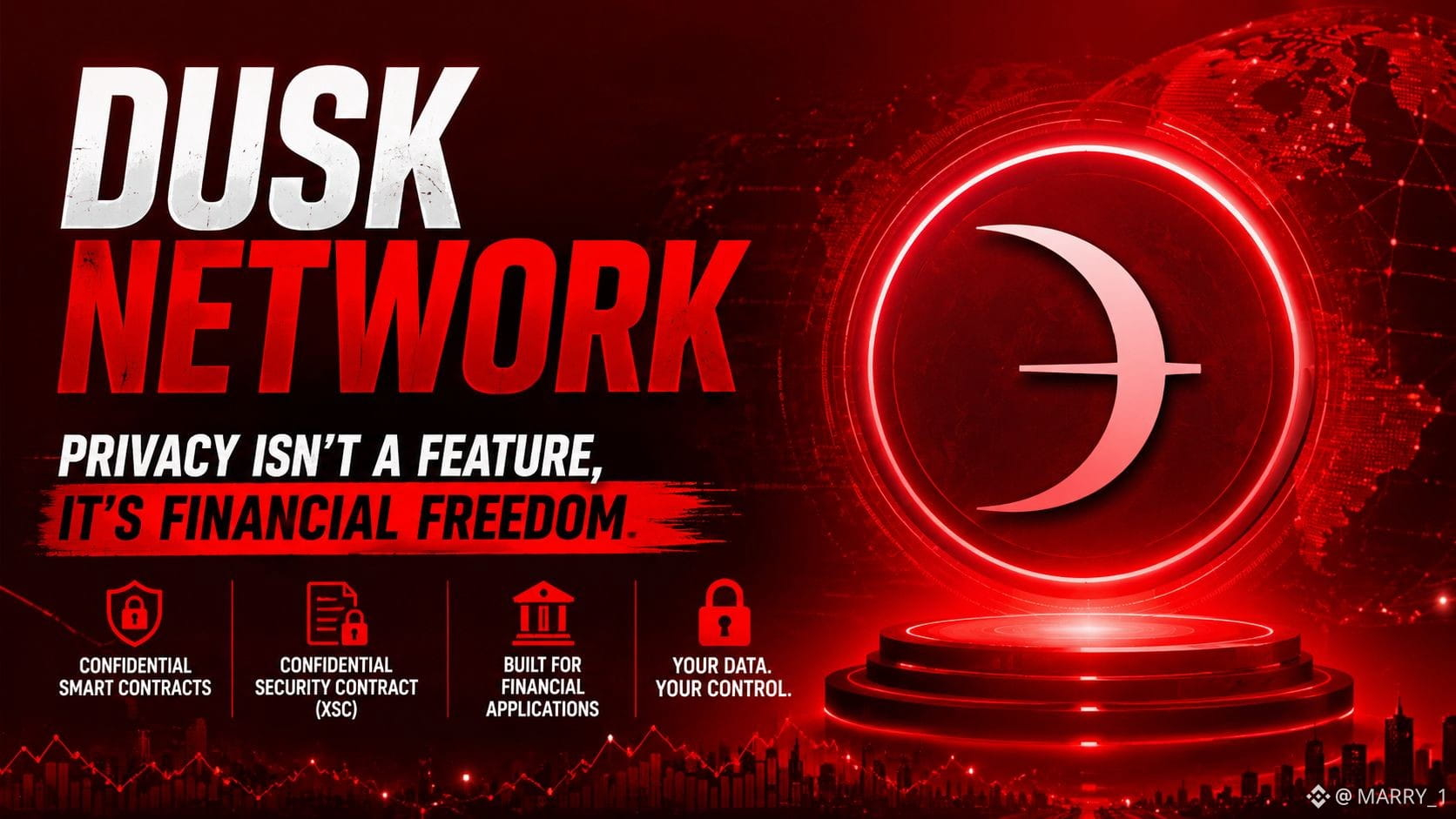
Dusk is built around confidential smart contracts and its Confidential Security Contract standard, aiming to let financial activity remain verifiable without making every detail publicly exposed.
That matters because privacy can change behavior.
A borrower may want liquidity without selling an asset. An institution may need to manage a position without broadcasting its strategy. A market participant may need settlement and verification without revealing its entire balance sheet.
I also think this is where Dusk faces its hardest test.
Privacy alone isn’t enough. Financial systems still need accountability, liquidity, security, and credible risk management. Too much secrecy can create problems of its own.
So I’m less interested in whether Dusk can become “the next big chain.”
I’m more interested in whether confidential infrastructure can make on-chain finance practical for activities that currently stay off-chain.
If it can, the value proposition becomes much quieter—and potentially much more important.
Not more speculation.
More control.
More discretion.
And, ultimately, better financial infrastructure.
@Dusk $DUSK #dusk
The interesting part isn’t simply that it is a privacy-focused Layer-1. It’s the financial problem sitting underneath it.
DeFi gave us transparent markets, but transparency can become a liability. Large positions are visible. Trading intentions can be exposed. Borrowers can be liquidated during temporary volatility. Liquidity can disappear when incentives dry up.
I keep wondering whether financial infrastructure really needs everyone to see everything.
Dusk is built around confidential smart contracts and its Confidential Security Contract standard, aiming to let financial activity remain verifiable without making every detail publicly exposed.
That matters because privacy can change behavior.
A borrower may want liquidity without selling an asset. An institution may need to manage a position without broadcasting its strategy. A market participant may need settlement and verification without revealing its entire balance sheet.
I also think this is where Dusk faces its hardest test.
Privacy alone isn’t enough. Financial systems still need accountability, liquidity, security, and credible risk management. Too much secrecy can create problems of its own.
So I’m less interested in whether Dusk can become “the next big chain.”
I’m more interested in whether confidential infrastructure can make on-chain finance practical for activities that currently stay off-chain.
If it can, the value proposition becomes much quieter—and potentially much more important.
Not more speculation.
More control.
More discretion.
And, ultimately, better financial infrastructure.
@Dusk $DUSK #dusk