#termmax @TermMax
Ich habe etwas leicht Widersprüchliches im Sicherheitsdesign von TermMax bemerkt: Eine Verzögerung, die normalerweise wie eine Schwäche wirkt, wird hier als Schutzmechanismus eingesetzt.
Die meisten Finanzsysteme betrachten schnellere Updates als Fortschritt. Aber wenn ein Protokoll eine kritische Abhängigkeit wie einen Oracle ändert, kann Geschwindigkeit eine andere Art von Risiko einführen.
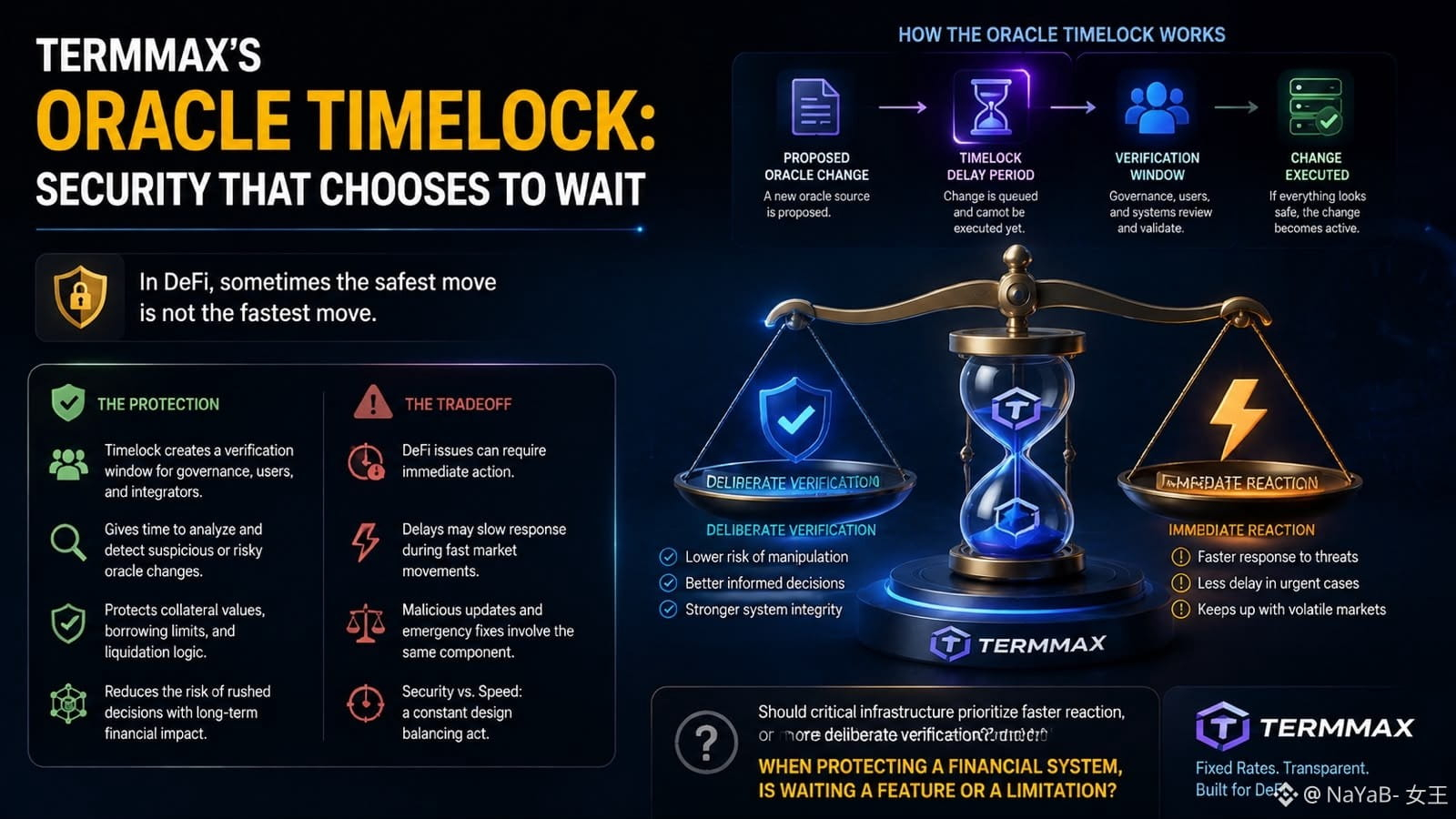
@TermMax schiebt Oracle-Quellen-Updates hinter einen Timelock. Das bedeutet, dass eine vorgeschlagene Oracle-Änderung nicht sofort aktiv wird. Stattdessen führt das System eine Wartezeit ein, bevor die neue Quelle Einfluss auf die Protokolloperationen nehmen kann.
Der tiefere Grund, warum das wichtig ist, liegt darin, dass ein Oracle-Update nicht nur ein einfacher Austausch einer Datenquelle ist. Es kann die Preisannahmen beeinflussen, die der Bewertung von Sicherheiten, Kreditlimits und Liquidationsentscheidungen zugrunde liegen. Eine kleine Änderung auf der Oracle-Ebene kann daher das gesamte Risikomodell eines Finanzsystems betreffen.
Ein Timelock schafft ein Prüfungsfenster, in dem Governance-Teilnehmer, Nutzer und verbundene Systeme Zeit haben zu bewerten, ob sich eine vorgeschlagene Änderung wie erwartet verhält, bevor sie aktive Positionen beeinflusst.
Doch hier wird der Trade-off besonders interessant.
Im DeFi-Bereich können Oracle-Probleme manchmal sofortiges Handeln erfordern. Ein bösartiges Update und eine Notfallkorrektur können sehr unterschiedlich aussehen, aber in beiden Fällen wird dieselbe grundlegende Komponente geändert. Eine Verzögerung kann vor überstürzten Entscheidungen schützen, sie kann jedoch auch die Reaktionsgeschwindigkeit verlangsamen, wenn sich Marktbedingungen rasch bewegen.
Was meine Aufmerksamkeit erregt hat, ist, dass TermMax nicht versucht, die menschliche Kontrolle vollständig zu entfernen. Stattdessen entscheidet es, wo menschliche Entscheidungen auf Reibung stoßen sollten—vor allem an Stellen, an denen Fehler die größten finanziellen Folgen haben könnten.
Und das wirft eine breitere Designfrage im dezentralen Finanzwesen auf: Soll kritische Infrastruktur eine schnellere Reaktion priorisieren oder eine bewusstere Verifizierung?
Wenn man ein Finanzsystem schützt: Ist Warten ein Feature oder eine Einschränkung?
Ich habe etwas leicht Widersprüchliches im Sicherheitsdesign von TermMax bemerkt: Eine Verzögerung, die normalerweise wie eine Schwäche wirkt, wird hier als Schutzmechanismus eingesetzt.
Die meisten Finanzsysteme betrachten schnellere Updates als Fortschritt. Aber wenn ein Protokoll eine kritische Abhängigkeit wie einen Oracle ändert, kann Geschwindigkeit eine andere Art von Risiko einführen.
@TermMax schiebt Oracle-Quellen-Updates hinter einen Timelock. Das bedeutet, dass eine vorgeschlagene Oracle-Änderung nicht sofort aktiv wird. Stattdessen führt das System eine Wartezeit ein, bevor die neue Quelle Einfluss auf die Protokolloperationen nehmen kann.
Der tiefere Grund, warum das wichtig ist, liegt darin, dass ein Oracle-Update nicht nur ein einfacher Austausch einer Datenquelle ist. Es kann die Preisannahmen beeinflussen, die der Bewertung von Sicherheiten, Kreditlimits und Liquidationsentscheidungen zugrunde liegen. Eine kleine Änderung auf der Oracle-Ebene kann daher das gesamte Risikomodell eines Finanzsystems betreffen.
Ein Timelock schafft ein Prüfungsfenster, in dem Governance-Teilnehmer, Nutzer und verbundene Systeme Zeit haben zu bewerten, ob sich eine vorgeschlagene Änderung wie erwartet verhält, bevor sie aktive Positionen beeinflusst.
Doch hier wird der Trade-off besonders interessant.
Im DeFi-Bereich können Oracle-Probleme manchmal sofortiges Handeln erfordern. Ein bösartiges Update und eine Notfallkorrektur können sehr unterschiedlich aussehen, aber in beiden Fällen wird dieselbe grundlegende Komponente geändert. Eine Verzögerung kann vor überstürzten Entscheidungen schützen, sie kann jedoch auch die Reaktionsgeschwindigkeit verlangsamen, wenn sich Marktbedingungen rasch bewegen.
Was meine Aufmerksamkeit erregt hat, ist, dass TermMax nicht versucht, die menschliche Kontrolle vollständig zu entfernen. Stattdessen entscheidet es, wo menschliche Entscheidungen auf Reibung stoßen sollten—vor allem an Stellen, an denen Fehler die größten finanziellen Folgen haben könnten.
Und das wirft eine breitere Designfrage im dezentralen Finanzwesen auf: Soll kritische Infrastruktur eine schnellere Reaktion priorisieren oder eine bewusstere Verifizierung?
Wenn man ein Finanzsystem schützt: Ist Warten ein Feature oder eine Einschränkung?