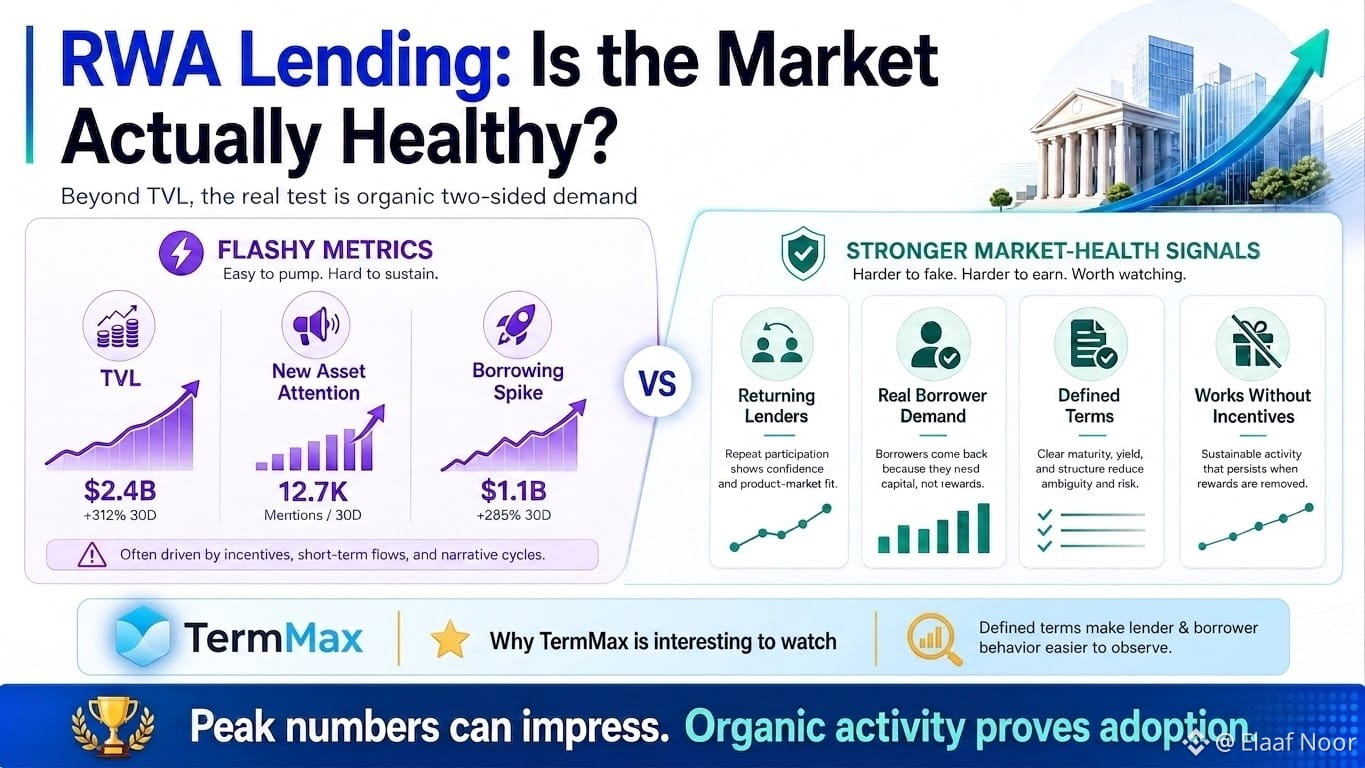
RWA-Kreditvergabe hat ein Problem, das ich spannender finde als die Tokenisierung selbst:
Wie weiß man, ob ein Sicherheitenmarkt tatsächlich gesund ist?
TVL kann beeindruckend aussehen.
Ein neues Asset kann Aufmerksamkeit anziehen.
Das Kreditvolumen kann stark ansteigen.
Keine dieser Aussagen sagt mir, ob der Markt wirklich eine echte zweiseitige Nachfrage entwickelt hat.
Genau dafür denke ich, hat @TermMax eine interessante Ausgangslage, die man beobachten kann.
Wenn die Finanzierung an klar definierte Konditionen geknüpft ist, statt an einen ständig wechselnden Pool-Zinssatz, lässt sich das Verhalten von Kreditgebern & Kreditnehmern viel leichter untersuchen.
Wer ist bereit, Kapital bereitzustellen?
Wer ist bereit, dafür zu zahlen?
Wie lange sind sie bereit, sich zu binden?
Und was passiert, wenn die leicht verfügbare Liquidität verschwindet?
Diese Fragen sind sogar noch wichtiger für tokenisierte Assets, weil die Liquiditätsbedingungen sich von Asset zu Asset dramatisch unterscheiden können.
Ich würde eher einen kleineren Markt sehen wollen, in dem die Teilnehmer unter normalen Bedingungen immer wieder zurückkommen, als eine riesige Anzahl, die nur dann aktiv aussieht, wenn Anreize die Hauptarbeit leisten.
Wenn TermMax also tiefer in RWA-Kredite expandiert, würde ich nicht zuerst auf die Schlagzeilen-TVL schauen.
Ich werde darauf achten, ob der Markt weiter funktioniert, wenn niemand stark dafür bezahlt wird, teilzunehmen.
Für mich ist das ein viel härterer – und viel nützlicherer – Test für echte Akzeptanz.
Beurteilst du Protokolle anhand ihrer Peak-TVL oder schaust du dir die organische Aktivität ohne Anreize an?
#termmax
Wie weiß man, ob ein Sicherheitenmarkt tatsächlich gesund ist?
TVL kann beeindruckend aussehen.
Ein neues Asset kann Aufmerksamkeit anziehen.
Das Kreditvolumen kann stark ansteigen.
Keine dieser Aussagen sagt mir, ob der Markt wirklich eine echte zweiseitige Nachfrage entwickelt hat.
Genau dafür denke ich, hat @TermMax eine interessante Ausgangslage, die man beobachten kann.
Wenn die Finanzierung an klar definierte Konditionen geknüpft ist, statt an einen ständig wechselnden Pool-Zinssatz, lässt sich das Verhalten von Kreditgebern & Kreditnehmern viel leichter untersuchen.
Wer ist bereit, Kapital bereitzustellen?
Wer ist bereit, dafür zu zahlen?
Wie lange sind sie bereit, sich zu binden?
Und was passiert, wenn die leicht verfügbare Liquidität verschwindet?
Diese Fragen sind sogar noch wichtiger für tokenisierte Assets, weil die Liquiditätsbedingungen sich von Asset zu Asset dramatisch unterscheiden können.
Ich würde eher einen kleineren Markt sehen wollen, in dem die Teilnehmer unter normalen Bedingungen immer wieder zurückkommen, als eine riesige Anzahl, die nur dann aktiv aussieht, wenn Anreize die Hauptarbeit leisten.
Wenn TermMax also tiefer in RWA-Kredite expandiert, würde ich nicht zuerst auf die Schlagzeilen-TVL schauen.
Ich werde darauf achten, ob der Markt weiter funktioniert, wenn niemand stark dafür bezahlt wird, teilzunehmen.
Für mich ist das ein viel härterer – und viel nützlicherer – Test für echte Akzeptanz.
Beurteilst du Protokolle anhand ihrer Peak-TVL oder schaust du dir die organische Aktivität ohne Anreize an?
#termmax