#dusk $DUSK @Dusk
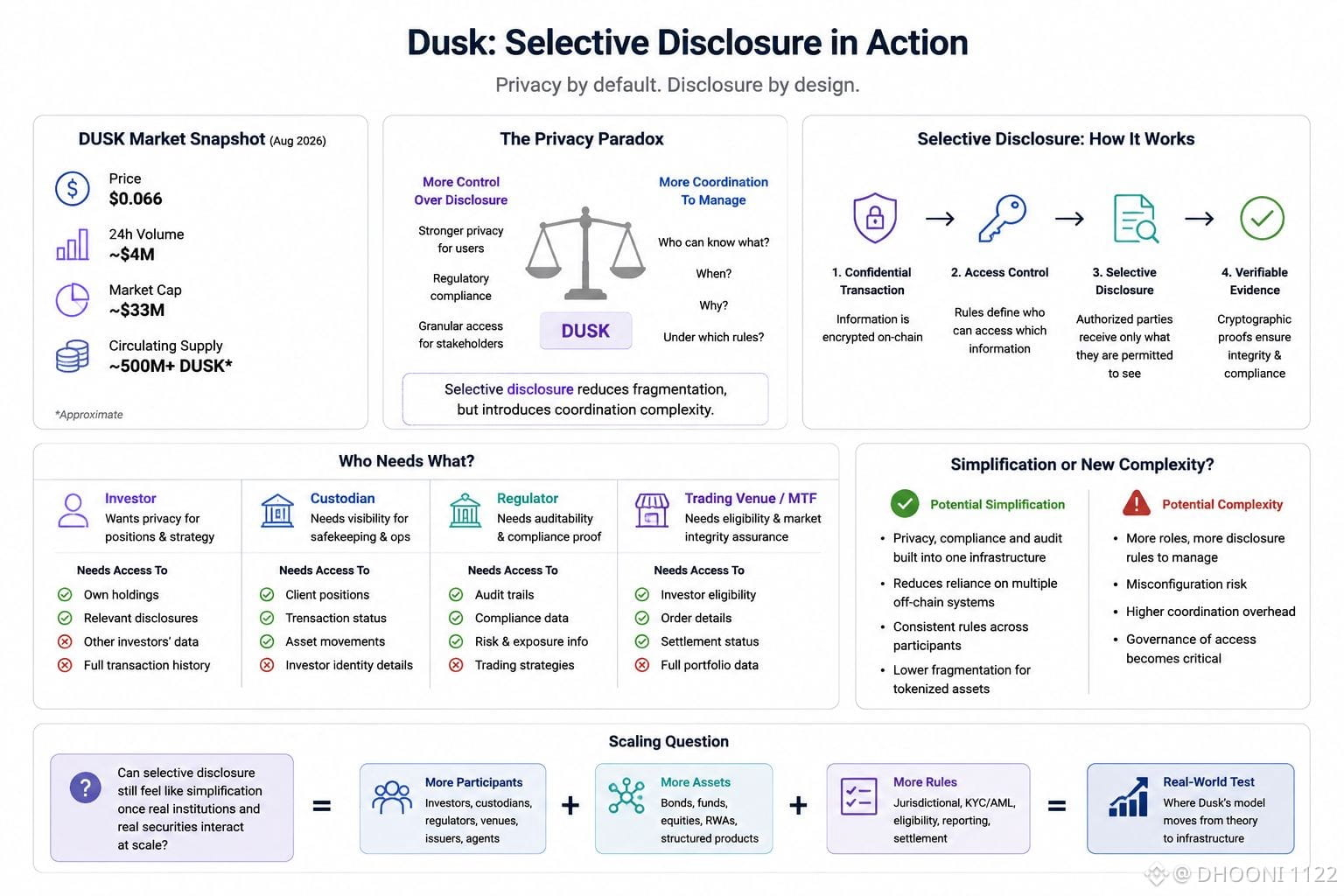
Ich habe ständig über das Datenschutzmodell von Dusk nachgedacht und dann angeschaut, was der Markt mit DUSK tatsächlich macht. DUSK liegt bei etwa 0,066 US-Dollar, mit ungefähr 4 Mio. US-Dollar täglichem Handelsvolumen und einer Marktkapitalisierung von rund 33 Mio. US-Dollar.
Der Token ist immer noch winzig im Vergleich zur Finanzinfrastruktur-Geschichte, die um ihn herum aufgebaut wird. Dieser Kontrast hat für mich einen Punkt besonders hervorgehoben. Dusk behandelt Datenschutz offenbar nicht als „alles verbergen“. Das Design kombiniert vertrauliche Übertragungen mit selektiver Offenlegung, sodass sensible Informationen geschützt bleiben können, während autorisierte Parteien bei Bedarf weiterhin Nachweise erhalten können. Auf den ersten Blick klingt das wie die naheliegende Lösung für regulierte Wertpapiere.
Doch da ist ein Widerspruch, den ich nicht bedacht hatte. Je genauer man die Offenlegung steuert, desto mehr Koordination muss das System verwalten. Ein Investor braucht möglicherweise Privatsphäre. Ein Verwahrer benötigt möglicherweise Einblick in Transaktionen. Ein Regulator braucht möglicherweise Audit-Nachweise. Ein Handelsplatz benötigt möglicherweise Angaben zur Berechtigung, ohne alles andere sehen zu müssen.
Dusk versucht im Grunde, diese Grenzen zu einem Bestandteil der Infrastruktur zu machen, statt sie in getrennten Systemen zu belassen. Das könnte die Fragmentierung verringern, die tokenisierte Assets schwierig macht.
Aber es könnte auch eine neue Art von Komplexität schaffen: Wer darf wann und warum was wissen. Deshalb interessiere ich mich weniger dafür, ob Dusk Transaktionen jetzt privat halten kann. Mich interessiert vielmehr, ob sich selektive Offenlegung immer noch wie eine Vereinfachung anfühlt, sobald echte Institutionen und echte Wertpapiere im großen Maßstab miteinander interagieren.
@Dusk #dusk $DUSK
Ich habe ständig über das Datenschutzmodell von Dusk nachgedacht und dann angeschaut, was der Markt mit DUSK tatsächlich macht. DUSK liegt bei etwa 0,066 US-Dollar, mit ungefähr 4 Mio. US-Dollar täglichem Handelsvolumen und einer Marktkapitalisierung von rund 33 Mio. US-Dollar.
Der Token ist immer noch winzig im Vergleich zur Finanzinfrastruktur-Geschichte, die um ihn herum aufgebaut wird. Dieser Kontrast hat für mich einen Punkt besonders hervorgehoben. Dusk behandelt Datenschutz offenbar nicht als „alles verbergen“. Das Design kombiniert vertrauliche Übertragungen mit selektiver Offenlegung, sodass sensible Informationen geschützt bleiben können, während autorisierte Parteien bei Bedarf weiterhin Nachweise erhalten können. Auf den ersten Blick klingt das wie die naheliegende Lösung für regulierte Wertpapiere.
Doch da ist ein Widerspruch, den ich nicht bedacht hatte. Je genauer man die Offenlegung steuert, desto mehr Koordination muss das System verwalten. Ein Investor braucht möglicherweise Privatsphäre. Ein Verwahrer benötigt möglicherweise Einblick in Transaktionen. Ein Regulator braucht möglicherweise Audit-Nachweise. Ein Handelsplatz benötigt möglicherweise Angaben zur Berechtigung, ohne alles andere sehen zu müssen.
Dusk versucht im Grunde, diese Grenzen zu einem Bestandteil der Infrastruktur zu machen, statt sie in getrennten Systemen zu belassen. Das könnte die Fragmentierung verringern, die tokenisierte Assets schwierig macht.
Aber es könnte auch eine neue Art von Komplexität schaffen: Wer darf wann und warum was wissen. Deshalb interessiere ich mich weniger dafür, ob Dusk Transaktionen jetzt privat halten kann. Mich interessiert vielmehr, ob sich selektive Offenlegung immer noch wie eine Vereinfachung anfühlt, sobald echte Institutionen und echte Wertpapiere im großen Maßstab miteinander interagieren.
@Dusk #dusk $DUSK