Ich habe mich in letzter Zeit in TermMax’ finanzielle Architektur vertieft—jenseits der Oberfläche, hin zu dem, was sie langfristig tragfähig macht. Hier ist, was besonders aufgefallen ist.
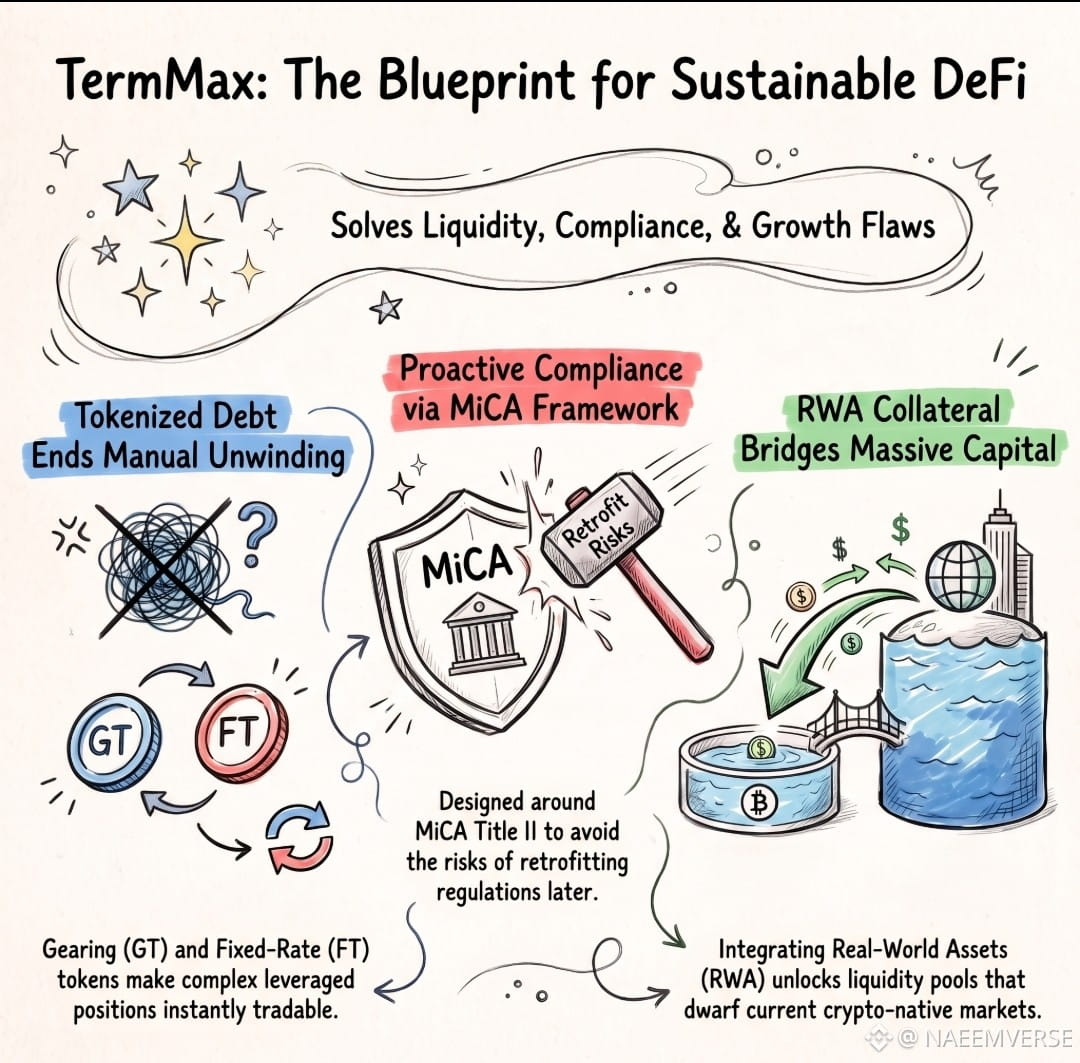
Das Problem der Liquidität bei Schulden. Die meisten Kreditprotokolle lassen dich festhängen, sobald du gehebelt bist. Willst du raus? Du musst Loops manuell abbauen, zahlst dabei Gas und Slippage bei jedem Schritt. TermMax tokenisiert stattdessen die gesamte Schuldposition. Gearing Tokens (GT) repräsentieren die gehebelte Position, Fixed-Rate Tokens (FT) repräsentieren die Ertragsseite. Beide sind handelbar. Was früher ein mehrstufiges Unwinding war, wird zu genau einem Trade. Das ist keine kosmetische Reparatur—das verändert, was mit gehebelten Schulden in DeFi überhaupt möglich ist.
Die regulatorische Frage, die niemand beantworten will. Die meisten Token-Projekte behandeln Compliance als etwas, das man später (oder gar nicht) angeht. TermMax’ TMX Token White Paper ist bereits um den MiCA-Titel-II-Rahmen herum aufgebaut. Das ist eine Wette darauf, dass die Protokolle, die in fünf Jahren noch stehen, diejenigen sind, die Compliance nicht unter Druck nachrüsten mussten. Ob sich diese Wette auszahlt, hängt davon ab, wie die Durchsetzung von MiCA verläuft—aber die Intention liest sich anders als das übliche „erst bauen, später um Verzeihung bitten“-Spielbuch.
Die Wachstumsfrage. Token-Inflation tötet mehr Protokolle, als Hacks es tun. Eine Pre-Mine-Struktur und ein Belohnungsdesign, das die Nutzung gegenüber Spekulation bevorzugt, ist ein Signal. Die Einbindung von RWA-Kollateral ist das Größere: Das ist nicht nur eine neue Asset-Klasse, sondern eine Brücke zu Kapital, das das übersteigt, was aktuell in DeFi gebunden ist. Real-World-Assets als Kollateral funktionieren nur, wenn die rechtliche und die Verwahrungsseite stabil ist—deshalb verbinden sich hier Compliance und Wachstum wirklich, statt dass es zwei getrennte Verkaufsvorhaben sind.
Feste Zinsen lösen das Problem der Preisunsicherheit. Physische Lieferung löst das Liquidationsproblem. Tokenisierte Schulden lösen das Liquiditätsproblem. Drei unterschiedliche Schmerzpunkte, ein stimmiges Design.
Wie siehst du das: Führt regulatorische Ausrichtung tatsächlich zu mehr ernsthaftem Kapital in DeFi—oder bremst sie Protokolle nur aus, ohne die Einführung wirklich voranzubringen?
@TermMax #TermMax
Das Problem der Liquidität bei Schulden. Die meisten Kreditprotokolle lassen dich festhängen, sobald du gehebelt bist. Willst du raus? Du musst Loops manuell abbauen, zahlst dabei Gas und Slippage bei jedem Schritt. TermMax tokenisiert stattdessen die gesamte Schuldposition. Gearing Tokens (GT) repräsentieren die gehebelte Position, Fixed-Rate Tokens (FT) repräsentieren die Ertragsseite. Beide sind handelbar. Was früher ein mehrstufiges Unwinding war, wird zu genau einem Trade. Das ist keine kosmetische Reparatur—das verändert, was mit gehebelten Schulden in DeFi überhaupt möglich ist.
Die regulatorische Frage, die niemand beantworten will. Die meisten Token-Projekte behandeln Compliance als etwas, das man später (oder gar nicht) angeht. TermMax’ TMX Token White Paper ist bereits um den MiCA-Titel-II-Rahmen herum aufgebaut. Das ist eine Wette darauf, dass die Protokolle, die in fünf Jahren noch stehen, diejenigen sind, die Compliance nicht unter Druck nachrüsten mussten. Ob sich diese Wette auszahlt, hängt davon ab, wie die Durchsetzung von MiCA verläuft—aber die Intention liest sich anders als das übliche „erst bauen, später um Verzeihung bitten“-Spielbuch.
Die Wachstumsfrage. Token-Inflation tötet mehr Protokolle, als Hacks es tun. Eine Pre-Mine-Struktur und ein Belohnungsdesign, das die Nutzung gegenüber Spekulation bevorzugt, ist ein Signal. Die Einbindung von RWA-Kollateral ist das Größere: Das ist nicht nur eine neue Asset-Klasse, sondern eine Brücke zu Kapital, das das übersteigt, was aktuell in DeFi gebunden ist. Real-World-Assets als Kollateral funktionieren nur, wenn die rechtliche und die Verwahrungsseite stabil ist—deshalb verbinden sich hier Compliance und Wachstum wirklich, statt dass es zwei getrennte Verkaufsvorhaben sind.
Feste Zinsen lösen das Problem der Preisunsicherheit. Physische Lieferung löst das Liquidationsproblem. Tokenisierte Schulden lösen das Liquiditätsproblem. Drei unterschiedliche Schmerzpunkte, ein stimmiges Design.
Wie siehst du das: Führt regulatorische Ausrichtung tatsächlich zu mehr ernsthaftem Kapital in DeFi—oder bremst sie Protokolle nur aus, ohne die Einführung wirklich voranzubringen?
@TermMax #TermMax