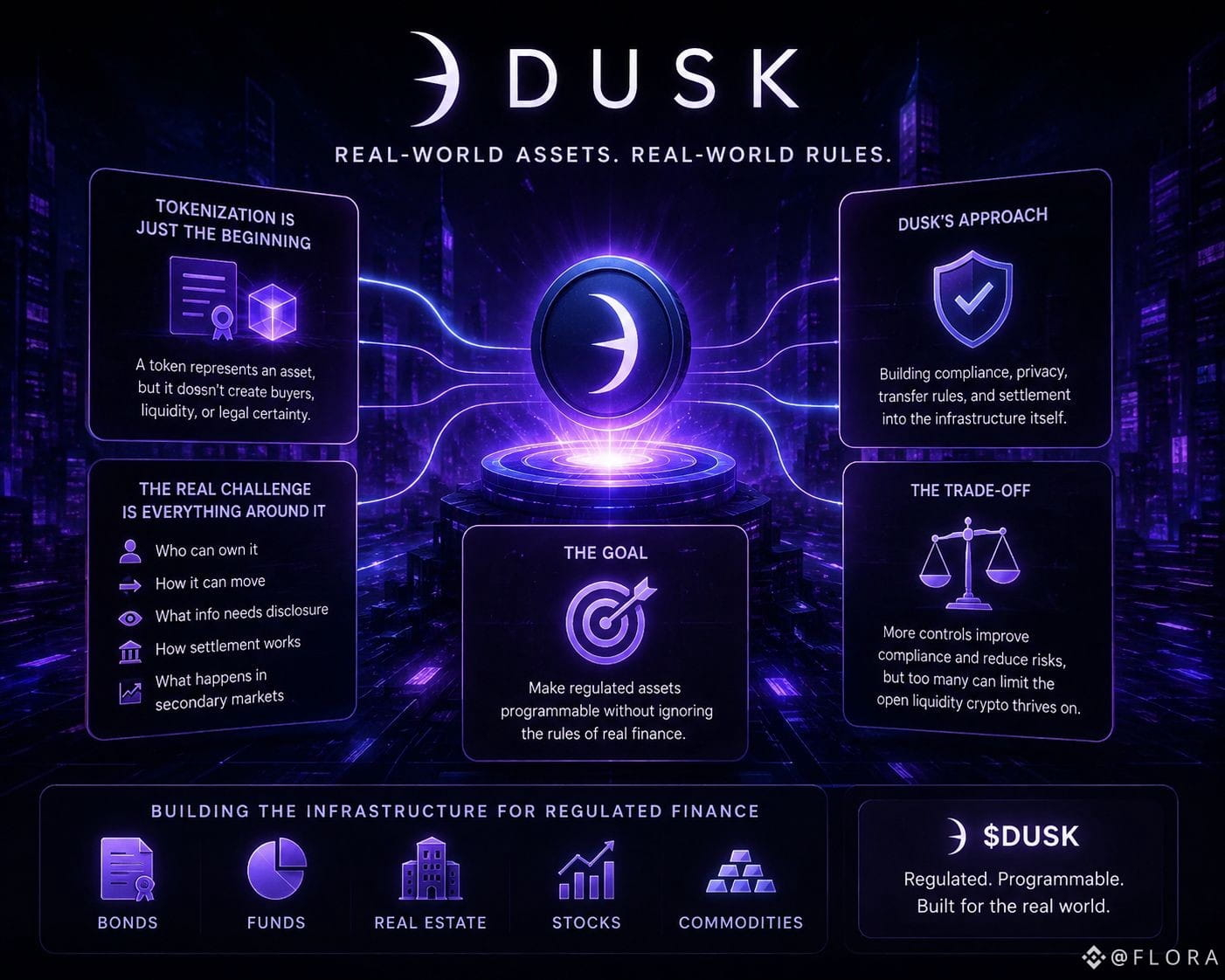
The more I study @Dusk , the more I realize that tokenization is actually the easy part of the RWA story. Putting a bond, fund, or security onchain may create a digital representation, but it doesn’t automatically create buyers, liquidity, or a legal framework around that asset. What really caught my attention is everything that comes after the token exists. Who can own it? How can it move? What information needs to be disclosed? How does settlement work? And what happens when it reaches a secondary market? These are the problems that determine whether tokenized assets can actually work in the real world. That’s why I find the $DUSK approach interesting. Dusk seems focused on making compliance, transfer rules, privacy, and settlement part of the infrastructure instead of treating tokenization as the finished product. There is obviously a trade-off. More controls can make regulated finance safer and more practical for institutions, but too many restrictions could reduce the open liquidity crypto is known for. So I’m not looking at Dusk as just another tokenization project. I’m watching to see if it can make regulated assets programmable without ignoring the rules that real financial markets operate under. For me, that’s the bigger thesis behind $DUSK .
#dusk $DUSK @Dusk
#dusk $DUSK @Dusk