
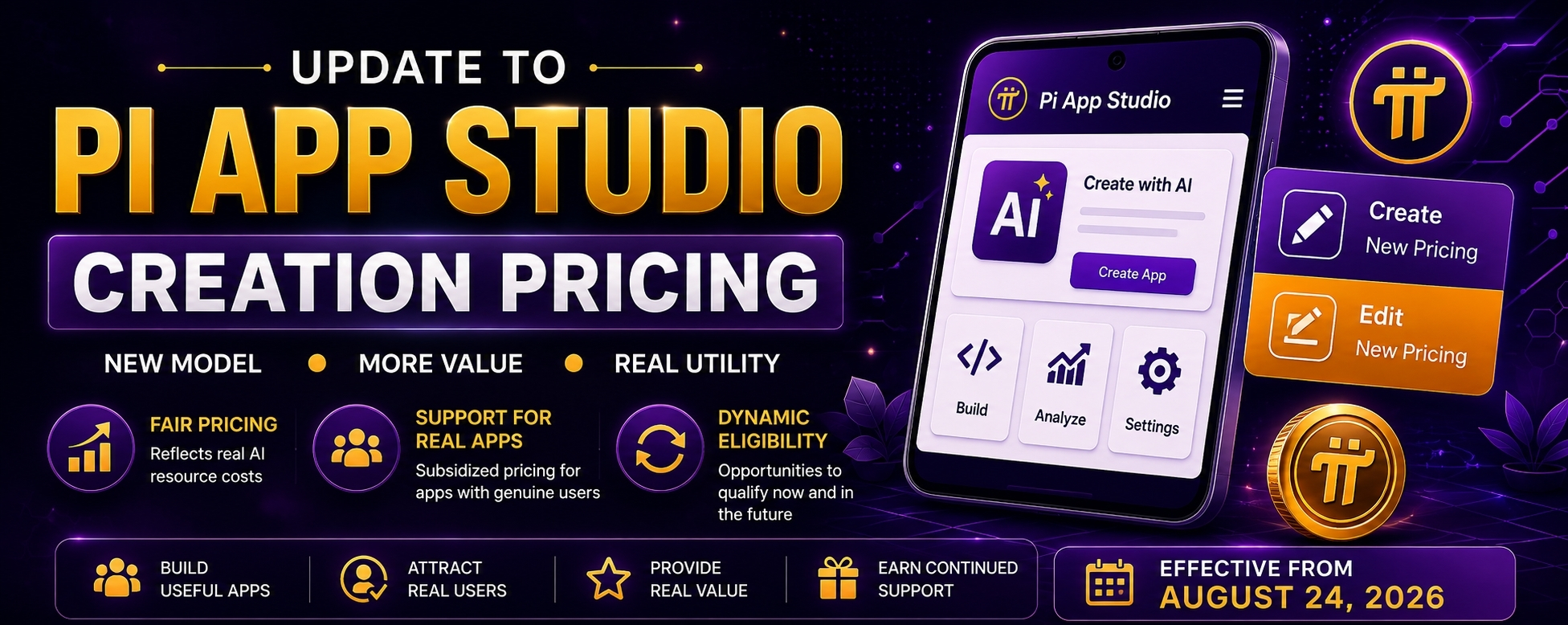
Pi Network is preparing to introduce a revised pricing model for Pi App Studio, with the changes scheduled to take effect on August 24, 2026.
The new approach will change how creators are charged for building and editing apps, while continuing to provide subsidized pricing for creators whose applications demonstrate genuine utility and attract real users.
How App Studio Pricing Is Changing
Since the early rollout of App Studio, Pi Network has heavily subsidized the cost of AI-powered app creation and editing.
Under the introductory pricing model, creators paid 0.25 Pi to create an app and another 0.25 Pi for an edit.
According to Pi Network, the actual cost of the AI services used for app development is considerably higher than these introductory fees. The network has been covering the difference to make App Studio more accessible during its initial phase.
After collecting usage data over time, Pi Network says it now has a better understanding of how creators use App Studio and which applications are attracting genuine users and showing potential utility.
Based on this information, the network is adjusting its pricing approach while continuing to provide subsidies where they are considered most useful.
New Standard Pricing
Beginning August 24, App Studio will introduce a standard price for creating and editing applications.
The amount will not necessarily be the same for every action. Pricing may vary depending on the computing and AI resources required to generate or modify an application.
Pi Network states that the new pricing is designed to more closely reflect the underlying cost of the AI services being used and that it will not add an additional markup to those AI service costs.
Subsidized Pricing for Apps With Real Users
Creators whose applications demonstrate meaningful usage from real users may continue to receive the previously subsidized pricing.
Eligibility will depend on whether an app provides genuine utility and attracts distinct users beyond the creator themselves.
This approach is intended to direct more of Pi Network's resources toward applications that are actually being used by Pioneers rather than apps created only for testing or experimentation.
How Eligibility Will Be Determined
For the initial implementation, Pi Network will use an early set of qualification criteria based on the data already collected from App Studio.
These criteria are not necessarily permanent. They may be adjusted as the platform develops and the network gains more information about how creators and their applications perform.
The number of creator categories and the conditions for receiving subsidized pricing may also change in the future.
Eligibility Can Change Over Time
Qualification for subsidized pricing will not be a permanent, one-time decision.
Pi Network plans to regularly review creator eligibility using newly generated data and app usage information.
This means a creator who does not qualify when the new system launches could potentially become eligible later by attracting more genuine users and developing an application with greater utility.
In this way, the pricing model is also designed to encourage creators to build applications that are useful, engaging, and capable of attracting continued user activity.
What Existing Creators Can Do Before August 24
The new pricing system will begin on August 24, 2026, giving existing creators an opportunity to improve their applications before the change takes effect.
Creators can focus on several areas, including:
- Improving the usefulness and overall quality of their applications.
- Making their apps easier and more enjoyable to use.
- Sharing their applications with other Pioneers who may find them valuable.
- Collecting feedback from genuine users and using that feedback to make improvements.
- Continuing to develop applications that address real needs within the Pi ecosystem.
Creators who do not initially meet the requirements for subsidized pricing will still have opportunities to qualify during future reviews.
Why Pi Network Is Changing the Pricing Model
Pi App Studio is a generative-AI-powered development tool designed to help both technical and non-technical creators turn ideas into functional Pi applications.
When the platform was introduced, broad subsidies allowed creators to experiment with app development at a very low cost.
This also gave Pi Network an opportunity to observe how creators used the platform and which types of applications gained meaningful attention.
However, not every application created through App Studio goes on to attract users or provide practical value. Maintaining the same level of subsidy for every creation could result in resources being spent on applications that are used only for testing, experimentation, or potentially spam.
The revised model is intended to make the use of those resources more targeted and efficient.
A Greater Focus on Utility
Under the new approach, greater support will be directed toward creators whose applications demonstrate real-world utility and attract genuine users.
This could encourage developers to focus not only on creating an app, but also on improving its usefulness, distributing it to potential users, and responding to feedback.
For the wider Pi ecosystem, the goal is to encourage the development of applications that people actually find useful and continue to use.
Final Takeaway
The upcoming Pi App Studio pricing update represents a shift from broad introductory subsidies toward a model that places greater emphasis on utility, genuine users, and active app development.
Starting August 24, 2026, standard creation and editing costs will more closely reflect the resources required by AI-powered app development, while qualifying creators may continue to benefit from subsidized rates.
The eligibility system will also remain flexible, giving creators opportunities to qualify in the future as their applications gain real users and demonstrate greater utility.
This article is for informational purposes only and is not financial or investment advice. Readers should conduct their own research (DYOR) and verify important information through official Pi Network sources.