
#samsungtoannouncenewshareholderreturnplanfriday
Einen Tag nachdem sein größter Rivale mit einem Rekord-Rückkauf Geschichte geschrieben hat, legt Samsung mit einer noch größeren Zahl nach.
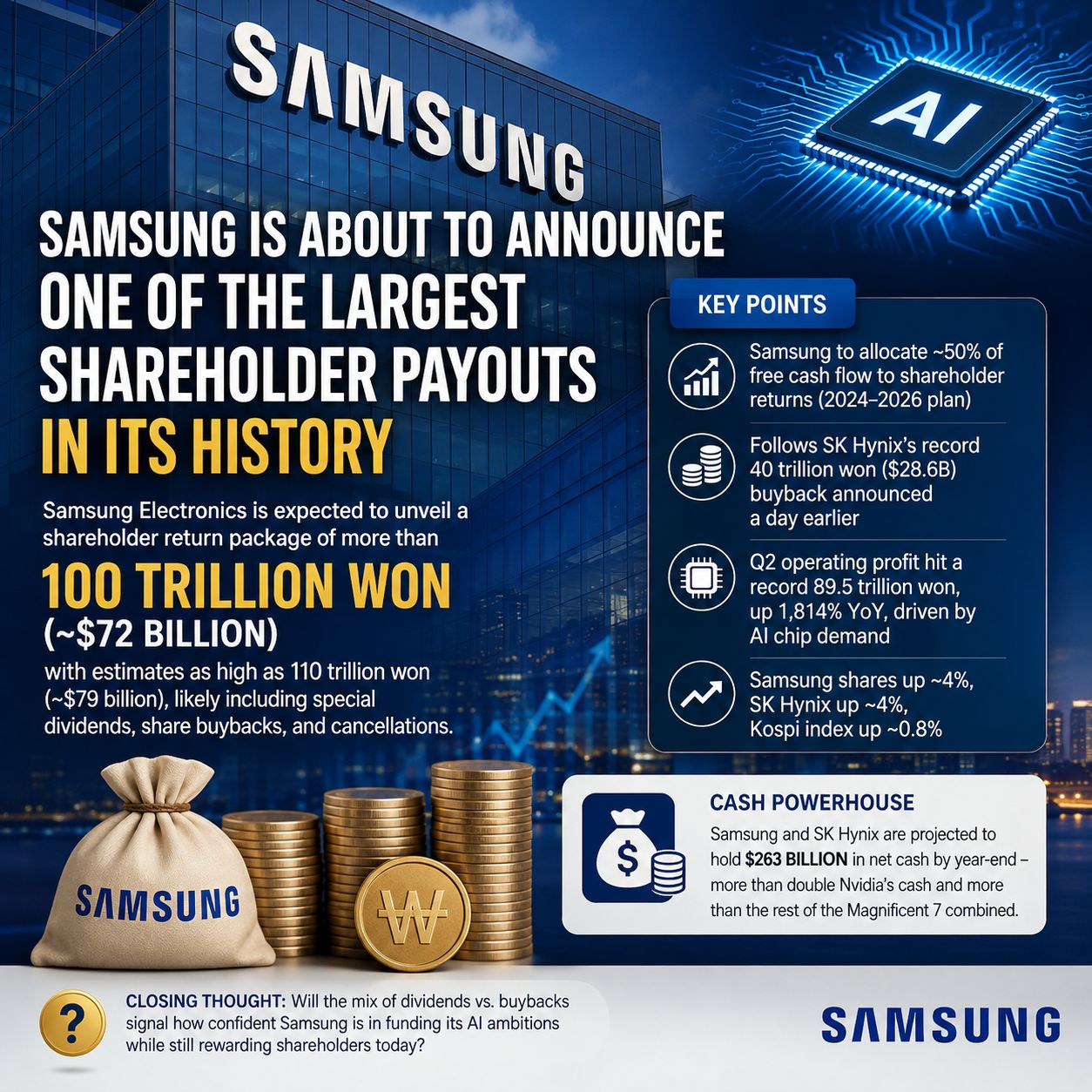
Die Aufschlüsselung: Samsung Electronics hält am Freitag am Nachmittag eine Sitzung des Vorstands ab, wobei ein neues Aktionärsrendite-Paket kurz nachdem der koreanische Markt geschlossen hat offengelegt werden soll. Medienberichte zufolge beläuft sich das Paket auf mehr als 100 Billionen Won (rund 72 Milliarden US-Dollar), wobei einige Schätzungen sogar bis zu 110 Billionen Won (etwa 79 Milliarden US-Dollar) gehen – vermutlich einschließlich einer Sonderdividende sowie möglicher Aktienrückkäufe und -streichungen. Samsung plant, rund 50 % seines Free-Cashflow für das Programm einzusetzen, im Einklang mit seinem bestehenden Rahmen für die Aktionärsrendite 2024–2026. Die Bekanntgabe erfolgt, nachdem SK Hynix bereits am Vortag eine eigene Rekordmaßnahme verkündet hatte – einen Rückkauf- und Stornierungsplan im Volumen von 40 Billionen Won (28,6 Milliarden US-Dollar), das größte Programm zur Aktionärsrendite, das jemals von einem börsennotierten südkoreanischen Unternehmen angekündigt wurde. Beide Schritte erfolgen vor dem Hintergrund außergewöhnlicher Ergebnisse: Samsung meldete für das zweite Quartal einen Rekord für den operativen Gewinn von 89,5 Billionen Won – ein Plus von 1.814 % im Vergleich zum Vorjahr, angetrieben durch stark steigende Nachfrage nach KI-bezogenen Chips. Die Samsung-Aktien stiegen nach der Nachricht um fast 4 %, während SK Hynix am Vortag um mehr als 4 % zulegte; der breitere Kospi-Index war etwa 0,8 % im Plus.
Warum das wichtig ist: Gemeinsam werden Samsung und SK Hynix bis zum Jahresende voraussichtlich über 263 Milliarden US-Dollar an Netto-Cash halten – mehr als das Doppelte von Nvidias geschätzter Cash-Position und mehr als die kombinierte Liquidität der übrigen „Magnificent Seven“-US-Techunternehmen. Das ist ein eindrucksvolles Signal dafür, wie stark sich der Wert während dieses KI-Infrastruktur-Ausbaus in der Lieferkette der Speicherchips konzentriert hat. Gleichzeitig steht Samsung vor einer echten Abwägungsaufgabe: Kapital an die Aktionäre auszuschütten und zugleich für 2026 mehr als 110 Billionen Won in Anlagen und F&E zu investieren, um mit Blick auf KI-Halbleiter auf Kurs zu bleiben und in Bereiche wie Robotik und Automotive-Elektronik zu expandieren. Wie das Unternehmen dieses Paket zwischen Dividenden und Rückkäufen aufteilt – Einzelheiten stehen zum Zeitpunkt der Aufsichtsratssitzung noch aus – könnte etwas darüber aussagen, wie es zwischen kurzfristigen Aktionärsbelohnungen und dem Bedarf an längerfristigen Investitionen abwägt.
Abschließender Gedanke: Mit der noch zu enthüllenden exakten Struktur des Samsung-Pakets: Lässt uns die spätere Mischung aus Dividenden und Rückkäufen etwas darüber erkennen, wie zuversichtlich das Unternehmen ist, seine KI-Ambitionen zu finanzieren – und gleichzeitig die Aktionäre heute weiterhin zu belohnen?